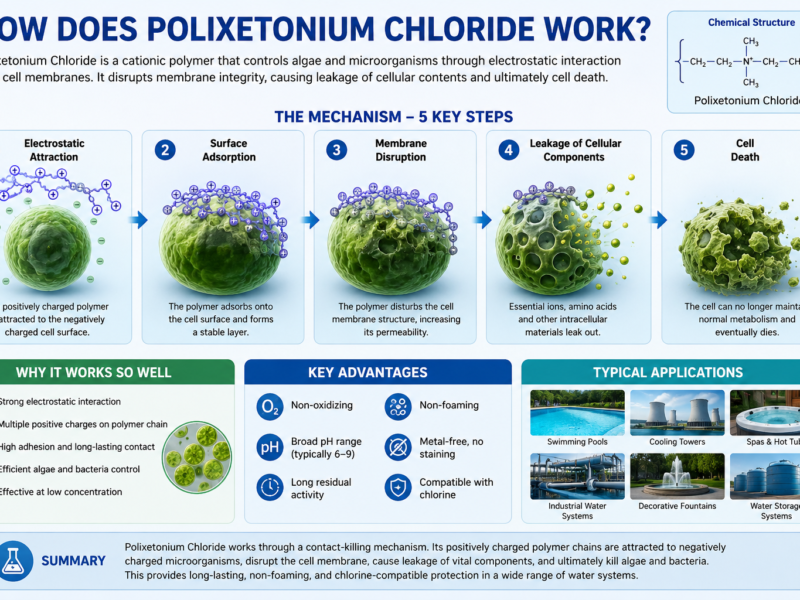
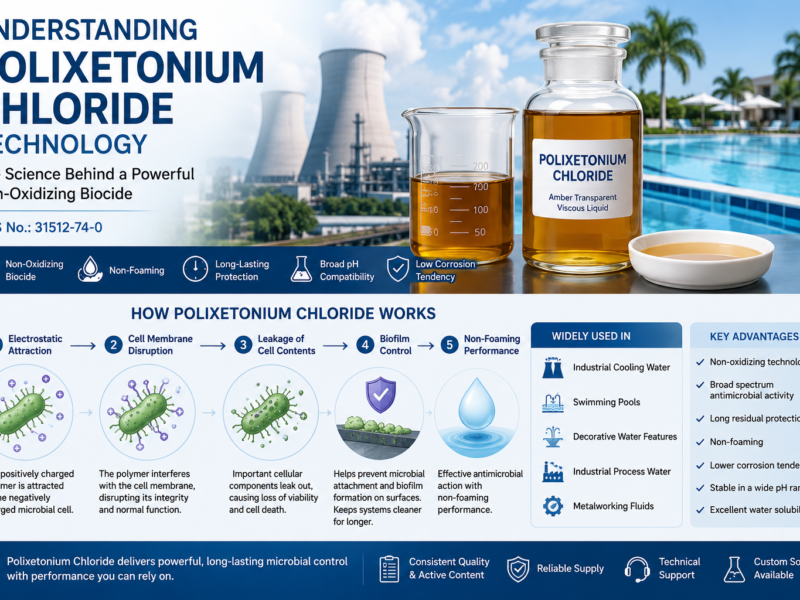
Infographic showing how Poly(2-hydroxypropyldimethylammonium chloride attaches to negatively charged algae and microbial cells through electrostatic attraction, helping control biological growth while remaining non-foaming and water-soluble

What Is Poly(2-hydroxypropyldimethylammonium Chloride)? A Complete Beginner’s Guide

Outline What Is Poly(2-hydroxypropyldimethylammonium Chloride)? A Complete Beginner’s Guide If you’ve been researching industrial biocides, pool algaecides, or water treatment polymers, you’ve probably come across the rather intimidating name Poly(2-hydroxypropyldimethylammonium chloride). At first glance, it sounds like something only a chemist could pronounce. But here’s the interesting part—it has become...
Read More
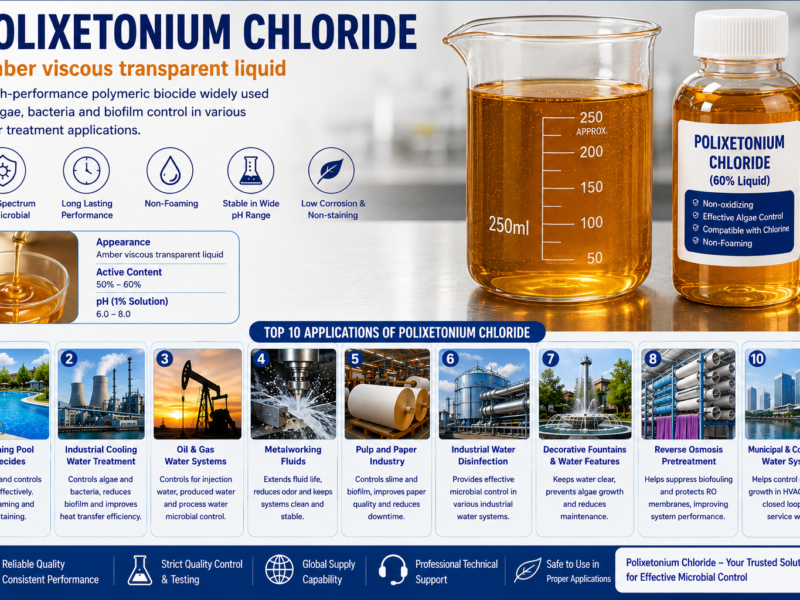
Amber transparent Polixetonium Chloride liquid with HDPE packaging options for non-foaming pool algaecide and water treatment use.

How to Choose Polixetonium Chloride

Outline How to Choose Polixetonium Chloride Choosing Polixetonium Chloride sounds easy at first. You ask for CAS No. 31512-74-0, check the price, compare two or three suppliers, and place the order. Well… not quite. If you’ve ever bought water treatment chemicals, pool algaecide raw materials, or industrial biocides, you already...
Read More
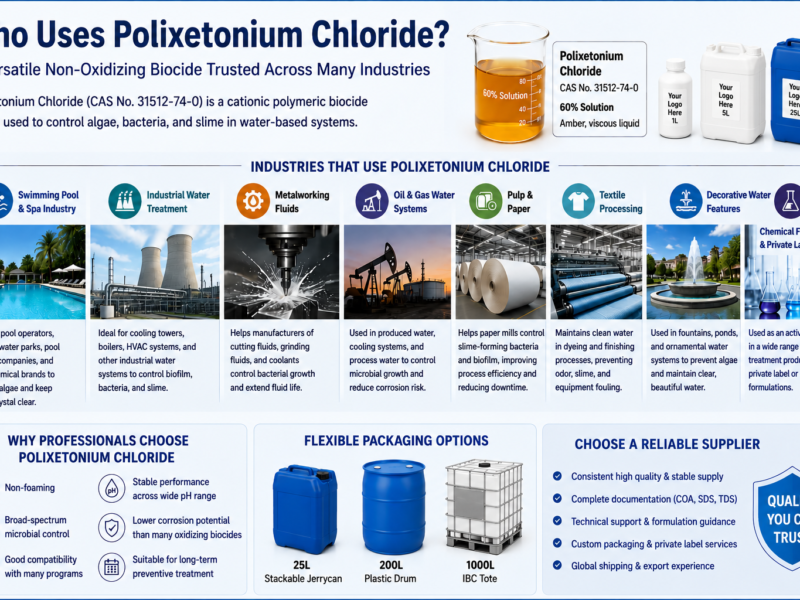
Professional infographic illustrating the major industries using Polixetonium Chloride, a non-oxidizing polymeric biocide for algae, bacteria, and slime control, featuring key benefits, supplier selection criteria, and packaging including 1L bottle, 5L jerrycan, 25L stackable jerrycan, and 1000L IBC tote.

Who Uses Polixetonium Chloride?

Outline Who Uses Polixetonium Chloride? If you’ve ever searched for Polixetonium Chloride, chances are you’ve seen plenty of information about its chemistry—but not much about who actually buys it. That’s a shame because understanding the real users tells you far more than a chemical formula ever could. The truth is,...
Read More
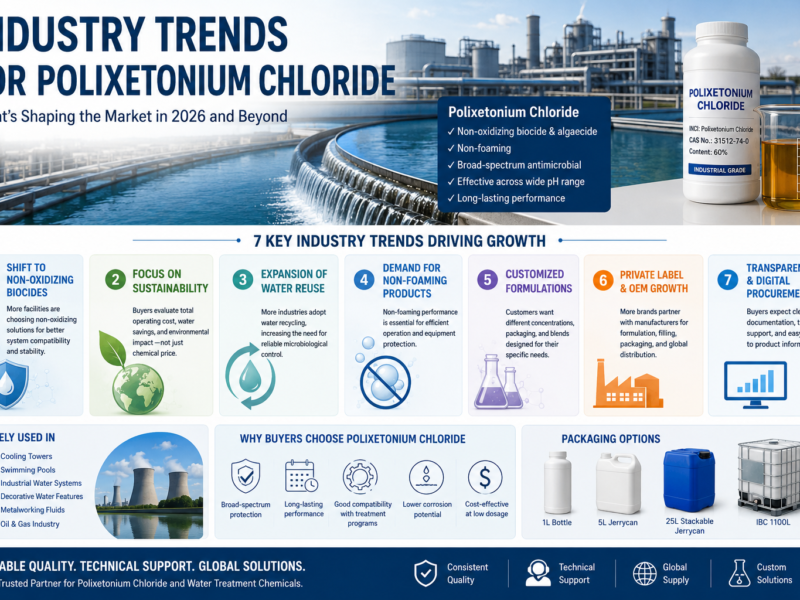
Infographic illustrating the 2026 industry trends for Polixetonium Chloride, including sustainability, water reuse, non-foaming performance, OEM manufacturing, digital procurement, industrial applications, and available packaging from 1L bottles to 1000L IBC totes.

Industry Trends for Polixetonium Chloride: What’s Shaping the Market in 2026 and Beyond

Outline Industry Trends for Polixetonium Chloride: What’s Shaping the Market in 2026 and Beyond Industrial water treatment isn’t standing still. Rising water costs, stricter environmental regulations, and higher expectations for system reliability are changing how companies select biocides. One product that continues to attract attention is Polixetonium Chloride. Once known...
Read More
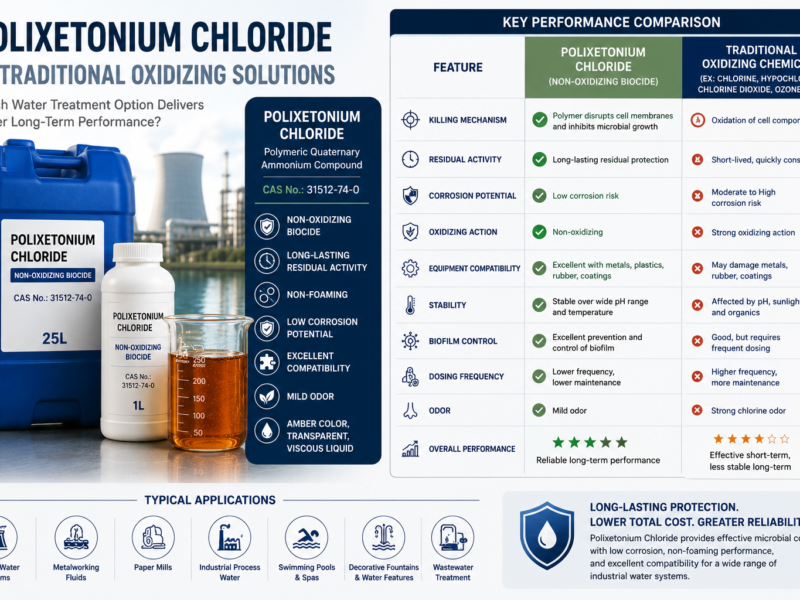
nfographic comparing Polixetonium Chloride with traditional oxidizing water treatment solutions across residual activity, corrosion, foaming, biofilm control, equipment compatibility, odor, stability, and maintenance requirements.

Polixetonium Chloride vs Traditional Oxidizing Solutions

Outline Polixetonium Chloride vs Oxidizing Traditional Solutions: Which Water Treatment Option Delivers Better Long-Term Performance? Water treatment has changed a lot over the past few decades. Facilities no longer focus only on killing algae or bacteria—they also care about operating costs, equipment protection, environmental impact, and system stability. That raises...
Read More
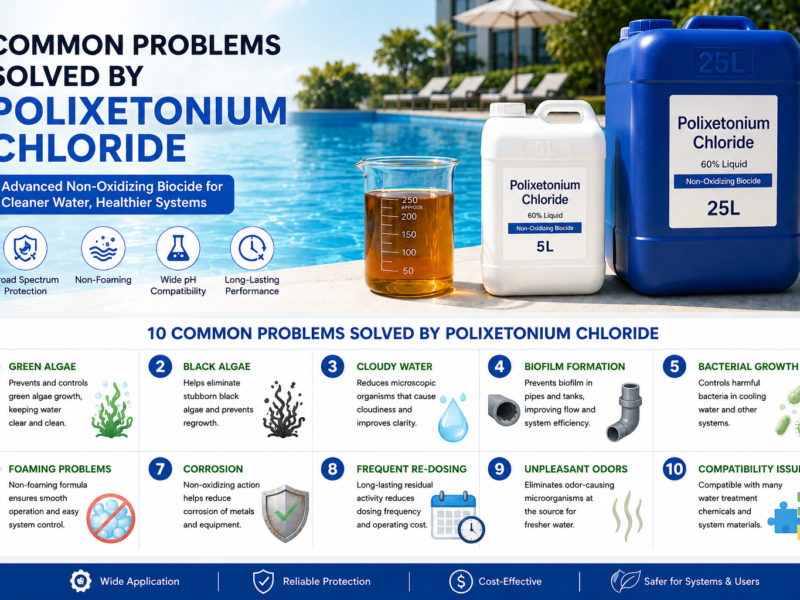
Transparent amber Polixetonium Chloride solution in laboratory glassware and industrial containers beside a crystal-clear swimming pool, illustrating solutions for algae and microbial control.

Common Problems Solved by Polixetonium Chloride

Outline Common Problems Solved by Polixetonium Chloride If you’ve ever dealt with algae-covered swimming pools, bacteria in industrial water systems, or unpleasant biofilm buildup, you already know one thing—these problems rarely disappear on their own. Traditional oxidizing chemicals often solve one issue while creating another. They may increase corrosion, generate...
Read More
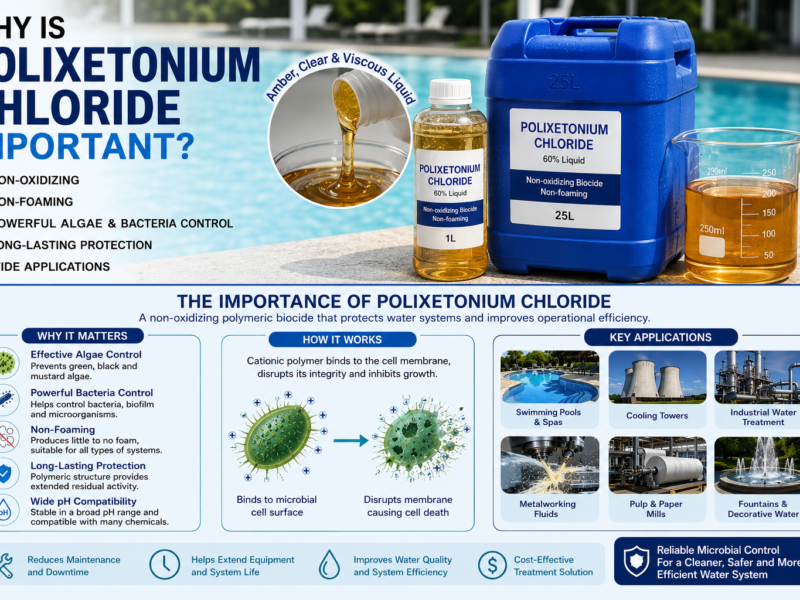
Why Is Polixetonium Chloride Important

Why Is Polixetonium Chloride Important?

Outline Why Is Polixetonium Chloride Important? The Science Behind a Small Molecule with a Big Impact When people think about water treatment chemicals, they often picture chlorine, bromine, or other familiar disinfectants. Yet many professionals working in industrial water treatment, swimming pool maintenance, and process water management rely on another...
Read More
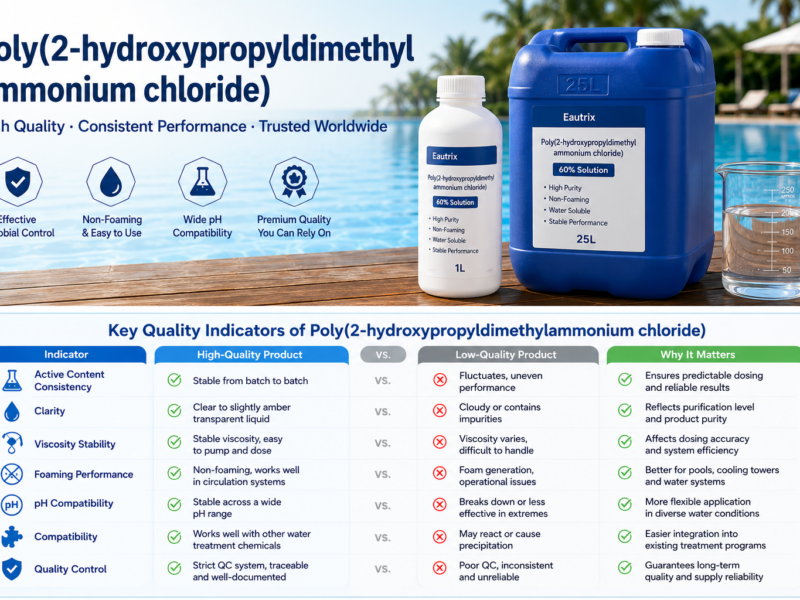
What Makes High-Quality Poly(2-hydroxypropyldimethylammonium chloride)

What Makes High-Quality Poly(2-hydroxypropyldimethylammonium chloride)

Outline What Makes High-Quality Poly(2-hydroxypropyldimethylammonium chloride)? A Buyer’s Complete Guide When you’re sourcing Poly(2-hydroxypropyldimethylammonium chloride), the lowest quotation rarely tells the whole story. Two suppliers may offer products with nearly identical specifications on paper. Both list a similar solid content. Both promise excellent antimicrobial performance. Both provide a COA. Yet...
Read More