
GET IN TOUCH
Ask For Sample?
Why Is Polixetonium Chloride Important? The Science Behind a Small Molecule with a Big Impact
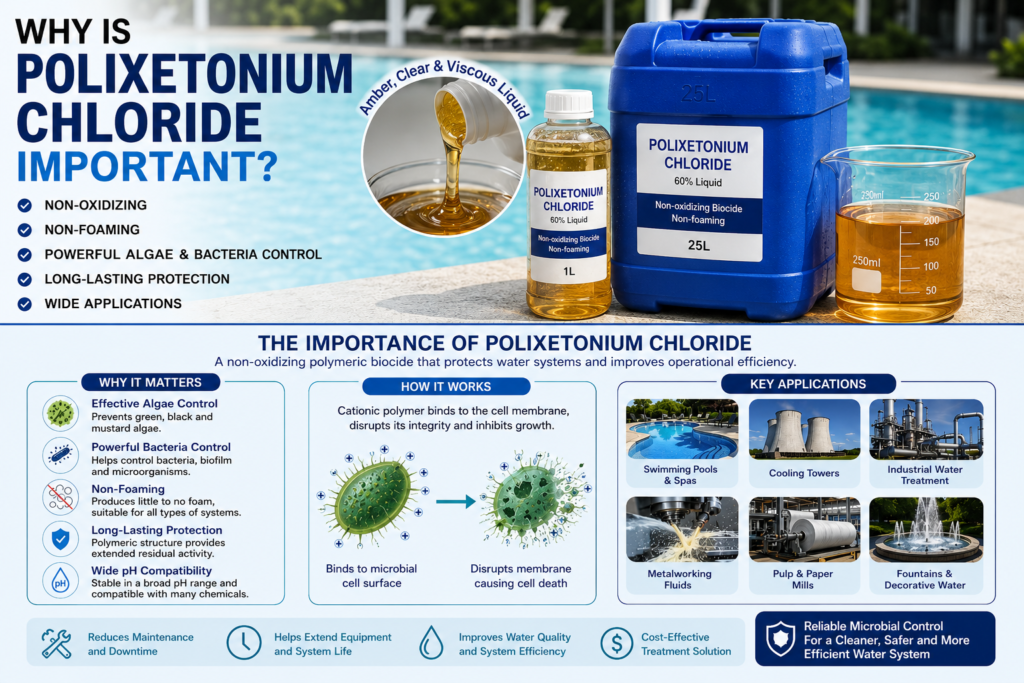
When people think about water treatment chemicals, they often picture chlorine, bromine, or other familiar disinfectants. Yet many professionals working in industrial water treatment, swimming pool maintenance, and process water management rely on another chemistry that’s far less famous—but incredibly effective.
That chemistry is Polixetonium Chloride.
Despite its long chemical name, Polixetonium Chloride has become one of the most trusted non-oxidizing polymeric biocides available. It helps keep water clean, prevents algae growth, controls bacteria, and extends the life of water systems—all while producing little or no foam and remaining compatible with many common treatment chemicals.
So why has it become so important?
Let’s break it down.
What Is Polixetonium Chloride?
Polixetonium Chloride is a cationic polymeric quaternary ammonium compound designed to control microorganisms in water systems.
Unlike oxidizing disinfectants that attack microbes through chemical oxidation, Polixetonium Chloride works by interacting directly with microbial cell membranes.
Typical characteristics include:
- Amber transparent liquid
- Non-oxidizing antimicrobial polymer
- Non-foaming formulation
- Stable over a wide pH range
- Compatible with many water treatment programs
- Long-lasting residual activity
Because it is polymeric rather than a small molecule, it remains active longer in many water systems and is less likely to evaporate or disappear quickly after dosing.
Why Has Polixetonium Chloride Become So Important?
The simple answer?
It solves several common water treatment problems at the same time.
Many conventional disinfectants work well—but each has limitations.
For example:
- Chlorine can be consumed rapidly by sunlight.
- Some algaecides stain pool surfaces because they contain copper.
- Certain quaternary ammonium compounds generate excessive foam.
- Oxidizing biocides may corrode sensitive equipment.
Polixetonium Chloride addresses many of these issues simultaneously.
That’s one reason why professionals continue to use it year after year.
It Controls Algae Without Creating Foam
Anyone who has managed a swimming pool knows how frustrating algae can be.
Green water.
Slippery walls.
Blocked filters.
Increased chlorine demand.
The problem isn’t simply appearance—algae can quickly upset the entire water balance.
Polixetonium Chloride effectively prevents algae from reproducing while producing non-foaming performance, making it especially suitable for:
- Residential swimming pools
- Commercial pools
- Hotel pools
- Water parks
- Decorative fountains
- Spa systems with appropriate formulations
Compared with many traditional quaternary ammonium algaecides, polymeric chemistry produces far less surface foam.
That alone saves maintenance time.
It Provides Long-Lasting Protection
One feature professionals appreciate is its persistence.
Because Polixetonium Chloride is a polymer, it tends to remain active longer than many conventional antimicrobial chemicals.
This means:
- Less frequent dosing
- More stable microbial control
- Better prevention instead of emergency treatment
- Lower overall chemical consumption
Rather than constantly reacting after contamination occurs, operators can maintain a preventative treatment program.
That’s usually more economical over the long term.
It Works Across Multiple Industries
One reason Polixetonium Chloride continues gaining popularity is its versatility.
Instead of serving one narrow application, it appears in many industries.
Swimming Pool Chemicals
Perhaps its best-known application is premium pool algaecides.
Benefits include:
- Prevents green algae
- Helps control black algae
- Compatible with chlorine programs
- Does not contain metals
- Non-staining
- Non-foaming
Industrial Water Treatment
Cooling towers provide ideal conditions for microbial growth.
Unchecked microorganisms can cause:
- Biofilm formation
- Reduced heat transfer
- Increased energy consumption
- Corrosion
- Equipment fouling
Polixetonium Chloride helps minimize these risks by controlling microbial populations before they become severe.
Industrial Process Water
Many manufacturing facilities circulate large volumes of water.
Examples include:
- Paper production
- Textile processing
- Chemical manufacturing
- Food processing (where permitted under applicable regulations)
- General industrial utilities
Consistent microbial control improves system reliability and reduces maintenance costs.
Metalworking Fluids
Metalworking emulsions are especially vulnerable to bacterial contamination.
Poor microbial control often results in:
- Bad odors
- Reduced fluid life
- Worker complaints
- Lower machining quality
Adding an appropriate antimicrobial program can significantly improve fluid stability.
It Helps Reduce Maintenance Costs
Here’s something many facility managers appreciate.
Chemical costs rarely represent the largest expense.
Downtime does.
Replacing clogged filters.
Cleaning biofilm.
Removing algae.
Repairing corroded equipment.
These activities cost labor, time, and production capacity.
Preventing microbial growth early often costs far less than fixing the consequences later.
That’s where Polixetonium Chloride delivers value.
It Is Compatible with Modern Water Treatment Programs
Water treatment rarely depends on one chemical.
Instead, facilities combine multiple products.
These may include:
- Chlorine
- Bromine
- Scale inhibitors
- Corrosion inhibitors
- Clarifiers
- Flocculants
- pH adjusters
Polixetonium Chloride generally integrates well into comprehensive treatment programs when used according to manufacturer recommendations.
This flexibility makes system design much easier.
Environmental and Operational Advantages
Many operators are shifting away from aggressive oxidizing chemistries whenever practical.
Why?
Because they want:
- Longer equipment life
- Better operator safety
- Stable water chemistry
- Lower maintenance frequency
- Improved user experience
Since Polixetonium Chloride is non-oxidizing, it avoids some of the challenges associated with high oxidizer demand.
Of course, it isn’t intended to replace every disinfectant. Instead, it often complements existing treatment programs.
That balanced approach produces the best results.
Why Manufacturers Prefer Polymeric Chemistry
Polymeric biocides behave differently from conventional small-molecule disinfectants.
Their larger molecular structure allows them to:
- Attach effectively to microbial surfaces
- Disrupt cell membrane integrity
- Provide residual antimicrobial activity
- Reduce rapid depletion
Think of it like applying a protective coating rather than making a single quick cleaning pass.
The protection tends to last longer.
Choosing a High-Quality Polixetonium Chloride Supplier
Not all products perform equally.
Reliable manufacturers typically focus on:
- Consistent active content
- Stable viscosity
- High clarity
- Low impurity levels
- Excellent batch consistency
- Strict quality control
- Reliable technical documentation
- Flexible packaging options
Requesting documentation such as COA, SDS, and quality certificates helps buyers evaluate supplier reliability before purchasing.
Future Demand Continues to Grow
Several global trends support increasing demand for polymeric biocides.
These include:
- Expansion of industrial water recycling
- Higher standards for pool water quality
- Greater emphasis on preventive maintenance
- Increased demand for long-lasting antimicrobial solutions
- More efficient industrial water management
As facilities seek better performance with fewer operational challenges, non-oxidizing polymeric technologies are expected to play an even larger role.
Final Thoughts
Polixetonium Chloride may not receive the same public attention as chlorine or bromine, but professionals understand its value.
Its combination of effective algae control, broad antimicrobial performance, non-foaming behavior, and long-lasting residual activity makes it an important component of modern water treatment.
Whether it’s protecting a commercial swimming pool, maintaining an industrial cooling tower, or extending the life of metalworking fluids, this polymer helps operators reduce maintenance, improve water quality, and keep systems running efficiently.
As water treatment standards continue to evolve, Polixetonium Chloride is likely to remain a trusted solution for industries that need dependable microbial control without unnecessary complexity.
Frequently Asked Questions
1. Why is Polixetonium Chloride considered a non-oxidizing biocide?
Unlike chlorine or bromine, Polixetonium Chloride controls microorganisms by disrupting their cell membranes rather than oxidizing them. This provides effective antimicrobial action while helping reduce corrosion and excessive chemical demand.
2. Is Polixetonium Chloride suitable for swimming pools?
Yes. It is widely used in premium swimming pool algaecides because it provides effective algae prevention, produces little to no foam, is compatible with chlorine treatment programs, and does not contain metals that may stain pool surfaces.
3. What industries commonly use Polixetonium Chloride?
Common applications include swimming pools, industrial cooling towers, process water systems, paper manufacturing, textile processing, chemical plants, and metalworking fluid preservation.
4. How does Polixetonium Chloride compare with copper-based algaecides?
Polixetonium Chloride is metal-free, so it avoids the risk of copper staining on pool surfaces and equipment. It also offers non-foaming performance and long-lasting residual protection, making it a preferred option for many maintenance programs.
5. What should buyers look for when purchasing Polixetonium Chloride?
Look for suppliers that offer consistent active content, excellent batch-to-batch quality, low impurity levels, comprehensive technical documentation (such as COA and SDS), flexible packaging, and reliable technical support. These factors help ensure stable product performance in real-world applications.