GET IN TOUCH
Ask For Sample?
Who Uses Polixetonium Chloride?
If you’ve ever searched for Polixetonium Chloride, chances are you’ve seen plenty of information about its chemistry—but not much about who actually buys it.
That’s a shame because understanding the real users tells you far more than a chemical formula ever could.
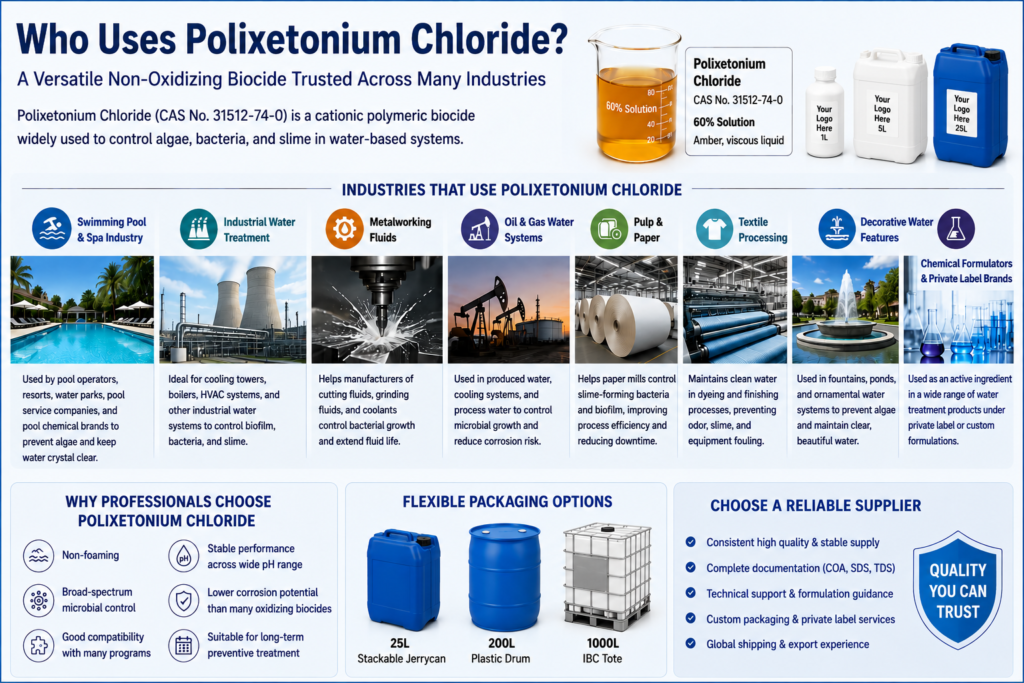
The truth is, Polixetonium Chloride (CAS No. 31512-74-0) has become a trusted non-oxidizing polymeric biocide across several industries. It’s valued because it helps control algae, bacteria, and slime without many of the drawbacks associated with traditional oxidizing chemicals.
So who relies on it every day?
Let’s take a closer look.
What Is Polixetonium Chloride?
Polixetonium Chloride is a cationic polymeric biocide designed to control microbial growth in water-based systems.
Unlike oxidizing biocides that attack microorganisms through chemical oxidation, Polixetonium Chloride works by interacting with negatively charged microbial cell membranes. This disrupts their normal function and prevents further growth.
The result?
- Long-lasting microbial control
- Non-foaming performance
- Good compatibility with many treatment programs
- Stable performance across a relatively wide pH range
- Lower corrosion potential than many oxidizing treatments
These characteristics explain why professionals in several industries continue to use it year after year.
Swimming Pool and Spa Professionals
Perhaps the best-known application is swimming pool water treatment.
Pool operators need an algaecide that keeps water clean without creating excessive foam or causing metal staining.
Typical users include:
- Commercial swimming pool operators
- Hotel and resort maintenance teams
- Water parks
- Pool service companies
- Pool chemical distributors
- Private-label pool chemical brands
Because Polixetonium Chloride remains active for extended periods, it is commonly used as both a routine maintenance algaecide and, depending on the formulation, in seasonal pool-closing products.
Many manufacturers formulate concentrated products around 60% active ingredient, which can later be diluted into retail-ready pool products.
Industrial Water Treatment Companies
Industrial water systems constantly battle biological contamination.
Warm water encourages microorganisms to multiply, eventually producing slime and biofilms that reduce heat-transfer efficiency and increase maintenance costs.
Common users include:
- Cooling tower operators
- Manufacturing plants
- Chemical factories
- HVAC water treatment contractors
- Industrial water treatment service providers
In these environments, Polixetonium Chloride is often incorporated into broader water-treatment programs alongside corrosion inhibitors and scale inhibitors. The exact treatment program depends on system design and local operating conditions.
Metalworking Fluid Manufacturers
Metalworking fluids provide an excellent environment for bacterial growth.
Without proper preservation, cutting fluids may develop:
- Bad odors
- Reduced tool life
- Lower fluid stability
- Increased maintenance requirements
Manufacturers of:
- Cutting fluids
- Grinding fluids
- Machining coolants
- Water-based lubricants
may incorporate polymeric biocides where appropriate to help control microbial growth and extend fluid service life. Product selection depends on formulation compatibility and regulatory requirements in the target market.
Oil and Gas Water Treatment Specialists
Water management is a major challenge in the oil and gas industry.
Produced water, storage systems, and cooling circuits can all support microbial growth if left untreated.
Users may include:
- Oilfield chemical companies
- Produced water treatment contractors
- Refinery water-treatment teams
- Industrial chemical formulators
Because every system is different, treatment programs are usually developed based on water chemistry, microbial populations, and local regulations.
Pulp and Paper Mills
Paper manufacturing uses enormous quantities of water.
That also means ideal conditions for:
- Slime-forming bacteria
- Biofilm development
- Process contamination
Paper producers and specialty chemical suppliers may use polymeric biocides as part of integrated microbial control strategies to help maintain cleaner process water and reduce unplanned downtime.
Textile Manufacturers
Textile processing often involves large recirculating water systems.
Microbial contamination can lead to:
- Unpleasant odors
- Equipment fouling
- Reduced process efficiency
- Increased cleaning frequency
Some textile chemical suppliers include polymeric biocides in water-treatment programs where they are compatible with the process and permitted by local regulations.
Decorative Fountains and Water Features
Clear ornamental water is more difficult to maintain than it looks.
Municipal facilities, hotels, shopping centers, and commercial buildings often need to prevent algae growth while preserving the appearance of decorative fountains.
Typical users include:
- Facility management companies
- Landscape maintenance contractors
- Fountain service providers
- Commercial property managers
Proper treatment helps keep water visually appealing and can reduce cleaning frequency.
Chemical Manufacturers and Private Label Brands
Many companies that purchase Polixetonium Chloride never sell it under that name.
Instead, they formulate it into finished products marketed as:
- Pool algaecides
- Industrial biocides
- Water treatment concentrates
- Maintenance chemicals
- Private-label formulations
These companies often purchase bulk quantities in:
- 25 L jerrycans
- 200 L drums
- 1,000 L IBC totes
before packaging them under their own brands.
Why Professionals Continue Choosing Polixetonium Chloride
Across industries, users often value several practical advantages:
- Non-foaming performance
- Broad-spectrum activity against many microorganisms
- Good compatibility with many water-treatment programs
- Lower corrosion potential than many oxidizing biocides
- Suitable for long-term preventive treatment in many water systems
- Available in concentrated formulations that support flexible downstream blending
The best choice always depends on the specific application, water chemistry, and applicable regulations, so treatment programs should be designed accordingly.
How to Choose a Reliable Polixetonium Chloride Supplier
Not every supplier offers the same level of consistency.
When evaluating manufacturers, consider:
- Consistent active content
- Stable viscosity from batch to batch
- Clear quality documentation (such as COA and SDS)
- Flexible packaging options
- Technical support for formulation and application
- Experience supplying international markets
- Ability to provide customized concentrations or private-label services, if needed
A reliable supplier helps reduce variability and supports more consistent product performance.
Final Thoughts
Polixetonium Chloride serves a remarkably broad customer base—from swimming pool professionals and industrial water-treatment providers to metalworking fluid manufacturers, paper mills, and chemical formulators.
Its popularity comes from practical benefits rather than marketing claims. Users appreciate its ability to help control microbial growth, its non-foaming characteristics, and its compatibility with many water-treatment programs.
As industries continue to seek effective and flexible microbial control solutions, polymeric biocides like Polixetonium Chloride are likely to remain an important option where they meet technical and regulatory requirements.
Frequently Asked Questions
1. Who is the largest user of Polixetonium Chloride?
The swimming pool industry and industrial water treatment sector are among the largest users, particularly for algae and microbial control in recirculating water systems.
2. Is Polixetonium Chloride only used in swimming pools?
No. It is also used in industrial cooling systems, metalworking fluids, pulp and paper processing, textile manufacturing, decorative water features, and by chemical formulators for various water-treatment products.
3. Why do manufacturers prefer polymeric biocides?
Many manufacturers value polymeric biocides because they can provide effective microbial control with non-foaming performance and good compatibility with many water-treatment formulations.
4. Can Polixetonium Chloride be supplied under a private label?
Yes. Many manufacturers offer bulk supply for downstream blending, as well as custom packaging and private-label manufacturing services.
5. What packaging options are commonly available for bulk buyers?
Common industrial packaging includes 25 L jerrycans, 200 L drums, and 1,000 L IBC totes, although packaging options vary by supplier and customer requirements.