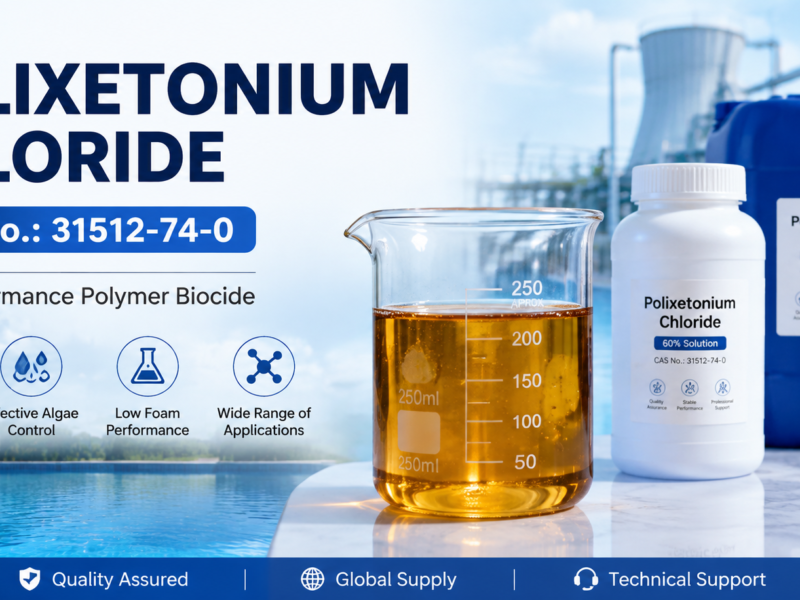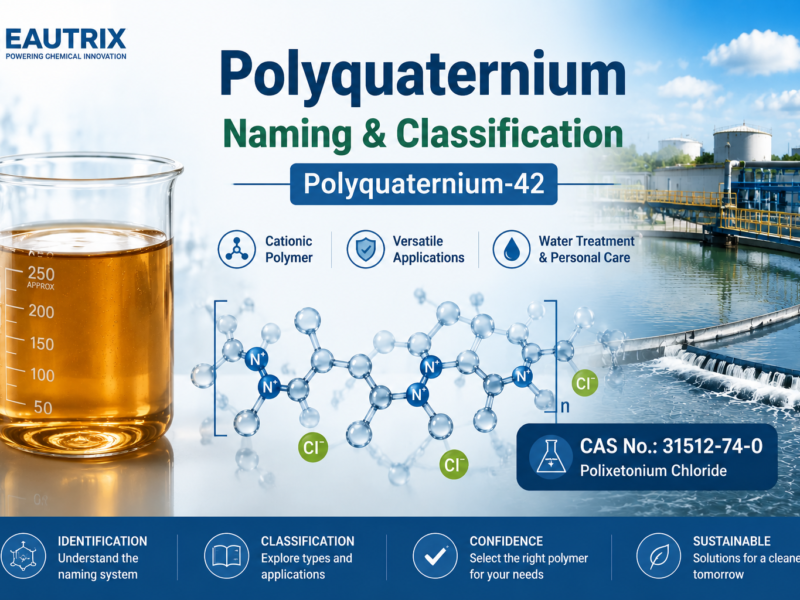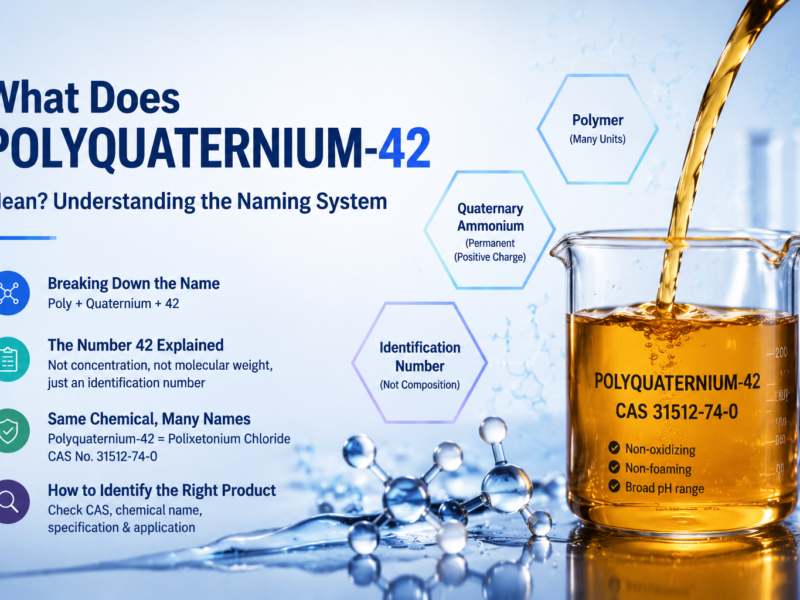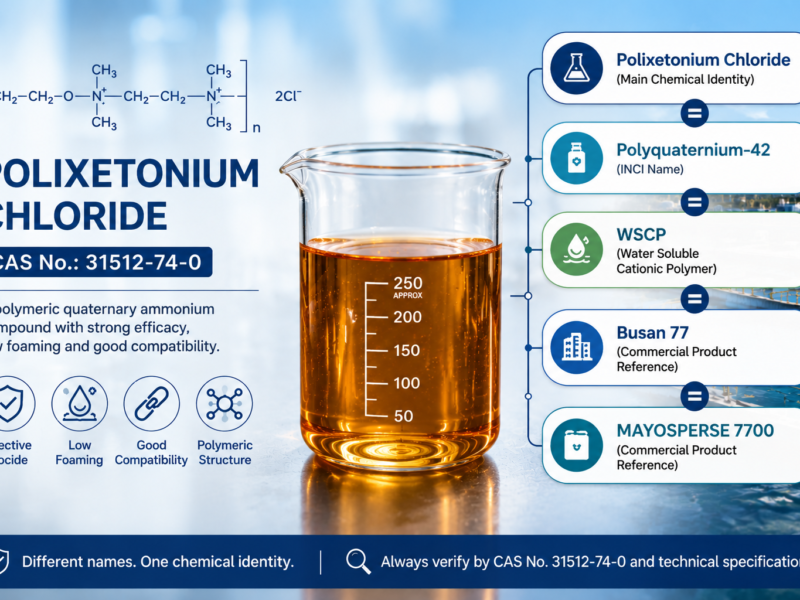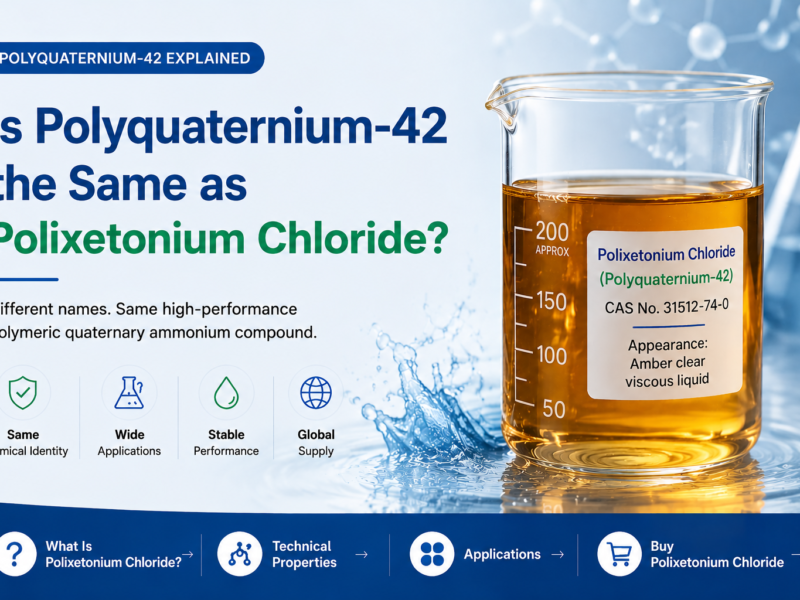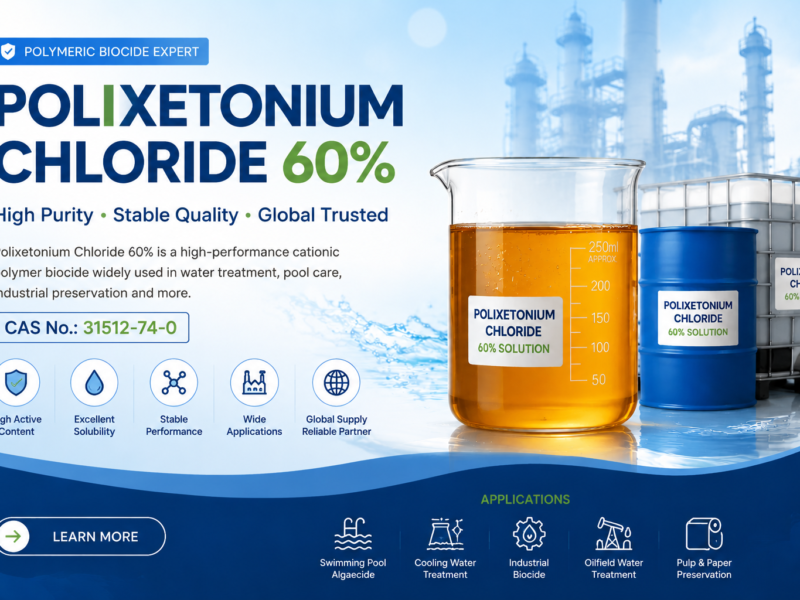
Quality standards for Polixetonium Chloride illustrated with an amber-colored clear viscous liquid in a laboratory beaker alongside 5L, 25L, and 1000L IBC packaging, highlighting consistent active content, viscosity control, non-foaming performance, and reliable water treatment applications.

Quality Standards for Polixetonium Chloride

Outline Quality Standards for Polixetonium Chloride Have you ever noticed that two products labeled Polixetonium Chloride 60% can perform very differently in the same water treatment system? One controls algae for weeks. Another requires higher dosages and still delivers inconsistent results. At first glance, both products appear identical. They may...
Read More
Infographic showing case studies of Polixetonium Chloride applications, featuring an amber-colored transparent viscous liquid and its use in cooling water systems, industrial water recirculation, swimming pool algae control, and metalworking fluid preservation.

Case Studies of Polixetonium Chloride Applications

Outline Case Studies of Polixetonium Chloride Applications When people evaluate a water treatment chemical, laboratory data is only part of the picture. The real question is much simpler: How does it perform in actual applications? That’s where case studies become valuable. They show how a product behaves under practical operating...
Read More
Wide banner showing Polixetonium Chloride (CAS No. 31512-74-0) in an amber-colored clear viscous liquid alongside industrial water treatment equipment, illustrating how the non-foaming polymeric biocide improves process efficiency, reduces downtime, and supports stable system operation

How Polixetonium Chloride Improves Process Efficiency

Outline How Polixetonium Chloride Improves Process Efficiency Every industrial water system has the same goal: keep production running smoothly while minimizing downtime, maintenance, and operating costs. That sounds simple. In reality, microorganisms, algae, slime, and biofilm constantly work against that goal. Once biofilm begins to develop, heat transfer becomes less...
Read More
Compatibility of Polixetonium Chloride (CAS No. 31512-74-0) with other water treatment chemicals, featuring an amber transparent viscous liquid in a laboratory beaker and highlighting compatibility with most treatment programs while advising caution with strong anionic chemicals

Compatibility of Polixetonium Chloride with Other Chemicals

Outline Compatibility of Polixetonium Chloride with Other Chemicals Polixetonium Chloride (CAS No. 31512-74-0) has become a popular non-oxidizing biocide for industrial water treatment, cooling water systems, swimming pools, decorative fountains, and various recirculating water applications. Its broad-spectrum antimicrobial activity, non-foaming performance, and excellent stability make it a reliable choice for...
Read More
Performance comparison infographic showing Polixetonium Chloride versus conventional water treatment biocides, including benzalkonium chloride (BKC), isothiazolinones, glutaraldehyde, DBNPA, and chlorine/bromine, with comparisons of algae control, bacteria control, foaming, residual activity, chlorine compatibility, corrosion tendency, and typical applications.

Performance Comparison: Polixetonium Chloride vs Conventional Water Treatment Biocides

Outline Performance Comparison: Polixetonium Chloride vs Conventional Water Treatment Biocides Choosing a water treatment biocide isn’t as simple as comparing price tags or reading a product label. Every water system behaves differently, and every biocide has its own strengths, limitations, and ideal applications. Some products are designed to eliminate bacteria...
Read More
Polixetonium Chloride (CAS No. 31512-74-0) infographic showing the top five benefits of this non-oxidizing biocide, including broad-spectrum microbial control, non-foaming performance, long-lasting activity, compatibility with common water treatment chemicals, and cost-effective water treatment performance.

Top 5 Advantages of Polixetonium Chloride

Outline Top 5 Advantages of Polixetonium Chloride When selecting a non-oxidizing biocide for industrial water treatment or swimming pool applications, performance matters—but so do stability, compatibility, and long-term operating costs. That’s exactly why Polixetonium Chloride has become a trusted choice across many industries. Unlike oxidizing biocides that work quickly and...
Read More
Banner infographic showing common mistakes when using Polixetonium Chloride (CAS No. 31512-74-0), featuring an amber transparent viscous liquid in a laboratory beaker alongside industrial water treatment facilities, with key application tips for improving biocide performance and system protection.

Common Mistakes When Using Polixetonium Chloride

Outline Common Mistakes When Using Polixetonium Chloride Water treatment professionals often choose Polixetonium Chloride (CAS No. 31512-74-0) because it provides reliable, non-foaming control of algae, bacteria, and slime-forming microorganisms across many industrial and commercial water systems. When applied correctly, it offers long-lasting protection while helping reduce maintenance costs. Yet here’s...
Read More
Comprehensive infographic explaining Polixetonium Chloride (CAS No. 31512-74-0), a non-oxidizing, non-foaming polymeric biocide for industrial water treatment, featuring its chemical properties, antimicrobial mechanism, key applications in cooling water and metalworking fluids, performance advantages, product selection guide, storage recommendations, and packaging options including an amber liquid sample bottle and a 1000L IBC tote.

Everything You Need to Know About Polixetonium Chloride

Outline Everything You Need to Know About Polixetonium Chloride Whether you’re treating industrial cooling water, preserving metalworking fluids, or looking for a reliable non-oxidizing biocide, you’ve probably come across Polixetonium Chloride. But what exactly is it? Why has it remained a trusted solution for decades while many other water treatment...
Read More