
GET IN TOUCH
Ask For Sample?
Polyquaternium-42 CAS Number, Chemical Name, and Synonyms Explained
When searching for Polyquaternium-42, buyers often encounter a surprising number of different names.
One supplier may mention Polyquaternium-42, another may list Polixetonium Chloride, while technical documents may use a much longer chemical description such as Poly[oxyethylene(dimethyliminio)ethylene(dimethyliminio)ethylene dichloride].
So, what exactly is Polyquaternium-42?
Is it a unique chemical, or simply another name used by different industries?
The answer is closely related to how chemical naming systems work. A single polymer can have different names depending on whether the document comes from a regulatory database, a technical specification sheet, a cosmetic ingredient list, or an industrial application guide.
Understanding these names is not just a chemistry exercise. For buyers, distributors, and formulators, knowing the correct identity of a material helps avoid purchasing mistakes, documentation problems, and unexpected performance differences.
In this article, we will explain the Polyquaternium-42 CAS number, chemical name, and commonly used synonyms, helping you understand how these names connect.
1. What Is Polyquaternium-42?
Polyquaternium-42 is a cationic polymer, meaning the polymer chain contains positively charged functional groups.
The word “cationic” simply means the material carries a positive electrical charge when dissolved in water. This property allows Polyquaternium-42 to interact with negatively charged substances such as organic particles, microorganisms, and certain surfaces.
From a chemical perspective, Polyquaternium-42 belongs to the family of quaternary ammonium polymers, often called polymeric quats.
Unlike small-molecule quaternary ammonium compounds, polymeric quats have long molecular chains. This structure gives them different characteristics, including:
- Long-lasting surface interaction
- Strong adsorption ability
- Compatibility with various water treatment systems
- Low foaming behavior compared with many conventional quaternary ammonium compounds
Because of these properties, Polyquaternium-42 is commonly associated with applications such as:
- Industrial water treatment
- Cooling water systems
- Algae control
- Pool chemical formulations
- Microbial control applications
Among these applications, Polixetonium Chloride has become a widely discussed polymeric quat because of its role in long-lasting algae control and microbial management. To learn more about its characteristics, formulation considerations, and industrial uses, visit our complete introduction: What Is Polixetonium Chloride? A Complete Beginner’s Guide
For industrial buyers, Polyquaternium-42 is usually supplied as a concentrated liquid solution rather than a pure dry polymer.
2. Polyquaternium-42 CAS Number: The Key Identifier
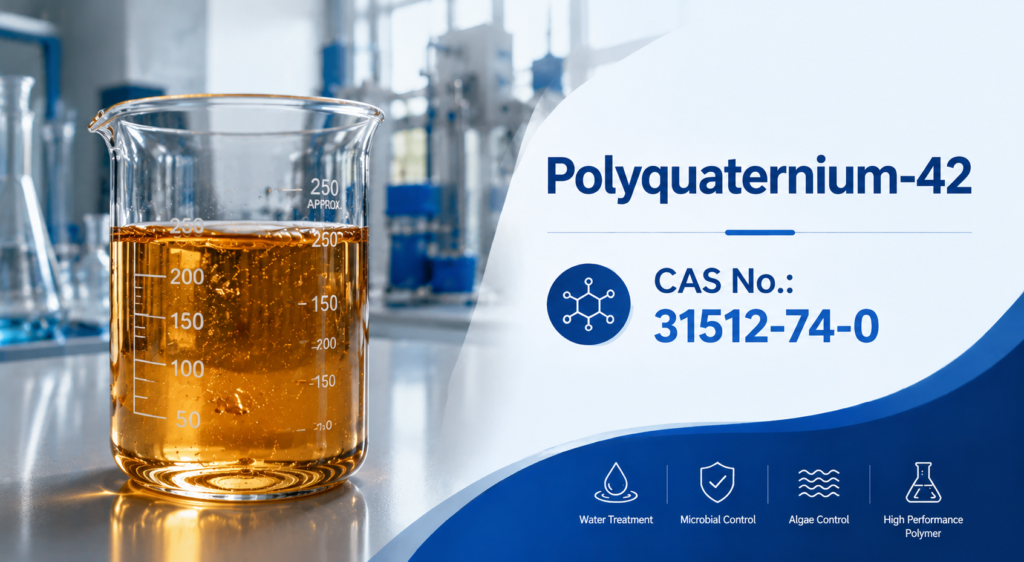
The CAS Number of Polyquaternium-42 is 31512-74-0.
CAS stands for Chemical Abstracts Service, which maintains a global database of chemical substances. A CAS number acts like a unique identification code for chemical materials.
Names can change.
Different countries may use different naming conventions. Different industries may prefer different descriptions. Trade names may also appear in commercial documents.
However, the CAS number provides a common reference point.
For buyers sourcing Polyquaternium-42, checking the CAS number is one of the first steps when reviewing technical documents.
Important documents where CAS numbers are commonly shown include:
- Safety Data Sheet (SDS)
- Certificate of Analysis (COA)
- Technical Data Sheet (TDS)
- Regulatory documents
- Import and export documentation
However, it is important to understand one point:
A CAS number helps identify a chemical substance, but it does not automatically guarantee product quality.
Two suppliers may provide materials with the same CAS number but different specifications, such as:
- Active content
- Molecular weight range
- Viscosity
- Purity
- Appearance
- Performance characteristics
That is why professional buyers usually evaluate both chemical identity and product specifications.
3. Understanding the Chemical Name of Polyquaternium-42
The chemical name commonly associated with Polyquaternium-42 is:
Poly[oxyethylene(dimethyliminio)ethylene(dimethyliminio)ethylene dichloride]
At first glance, this name looks extremely complicated.
But chemical names often describe the building blocks of a molecule rather than providing an easy-to-read product description.
Let’s break it down.
“Poly”
The prefix “poly” indicates that the material is a polymer.
A polymer consists of many repeating molecular units connected together to form a larger structure.
Think of a polymer like a long necklace. Each bead represents a repeating unit, and thousands of beads together create the final material.
“Oxyethylene”
This describes part of the repeating molecular structure containing oxygen and ethylene groups.
These sections contribute to the overall characteristics of the polymer chain.
“Dimethyliminio”
This part relates to the positively charged quaternary ammonium groups.
These charged groups are responsible for the cationic nature of Polyquaternium-42.
“Dichloride”
The chloride ions are associated with the positively charged polymer structure and balance the electrical charge.
Although the chemical name is useful for technical identification, most industrial users do not communicate using the full systematic name every day.
That is why shorter names such as Polyquaternium-42 or Polixetonium Chloride are commonly used.
4. Common Synonyms of Polyquaternium-42
One reason buyers become confused is that Polyquaternium-42 appears under different names in different industries.
Below are some commonly encountered names.
| Name | Typical Usage |
|---|---|
| Polyquaternium-42 | Industry and ingredient naming |
| Polixetonium Chloride | Chemical and regulatory name |
| Poly[oxyethylene(dimethyliminio)ethylene(dimethyliminio)ethylene dichloride] | Full chemical description |
| WSCP | Industrial water treatment abbreviation |
| Polyquat 60 | Pool and algae control terminology |
| Algaecide 60 | Commercial application description |
These names generally refer to the same polymer identity when they correspond to CAS No. 31512-74-0.
However, buyers should be careful with commercial names.
Some names used in the market may represent specific formulations, suppliers, or registered products rather than the chemical itself.
For example, certain trade names are associated with particular manufacturers or product lines. They should not automatically be treated as generic chemical names.
When purchasing, the safest approach is to confirm:
- CAS number
- Chemical name
- Active content
- Technical specification
- Supplier documentation
5. Why Does Polyquaternium-42 Have Multiple Names?
You may wonder:
“Why can’t the chemical industry just use one name?”
It sounds simple, but chemical naming is influenced by history, industry habits, and regulations.
Different naming systems serve different purposes.
Regulatory Names
Regulatory documents often prefer systematic chemical names because they provide detailed chemical descriptions.
Industry Names
Industrial users usually prefer shorter names that are easier to communicate.
For example, a water treatment professional may say:
“We need Polyquat 60 for algae control.”
A chemist preparing technical documentation may write:
“Poly[oxyethylene(dimethyliminio)ethylene(dimethyliminio)ethylene dichloride].”
Both are describing the same chemical family.
Marketing Names
Commercial products may use brand names to distinguish products in the marketplace.
This is common in almost every chemical industry.
The key point is simple:
A name alone does not tell the whole story.
The CAS number, specifications, and documentation together provide a clearer chemical identity.
6. Polyquaternium-42 vs Polixetonium Chloride: Understanding the Connection
Many buyers ask:
“Is Polyquaternium-42 the same as Polixetonium Chloride?”
In many technical and commercial contexts, these two names refer to the same polymer.
Polyquaternium-42 is a naming designation commonly recognized in certain ingredient and industry contexts, while Polixetonium Chloride is widely used as the chemical name.
Both are associated with:
CAS No.: 31512-74-0
For a more detailed explanation of why these two names are used differently, you can read our article:
Is Polyquaternium-42 the Same as Polixetonium Chloride?
Understanding this connection helps buyers search more effectively.
A customer looking for “Polyquaternium-42” may actually need “Polixetonium Chloride,” and a buyer searching for “Polixetonium Chloride” may find suppliers listing the material as “Polyquaternium-42.”
7. How Buyers Can Identify Genuine Polyquaternium-42
When sourcing Polyquaternium-42, relying only on the product name is risky.
A professional purchasing process usually checks several points.
For industrial buyers, chemical identity is only the first step. Product performance also depends on factors such as active content, viscosity, compatibility, and application conditions. Before selecting a supplier, it is important to understand how Polyquaternium-42 performs under different operating environments. Learn more in our technical article: Technical Properties of Polixetonium Chloride
1. Confirm the CAS Number
The first step is confirming:
CAS No.: 31512-74-0
This helps ensure the material matches the intended chemical identity.
2. Review Technical Specifications
Important parameters may include:
- Active content
- Appearance
- pH value
- Density
- Viscosity
- Storage requirements
For example, industrial Polyquaternium-42 is commonly supplied as a clear amber-colored viscous liquid solution.
3. Check Quality Documents
Reliable suppliers should be able to provide:
- SDS
- COA
- Technical Data Sheet
These documents help buyers evaluate whether the product matches their application.
4. Understand the Application
The same chemical may be evaluated differently depending on its final use.
A pool chemical distributor may focus on algae control performance.
A cooling water company may focus on microbial control, compatibility, and long-term stability.
A formulator may focus on concentration, viscosity, and blending performance.
The “right” Polyquaternium-42 is not only about chemical identity — it is also about matching the right specification to the final application.
8. Why Chemical Identification Matters When Sourcing Polyquaternium-42
Chemical purchasing is not only about finding the lowest price.
A small difference in product identity or specification can create major problems later.
Imagine receiving a shipment that has the correct name on the label but does not perform as expected.
The result?
- Production delays
- Reformulation work
- Customer complaints
- Additional testing costs
That is why experienced buyers pay attention to details before placing an order.
A reliable supplier should provide clear information about:
- Chemical identity
- CAS number
- Product specification
- Packaging options
- Technical support
For companies purchasing Polyquaternium-42 internationally, transparency matters.
Frequently Asked Questions
1. What is the CAS number of Polyquaternium-42?
The CAS number of Polyquaternium-42 is 31512-74-0. This number is commonly used to identify the polymer in technical and regulatory documents.
2. Is Polyquaternium-42 the same as Polixetonium Chloride?
Yes, Polyquaternium-42 and Polixetonium Chloride commonly refer to the same polymer associated with CAS No. 31512-74-0. The difference mainly comes from different naming systems.
3. What is the chemical name of Polyquaternium-42?
The chemical name of Polyquaternium-42 is Poly[oxyethylene(dimethyliminio)ethylene(dimethyliminio)ethylene dichloride].
4. What are the common synonyms of Polyquaternium-42?
Common synonyms include Polixetonium Chloride, WSCP, Polyquat 60, and the full chemical name. Buyers should always confirm the CAS number when comparing products.
5. How can buyers verify Polyquaternium-42 quality before purchasing?
Buyers should review the CAS number, SDS, COA, technical specifications, and supplier documentation before purchasing Polyquaternium-42.