GET IN TOUCH
Ask For Sample?
Why Is Polixetonium Chloride Also Known as Polyquaternium-42?
Have you ever searched for a chemical product and suddenly found three, four, or even ten different names describing what seems to be the same material?
You are not alone.
For many specialty chemicals, especially cationic polymers, naming can feel like solving a puzzle. One supplier may mention Polixetonium Chloride, another document may list Polyquaternium-42, while technical papers, regulatory files, or product labels may use completely different descriptions.
So, what is really going on?
Is Polixetonium Chloride different from Polyquaternium-42?
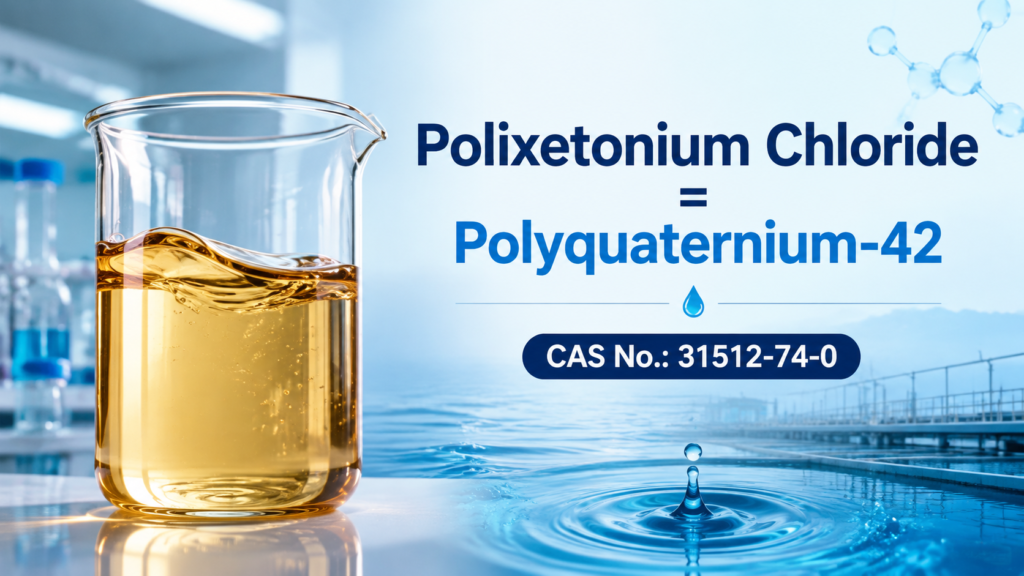
The short answer is: No. They refer to the same polymeric quaternary ammonium compound.
The difference comes from the naming system being used, not from the chemistry itself.
Understanding this naming relationship is extremely important for buyers, formulators, distributors, and water treatment professionals. Otherwise, you may spend hours comparing products that are actually the same material under different names.
The Same Chemical, Two Different Naming Systems
Chemicals often have multiple identities.
Think about a person who has a legal name, a nickname, and a professional title. Your passport may show one name, your friends may use another, and your workplace may know you by a job title.
Chemicals work in a surprisingly similar way.
A single substance can have:
- A systematic chemical name describing its molecular structure
- A common industry name
- A regulatory name
- An INCI name used in cosmetics
- A commercial product name from manufacturers
Polixetonium Chloride and Polyquaternium-42 are a perfect example of this situation.
Both names describe the same type of cationic polymer, but they come from different naming traditions.
What Is Polixetonium Chloride?
Polixetonium Chloride is a polymeric quaternary ammonium compound widely used as a non-oxidizing biocide and algae control agent.
If you are new to this material and want to understand its basic chemistry, applications, and common uses before exploring its different names, you can read our guide on What Is Polixetonium Chloride? A Complete Beginner’s Guide.
Its chemical name is:
Poly[oxyethylene(dimethyliminio)ethylene(dimethyliminio)ethylene dichloride]
Although this name looks complicated, the chemistry behind it follows a simple idea.
The polymer contains positively charged quaternary ammonium groups along its backbone. These permanent positive charges allow the polymer to interact strongly with negatively charged surfaces, including:
- Algae cell membranes
- Microbial surfaces
- Organic particles
- Suspended contaminants
Because of this structure, Polixetonium Chloride is commonly used in applications such as:
- Industrial water treatment
- Cooling water systems
- Swimming pool algae control
- Metalworking fluid preservation
- Specialty antimicrobial formulations
Commercially, it is often supplied as a concentrated liquid solution, commonly around 60% active content.
The material usually appears as a clear amber-colored viscous liquid.
What Does Polyquaternium-42 Mean?
Now comes the interesting part.
Polyquaternium-42 is not a completely different chemical.
It is a naming designation created under the Polyquaternium classification system, mainly associated with cosmetic and personal care ingredients.
You may already know ingredients such as:
- Polyquaternium-7
- Polyquaternium-10
- Polyquaternium-37
- Polyquaternium-42
These numbers do not represent concentration, molecular weight, or performance level.
Instead, the number simply identifies a specific polymer registered within the Polyquaternium family.
So when you see:
Polyquaternium-42
the number “42” is simply its assigned identification number within this naming system.
It does not mean:
- 42% concentration
- 42 molecular units
- 42% active ingredient
This misunderstanding happens quite often among new buyers.
Why Are Polixetonium Chloride and Polyquaternium-42 Considered the Same Material?
The reason is straightforward:
They describe the same polymer structure under different naming conventions.
Polixetonium Chloride is the chemical and industrial name.
Polyquaternium-42 is the recognized polymer classification name.
The relationship can be understood like this:
| Naming Type | Name |
|---|---|
| Chemical name | Poly[oxyethylene(dimethyliminio)ethylene(dimethyliminio)ethylene dichloride] |
| Industrial chemical name | Polixetonium Chloride |
| Polyquaternium designation | Polyquaternium-42 |
| CAS Number | 31512-74-0 |
The CAS number is especially important because it acts like a chemical fingerprint.
No matter whether a supplier writes:
- Polixetonium Chloride
- Polyquaternium-42
- Polyquat-42
- Polymeric quaternary ammonium compound
the CAS number helps confirm whether you are looking at the same substance.
For sourcing, always check the CAS number together with specifications.
How Chemical Names, INCI Names, and Trade Names Create Confusion
So why does the chemical industry make things so complicated?
Well, chemistry has a long history, and different industries developed their own languages.
This naming confusion is especially common in specialty chemicals, where one material may appear under chemical names, industry terms, or commercial references. To learn more about why Polixetonium Chloride appears under so many different names, see our detailed explanation: Why Does Polixetonium Chloride Have So Many Different Names?
A water treatment engineer and a cosmetic formulator may look at the same polymer from completely different perspectives.
A water treatment professional thinks about:
- Algae control efficiency
- Microbial reduction
- Compatibility with chlorine
- Long-term stability
A cosmetic formulator may focus on:
- Conditioning properties
- Film formation
- Hair or skin feel
Same polymer.
Different conversations.
That is why one industry may prefer Polixetonium Chloride, while another may prefer Polyquaternium-42.
CAS Number: The Key Connection Between Different Names
When sourcing specialty chemicals internationally, names alone are sometimes not enough.
A supplier in one country may use a different commercial description from a supplier in another region.
This is especially common for:
- Cationic polymers
- Biocides
- Specialty additives
- Cosmetic ingredients
The safest approach is to confirm:
- CAS Number
- Chemical structure
- Active content
- Technical specification
- Intended application
For Polixetonium Chloride / Polyquaternium-42, the key identifier is:
CAS No.: 31512-74-0
A serious supplier should be able to provide supporting documents such as:
- Technical Data Sheet (TDS)
- Safety Data Sheet (SDS)
- Certificate of Analysis (COA)
This information helps buyers avoid purchasing a similar-looking but different polymer.
Why Does the Water Treatment Industry Prefer the Name Polixetonium Chloride?
In water treatment markets, the name Polixetonium Chloride is usually more common because it directly connects with its functional application.
Customers searching for this material are often looking for:
- Non-oxidizing algaecides
- Cooling water biocides
- Industrial antimicrobial agents
The name immediately communicates its role as a treatment chemical.
For example, a cooling tower operator is more likely to search:
“Polixetonium Chloride supplier”
rather than:
“Polyquaternium-42 industrial polymer”
The first keyword matches the actual purchasing purpose.
Why Is Polyquaternium-42 More Common in Personal Care Discussions?
The Polyquaternium naming system was developed mainly for polymers used in personal care products.
Because of that, Polyquaternium-42 appears more frequently in discussions about:
- Hair conditioners
- Cosmetic formulations
- Conditioning polymers
- Film-forming ingredients
This does not mean the material changes.
The molecule remains the same.
The difference is simply the industry context.
A good analogy is water.
A scientist may call it:
H₂O
A restaurant menu may call it:
Mineral water
A person at home simply says:
Water
Different words. Same substance.
Common Names and Commercial References You May Encounter
When researching Polixetonium Chloride, buyers may encounter several related names.
Some examples include:
- Polixetonium Chloride
- Polyquaternium-42
- Polyquat 42
- WSCP
- Polymeric quaternary ammonium compound
Some commercial products may also use proprietary trade names.
However, buyers should be careful.
A trade name belongs to a specific manufacturer and may represent a formulation rather than a pure chemical identity.
The important information remains:
- CAS number
- Active ingredient
- Polymer specification
- Application suitability
How Buyers Should Identify the Right Material When Sourcing
When purchasing Polixetonium Chloride internationally, relying only on the product name can create unnecessary confusion.
A better approach is to ask suppliers:
“Is this material CAS No. 31512-74-0, also known as Polyquaternium-42?”
Then verify:
- Active content range
- Appearance
- Viscosity
- pH value
- Packaging
- Application recommendations
For industrial buyers, the specification often matters more than the marketing name.
After all, a name tells you what someone calls the product.
A specification tells you what the product actually is.
When sourcing Polixetonium Chloride internationally, verifying the supplier’s technical capability, documentation, and product consistency is just as important as confirming the chemical name. You can learn more about supplier evaluation in our guide: How to Evaluate a Polixetonium Chloride Manufacturer.
Conclusion: One Polymer, Different Names
So, why is Polixetonium Chloride also known as Polyquaternium-42?
Because different industries use different naming systems.
Polixetonium Chloride is the chemical and industrial name commonly used in water treatment and biocide applications.
Polyquaternium-42 is the polymer classification name used mainly in cosmetic and personal care contexts.
They refer to the same polymeric quaternary ammonium compound with:
- CAS No. 31512-74-0
- Similar chemical identity
- Different naming backgrounds
For buyers, distributors, and formulators, understanding this relationship saves time, avoids confusion, and makes international sourcing much easier.
Sometimes chemistry is not confusing because the material is complicated.
Sometimes it is confusing because everyone has their own way of naming the same thing.
Frequently Asked Questions
1. Is Polyquaternium-42 the same as Polixetonium Chloride?
Yes. Polyquaternium-42 and Polixetonium Chloride refer to the same polymeric quaternary ammonium compound. The difference is mainly related to naming systems used by different industries.
2. What is the CAS number of Polyquaternium-42?
The CAS number associated with Polyquaternium-42, also known as Polixetonium Chloride, is 31512-74-0.
3. Is Polyquaternium-42 used for water treatment?
Yes. Polyquaternium-42 can be used in water treatment applications when supplied as Polixetonium Chloride, including algae control and non-oxidizing biocide applications.
4. Why do suppliers list both Polixetonium Chloride and Polyquaternium-42?
Suppliers may include both names because customers search using different industry terms. Listing both improves identification and reduces confusion during international sourcing.
5. How can I confirm I am buying genuine Polixetonium Chloride?
Always check the CAS number, technical specifications, active content, SDS, and COA. These documents provide stronger confirmation than the product name alone.