
GET IN TOUCH
Ask For Sample?
Why Does Polixetonium Chloride Provide Long-Lasting Algae Control?
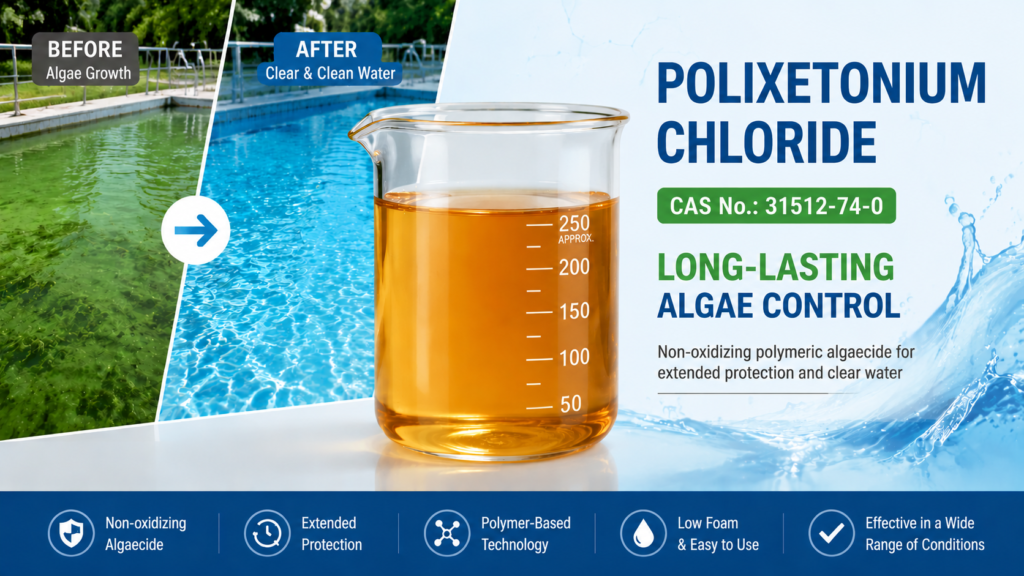
When people talk about algae control, the first question is often simple: “How quickly can it remove algae?”
But for many professional water treatment users, that is only half of the story.
A swimming pool operator, cooling tower manager, or industrial water treatment specialist usually has another concern:
“How long will the protection last after treatment?”
Because removing algae once is not always difficult. The real challenge is preventing algae from returning again and again.
This is where Polixetonium Chloride (CAS No.: 31512-74-0) attracts attention. As a polymeric quaternary ammonium compound and non-oxidizing algaecide, it is widely used in applications where longer-lasting algae control is needed.
Unlike fast-reacting oxidizing chemicals, Polixetonium Chloride works through a different mechanism. Its polymer structure, positive charges, and stable chemical characteristics allow it to maintain activity in water systems for an extended period.
But why exactly does this happen?
Let’s take a closer look.
Why Long-Lasting Algae Control Matters in Water Treatment
Algae growth is rarely a one-time problem.
Anyone who has maintained a swimming pool knows this situation: the water looks clear after treatment, but a short time later, green patches begin appearing again. It can feel like fighting the same battle repeatedly.
The same challenge appears in industrial systems.
In cooling water applications, uncontrolled algae growth may contribute to:
- Slime formation
- Reduced heat transfer efficiency
- Increased cleaning frequency
- Additional maintenance costs
In metalworking fluids, microbial growth may affect fluid quality and operational stability.
So, the goal is not only to eliminate existing algae. The bigger goal is to create a water environment where algae growth becomes much harder to establish.
Understanding why Polixetonium Chloride provides extended algae control is only the first step. For buyers who want a broader understanding of its applications, performance characteristics, and purchasing considerations, our Complete Buyer’s Guide to Polixetonium Chloride provides a practical overview from product selection to application requirements.
That is why long-lasting algae control matters.
A product that provides extended protection can help reduce treatment frequency, improve operational consistency, and simplify routine maintenance.
What Makes Polixetonium Chloride Different from Traditional Algaecides?
To understand why Polixetonium Chloride provides longer-lasting effects, it helps to compare it with traditional oxidizing treatments.
Many common water treatment chemicals, such as chlorine-based products, work through oxidation.
They are very effective for rapid microbial control, but they are also easily affected by environmental factors.
For example:
- Organic matter can consume oxidizing chemicals.
- Sunlight can reduce chlorine stability.
- Water conditions can influence performance.
This means oxidizing chemicals often require frequent monitoring and adjustment.
Polixetonium Chloride works differently.
It belongs to the family of polymeric quaternary ammonium compounds. Instead of relying on oxidation, it interacts with microorganisms through its positively charged polymer structure.
This gives it several important characteristics:
| Feature | Chlorine-Based Treatment | Polixetonium Chloride |
|---|---|---|
| Main action | Oxidation | Polymer-based antimicrobial interaction |
| Chemical type | Oxidizing agent | Non-oxidizing algaecide |
| Main advantage | Rapid treatment | Extended algae control |
| Sensitivity to organic load | Higher | Generally lower |
| Typical role | Shock treatment | Maintenance and prevention |
The difference is important.
Polixetonium Chloride is not designed to replace every function of chlorine. Instead, it is often used as a complementary solution when longer-term algae prevention is required.
The Polymer Structure Behind Long-Lasting Performance
The secret behind Polixetonium Chloride’s durability comes from its polymer structure.
Unlike small molecular compounds that may quickly react and disappear from a water system, Polixetonium Chloride contains long polymer chains with multiple positively charged sites.
Think of it like a long chain carrying many small magnets.
A small molecule may have only one active point. A polymer chain can interact with multiple targets.
This structure contributes to:
- Lower mobility compared with small molecules
- Longer residence time in water systems
- Continuous interaction with microorganisms
These unique structural characteristics are also responsible for many of the practical benefits users experience during application. To learn more about the major advantages of this polymeric algaecide compared with conventional treatments, you can read our article Top 5 Advantages of Polixetonium Chloride.
Of course, this does not mean Polixetonium Chloride remains active forever. Like all treatment chemicals, its performance depends on dosage, water conditions, contamination levels, and system operation.
However, compared with many rapidly consumed chemicals, its polymer structure helps maintain useful activity over a longer treatment period.
How Positive Charges Help Control Algae Growth
One of the most important characteristics of Polixetonium Chloride is its positive charge.
Algae cells and many microorganisms typically have negatively charged surfaces because of components such as cell membranes and surface polymers.
When Polixetonium Chloride enters the water system, its positively charged groups are attracted to these negatively charged surfaces.
The interaction can be described simply:
Positive polymer + negative cell surface → attachment and disruption
This contact may interfere with normal cell functions and reduce the ability of algae to continue growing.
The process is different from simply “burning away” algae.
Instead, Polixetonium Chloride acts more like a protective barrier that makes the environment less favorable for algae development.
This explains why it is often used for maintenance programs rather than only emergency algae treatment.
Why Polixetonium Chloride Is Less Easily Consumed in Water Systems
A common challenge with water treatment chemicals is rapid depletion.
Once added, where does the chemical go?
Some chemicals are quickly consumed by:
- Organic contaminants
- Sunlight exposure
- Chemical reactions
- Other substances in the water
Polixetonium Chloride has several characteristics that help reduce rapid loss.
1. Non-oxidizing chemistry
Because it does not depend on oxidation, it is not consumed in the same way as chlorine-based products.
2. High molecular structure
Its polymeric nature reduces rapid movement and reaction compared with many smaller compounds.
3. Strong adsorption ability
The polymer can interact with suspended particles, microbial surfaces, and organic materials.
These properties together contribute to longer-lasting algae control.
Continuous Protection Instead of Short-Term Algae Removal
A useful way to understand Polixetonium Chloride is to compare it with cleaning a house.
A quick cleaning removes visible dirt, but without preventing new dirt from coming back, the same work must be repeated soon.
Algae control works in a similar way.
A strong shock treatment may quickly improve water appearance. However, maintaining clear water requires ongoing protection.
Polixetonium Chloride helps by creating a more stable maintenance environment.
For swimming pools, this means:
- Supporting clear water appearance
- Reducing algae recurrence
- Helping maintain water quality between treatments
For industrial water systems, this means:
- Supporting cleaner operation
- Reducing biological fouling risks
- Improving maintenance efficiency
The value is not only what happens immediately after application. The value is what happens days and weeks later.
Factors That Influence the Duration of Polixetonium Chloride Performance
Although Polixetonium Chloride offers extended activity, actual performance depends on several factors.
Water Quality
High levels of organic contamination may reduce available active material.
Dosage Level
The correct dosage depends on:
- Water conditions
- Application type
- Existing algae pressure
- Treatment goals
Sunlight Exposure
Outdoor pools exposed to strong sunlight may require different maintenance strategies compared with indoor systems.
Water Replacement Rate
Systems with frequent water exchange may naturally remove active ingredients faster.
Compatibility with Other Chemicals
Polixetonium Chloride is generally compatible with many water treatment programs, but strong anionic materials may affect performance through interactions.
Therefore, proper formulation design and application guidance remain important.
Why Many Pool and Industrial Water Treatment Professionals Choose Polixetonium Chloride
The popularity of Polixetonium Chloride comes from a combination of practical benefits.
Professionals often value it because it provides:
- Non-oxidizing algae control
- Extended performance
- Low foam characteristics
- Compatibility with many water treatment programs
- Reduced dependence on frequent algae treatments
In swimming pool applications, it is commonly used as a Polyquat-based algaecide.
In industrial applications, its non-oxidizing characteristics make it attractive for systems where corrosion concerns and material compatibility matter.
The key point is simple:
Polixetonium Chloride is not just about killing algae. It is about maintaining better control over time.
How to Maximize the Long-Term Benefits of Polixetonium Chloride
To achieve consistent results, users should focus on several practical points.
Maintain Proper Dosage
Too little product may not provide sufficient protection, while excessive dosage may increase unnecessary chemical consumption.
Monitor Water Conditions
Regular testing helps determine whether additional treatment is needed.
Combine with a Complete Water Management Program
Algae control works best when combined with:
- Proper filtration
- Good circulation
- Balanced water chemistry
- Regular maintenance
Choose the Right Product Grade
For different applications, users should consider:
- Active content
- Viscosity
- Packaging requirements
- Technical documentation
A reliable supplier should provide supporting documents such as:
- Certificate of Analysis (COA)
- Safety Data Sheet (SDS)
- Product specification
However, documentation is only one part of supplier evaluation. Buyers should also consider product consistency, technical support, and application experience when selecting a Polixetonium Chloride supplier. Our guide on How to Evaluate a Polixetonium Chloride Manufacturer explains the key factors international buyers should review before making a purchase decision.
Final Thoughts: A Reliable Solution for Sustainable Algae Control
So, why does Polixetonium Chloride provide long-lasting algae control?
The answer comes down to its chemistry.
Its polymer structure, positive charges, and non-oxidizing mechanism allow it to remain effective longer than many fast-consumed treatments.
It does not simply provide a temporary solution. Instead, it helps create a more stable environment where algae growth is easier to manage.
For pool professionals, industrial water treatment specialists, and chemical formulators, this makes Polixetonium Chloride a valuable tool for long-term algae management.
Sometimes the best treatment is not the one that works the fastest.
It is the one that keeps working after the first day.
Frequently Asked Questions
1. How long does Polixetonium Chloride remain effective in water?
The effective period depends on dosage, water conditions, contamination level, sunlight exposure, and system operation. Under suitable conditions, Polixetonium Chloride can provide extended algae control compared with many short-term treatments.
2. Is Polixetonium Chloride better than chlorine for algae control?
Polixetonium Chloride and chlorine work differently. Chlorine provides strong oxidation and rapid treatment, while Polixetonium Chloride provides non-oxidizing, longer-term algae management. Many programs use them for different purposes.
3. Why is Polixetonium Chloride called a long-lasting algaecide?
Polixetonium Chloride is considered long-lasting because its polymeric quaternary ammonium structure helps maintain activity in water systems and interact continuously with algae cells.
4. Can Polixetonium Chloride be used in swimming pools and industrial water systems?
Yes. Polixetonium Chloride is widely used in applications including swimming pools, cooling water systems, and other industrial water treatment processes where long-term algae control is required.
5. What factors affect Polixetonium Chloride algae control performance?
Performance depends on active concentration, water quality, organic contamination, sunlight exposure, dosage frequency, and compatibility with other chemicals in the treatment program.