
GET IN TOUCH
Ask For Sample?
How Green Algae Develops in Swimming Pools?
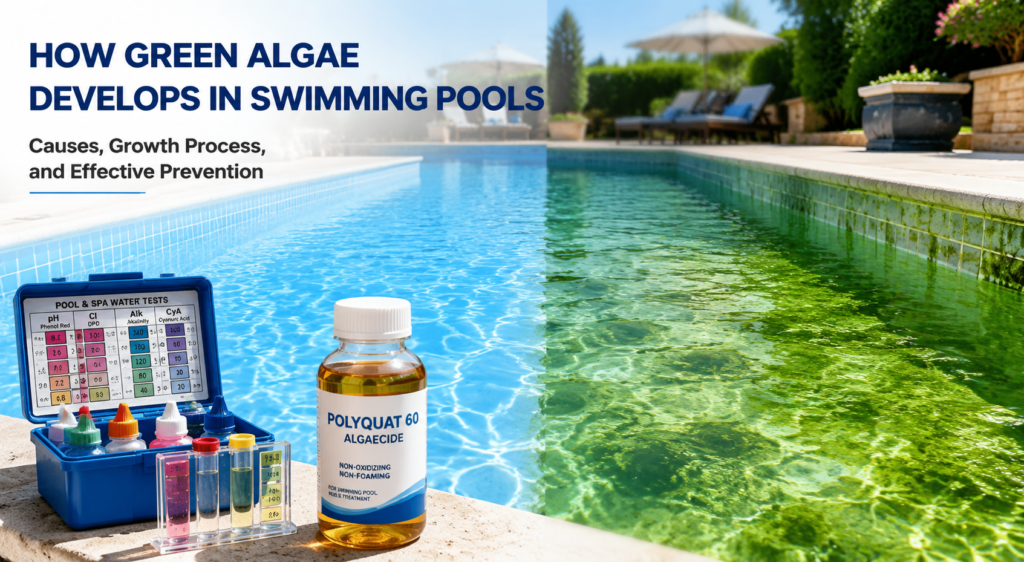
What Is Green Algae in Swimming Pools?
You look at your swimming pool one morning, expecting crystal-clear blue water. Instead, the walls have a slight green tint, the corners look cloudy, and the surface no longer has that fresh, inviting appearance.
Sound familiar?
Green algae is one of the most common problems faced by swimming pool owners and maintenance professionals. It may look harmless at first — just a little green color here and there — but algae growth can quickly become a much bigger water quality issue if it is ignored.
Green algae refers to microscopic plant-like organisms that use sunlight, water, and nutrients to grow. Unlike larger plants, algae does not need soil or roots. It can float freely in pool water, attach itself to pool surfaces, or hide inside small cracks and rough areas.
The most common type found in swimming pools is green algae, which usually appears as:
- Green-colored water
- Slippery pool walls and floors
- Cloudy water appearance
- Green deposits around steps, corners, and shaded areas
Many people assume algae only develops in dirty pools. But that is not always true.
A pool can look clean and still develop algae problems. Even professionally maintained pools may experience algae growth when environmental conditions become favorable.
So, why does this happen?
The answer comes down to biology, water chemistry, and daily pool conditions.
Why Does Green Algae Appear Even in Well-Maintained Pools?
A common question among pool owners is:
“Why did algae grow? I checked my chlorine level yesterday.”
This is actually a very reasonable question.
Chlorine is one of the most important tools for pool sanitation, but algae control is not simply about adding more chlorine. The relationship between disinfectants, water balance, sunlight, circulation, and organic contamination is much more complicated.
Green algae usually develops when several conditions happen at the same time.
1. Insufficient Sanitizer Levels
The first and most obvious reason is low chlorine concentration.
Chlorine works by attacking microorganisms in water. When the free chlorine level drops too low, algae spores can survive and begin multiplying.
This often happens after:
- Heavy rain
- Hot weather
- Large numbers of swimmers
- Long periods without testing
- Poor chlorine distribution
For example, a backyard pool may have perfect chlorine levels in the morning, but after a busy afternoon party with many swimmers, organic materials can consume chlorine quickly.
By evening, the pool may have lost much of its protection.
2. Excessive Sunlight Exposure
Green algae loves sunlight.
Just like plants in a garden, algae uses light energy to grow. Outdoor swimming pools are especially vulnerable because they receive several hours of direct sunlight every day.
Warm water combined with strong sunlight creates an ideal environment for algae reproduction.
This is why many pool owners notice algae problems appearing during summer months.
The pool did not suddenly become dirty.
The environment simply became more favorable for algae growth.
3. Poor Water Circulation
Have you ever noticed green areas appearing only in certain parts of a pool?
Usually, those spots are not random.
They often appear in:
- Pool corners
- Behind ladders
- Around steps
- Dead zones with weak water movement
When circulation is poor, chemicals do not spread evenly throughout the pool.
Some areas may have enough sanitizer.
Others may become small “safe zones” where algae can survive and grow.
A good circulation system works like the heartbeat of a swimming pool. It keeps chemicals moving and prevents stagnant areas where problems can develop.
How Green Algae Starts Growing Step by Step
Green algae does not usually appear overnight.
The visible green color is actually the final stage of a process that begins much earlier.
Understanding this process helps pool professionals prevent problems before they become obvious.
Step 1: Algae Spores Enter the Pool
Algae spores are everywhere.
They can enter swimming pools through:
- Wind
- Rainwater
- Dust
- Swimmers
- Pool equipment
- Contaminated accessories
A pool does not need to be neglected for algae spores to appear.
They are naturally present in the environment.
The key question is not whether algae spores enter the pool.
They will.
The real question is whether the pool environment allows them to grow.
Step 2: Spores Find Suitable Conditions
Once algae spores enter the water, they begin looking for favorable conditions.
Growth becomes more likely when:
- Chlorine levels are unstable
- Water temperature rises
- Nutrients accumulate
- Circulation decreases
- pH balance moves outside the ideal range
Nutrients are especially important.
Algae needs food sources such as:
- Organic debris
- Swimmer waste
- Dust particles
- Phosphates and nitrates
A pool may look clear but still contain enough nutrients to support algae growth.
Step 3: Algae Attaches to Pool Surfaces
After finding suitable conditions, algae begins attaching itself to surfaces.
This stage is often difficult to notice.
Small amounts of algae may develop:
- Inside grout lines
- On pool walls
- Around drains
- In filtration areas
At this point, the pool may still look normal.
However, algae has already started building a presence.
Step 4: Rapid Growth Creates Visible Problems
Once algae colonies become established, growth can accelerate quickly.
The pool may change from:
Clear blue → Slightly cloudy → Greenish → Heavy green contamination
This is why early prevention matters.
Many pool professionals prefer preventing algae growth rather than waiting until the pool requires aggressive treatment.
The Main Factors That Encourage Green Algae Growth
Green algae development is rarely caused by one single problem.
Usually, several factors work together.
Warm Water
Temperature plays a major role in algae growth.
Warmer water increases biological activity, allowing algae cells to reproduce faster.
This is why algae outbreaks are more common during:
- Summer
- Heat waves
- Warm climates
- Poorly covered pools
Unbalanced pH Levels
Pool chemistry is a delicate balance.
When pH moves too high, chlorine becomes less effective.
For example, chlorine activity decreases as pH rises, meaning the same amount of chlorine may provide less algae protection.
Maintaining proper water balance allows sanitizers and algaecides to perform better.
High Organic Contamination
Every swimmer introduces organic materials into pool water.
These include:
- Sweat
- Body oils
- Sunscreen residues
- Skin particles
These materials consume chlorine and create conditions where algae can compete more successfully.
A pool used frequently needs more attention because the chemical demand changes constantly.
Poor Filtration and Maintenance
The filtration system removes suspended particles and helps maintain water clarity.
When filters are dirty or circulation time is too short, contaminants remain in the water longer.
Over time, this creates a more comfortable environment for algae.
Why Chlorine Alone Sometimes Cannot Control Green Algae
Many pool owners believe that chlorine is the only answer to algae problems.
After all, chlorine kills microorganisms, right?
Yes, but the reality is a little more complicated.
Chlorine is excellent at sanitizing pool water, but algae control often requires a more complete approach. When algae begins attaching to pool surfaces or forming protective layers, chlorine may become less effective.
Think of it like cleaning a kitchen counter.
A quick wipe removes surface dust. But if something has dried and stuck firmly to the surface, you need a different method.
Algae behaves in a similar way.
Once algae colonies become established, several challenges appear:
- Chlorine demand increases
- Water chemistry becomes harder to maintain
- Pool surfaces become slippery
- More frequent treatments may be required
This is why many professional pool operators use algaecides as part of a prevention program rather than relying only on chlorine.
A balanced pool maintenance program usually combines:
- Proper sanitizer levels
- Regular circulation
- Filtration
- Water testing
- Preventive algaecide treatment
For readers who want to understand how specialized algaecides work, our guide How Does Polyquat 60 Algaecide Work in Swimming Pools? explains the working mechanism behind polymer-based algae control products.
The Role of Water Chemistry in Preventing Green Algae
Keeping a swimming pool clear is not only about adding chemicals. It is about maintaining a stable environment where algae cannot easily grow.
Several water parameters directly influence algae development.
Maintaining Proper Chlorine Levels
Free chlorine remains the primary defense against microorganisms.
However, chlorine levels can change quickly because of:
- Sunlight exposure
- Organic contamination
- Heavy swimming activity
- Weather conditions
Regular testing helps identify problems before algae becomes visible.
Keeping pH Within the Proper Range
pH affects how efficiently chlorine works.
When pH becomes too high, chlorine activity decreases. This means a pool may show an acceptable chlorine reading while still having weaker algae protection.
Stable pH helps every treatment work more efficiently.
Managing Nutrient Levels
Algae needs nutrients to survive.
Even a small amount of organic material can contribute to algae development over time.
Good maintenance habits include:
- Removing leaves and debris
- Cleaning filters regularly
- Brushing pool walls
- Maintaining proper circulation
Small actions add up.
A few minutes of maintenance today can prevent hours of cleanup later.
How Pool Professionals Control Green Algae Long Term
Professional pool maintenance is often less about reacting to problems and more about preventing them before they appear.
A pool technician does not wait until the water turns completely green.
Instead, professionals typically focus on three areas:
1. Routine Monitoring
Regular testing provides information about what is happening inside the water.
Professionals monitor:
- Chlorine levels
- pH
- Alkalinity
- Water clarity
- Signs of early algae growth
Early detection makes treatment much easier.
2. Preventive Algae Control
Many commercial and residential pools use preventive algaecides during periods when algae risk increases.
This is especially common for:
- Outdoor swimming pools
- Hotel pools
- Public aquatic facilities
- Pools in warm climates
Preventive treatment helps reduce the chance of algae becoming established.
3. Using Compatible Pool Chemicals
Not every algaecide works the same way.
Some products may create foam, affect water appearance, or interact differently with other pool chemicals.
For professional applications, many operators prefer polymer-based algaecides because they provide effective algae control while maintaining pool appearance.
Why Polyquat 60 Algaecide Is Used for Green Algae Prevention
Among different types of pool algaecides, Polyquat 60 Algaecide has become a popular choice for many pool professionals.
Polyquat 60 is based on a cationic polymer known as Polixetonium Chloride (CAS No. 31512-74-0).
It is widely used as a non-oxidizing algaecide for swimming pool maintenance.
Unlike copper-based products, Polyquat 60 does not introduce metal ions into pool water.
This provides several practical advantages:
Non-Foaming Performance
Foam can be an annoying problem, especially in residential pools, spas, and commercial facilities.
A quality Polyquat 60 formulation is designed to provide algae control without creating unwanted foam.
No Metal Staining Concerns
Copper algaecides can sometimes create staining issues when water chemistry is not properly controlled.
Because Polyquat 60 is metal-free, it avoids many of the concerns associated with copper-based treatments.
Compatibility With Chlorine Programs
Pool maintenance often requires multiple chemicals working together.
Polyquat 60 is commonly used alongside chlorine-based sanitation programs because it works through a different mechanism.
For readers comparing different algae control options, our article Why Pool Professionals Choose Polyquat 60 Instead of Copper Algaecides provides a detailed comparison between polymer-based and copper-based solutions.
Practical Tips for Keeping Pool Water Clear and Green Algae-Free
Preventing algae does not require complicated routines.
Small consistent habits usually create the biggest results.
Here are practical steps:
Keep Water Moving
Run the circulation system long enough each day.
Moving water reduces stagnant areas where algae can establish.
Brush Pool Surfaces Regularly
Even clean-looking surfaces can collect early algae growth.
Brushing:
- Walls
- Steps
- Corners
- Pool floors
helps prevent algae from attaching firmly.
Test Water Frequently
Do not wait until the pool looks green.
Regular testing helps you understand what is happening before visible problems appear.
Clean Filters on Schedule
A dirty filter reduces water quality and circulation efficiency.
Clean filtration supports clearer water.
Use Preventive Algae Control During High-Risk Periods
Certain seasons require extra attention.
For example:
- Hot summer months
- Long periods of sunlight
- Heavy pool usage
- Vacation periods when pools receive less maintenance
Using a suitable non-oxidizing algaecide can provide additional protection.
Green Algae Prevention Is Easier Than Green Algae Recovery
Once a pool turns green, fixing it can require significant effort.
Treatment may involve:
- Adjusting chemistry
- Shock treatment
- Brushing surfaces
- Cleaning filters
- Repeating water tests
The process takes time.
Prevention, however, is much simpler.
A stable maintenance routine combined with the right algae-control products can help keep pool water clear throughout the season.
Green algae is not a sign that a pool has failed.
It is simply a reminder that water is a living environment, and it needs consistent care.
After all, a swimming pool is not just a container filled with water. It is a carefully balanced system.
Frequently Asked Questions
1. Why does my swimming pool turn green even when chlorine levels are normal?
A pool can still develop green algae when chlorine readings appear normal because chlorine effectiveness depends on factors such as pH balance, circulation, sunlight exposure, and organic contamination. A stable algae prevention program may require additional protection beyond chlorine alone.
2. How long does it take for green algae to grow in a swimming pool?
Green algae can begin developing within several days when conditions are favorable. Warm temperatures, sunlight, low sanitizer levels, and poor circulation can accelerate algae growth.
3. What is the best algaecide for preventing green algae in swimming pools?
Many pool professionals use Polyquat 60 Algaecide because it is a non-oxidizing, non-foaming algae control solution that works well with regular chlorine maintenance programs.
4. Can Polyquat 60 Algaecide remove existing green algae?
Polyquat 60 is mainly used for algae prevention and control. When a pool has severe algae growth, additional treatment steps such as filtration improvement, brushing, and chlorine adjustment may be necessary.
5. How can I prevent green algae growth in my swimming pool during summer?
To prevent summer algae problems, maintain proper water chemistry, improve circulation, clean filters regularly, brush pool surfaces, and use preventive algae-control products when needed.