
GET IN TOUCH
Ask For Sample?
How Does Polyquat 60 Algaecide Work in Swimming Pools?
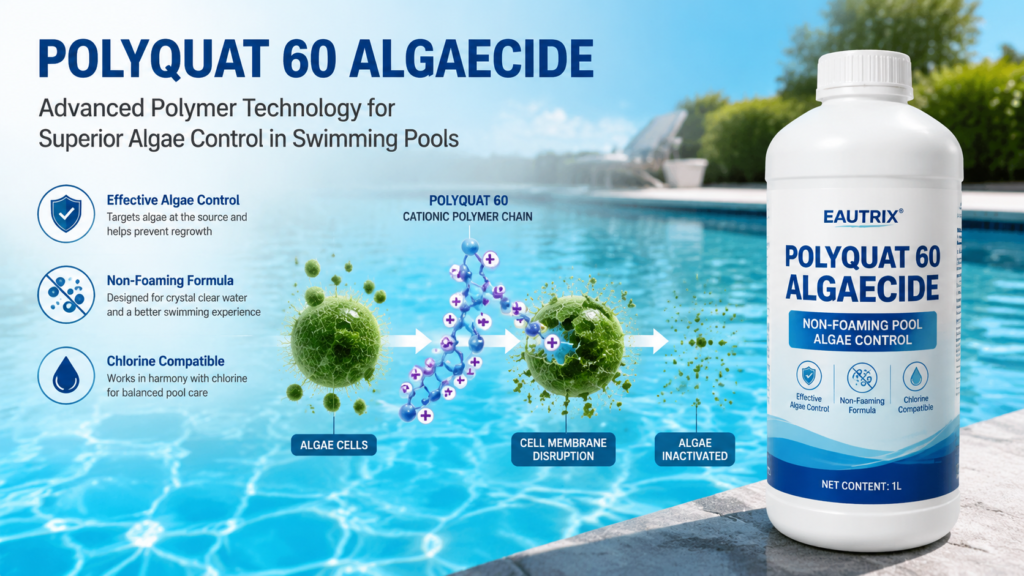
A swimming pool can look perfect one week and start showing green water, cloudy surfaces, or slippery walls the next. Many pool owners have experienced that frustrating moment: the chlorine level seems acceptable, the filtration system is running, yet algae still appears.
So, what is really happening inside the water?
The answer often comes down to microorganisms finding the right conditions to grow. Warm temperatures, sunlight, nutrients, and poor circulation create a comfortable environment for algae. Once algae begins multiplying, simply adding more chlorine is not always the most efficient solution.
This is where Polyquat 60 Algaecide comes into the picture.
Unlike traditional copper-based algaecides or older quaternary ammonium compounds, Polyquat 60 uses a polymeric quaternary ammonium structure to control algae growth. It works through a different approach — instead of aggressively oxidizing contaminants, it interacts with algae cells and interferes with their ability to survive.
But how exactly does it work? Why do many pool professionals prefer Polyquat 60? And why is it often described as a non-foaming, chlorine-compatible algaecide?
Let’s take a closer look.
What Is Polyquat 60 Algaecide?
Polyquat 60 Algaecide is a concentrated non-oxidizing algaecide widely used for swimming pool maintenance and commercial water treatment applications.
The name “Polyquat” comes from polymeric quaternary ammonium compound. In simple words, it is a long-chain cationic polymer containing positively charged functional groups.
The active ingredient in many Polyquat 60 products is:
- Polixetonium Chloride
- Polyquaternium-42
- CAS No.: 31512-74-0
It is commonly supplied as a 60% active solution, which is why the product is called “Polyquat 60.”
Unlike chlorine shock treatments, Polyquat 60 is not designed to rapidly oxidize organic contaminants. Instead, it provides long-lasting algae control by attaching to algae surfaces and disturbing their normal biological functions.
For readers who want to understand more about its chemical identity, you can also read:
What Is Polyquat 60 Algaecide? A Complete Beginner’s Guide
The chemistry may sound technical, but the basic idea is actually quite simple:
Polyquat 60 acts like a protective barrier controller inside pool water. It prevents algae from becoming established and helps maintain clearer water conditions over time.
Why Do Swimming Pools Develop Algae Problems?
Before understanding how Polyquat 60 works, it helps to understand why algae appears in the first place.
Algae are simple aquatic organisms. They need only a few things to grow:
- Sunlight
- Water
- Nutrients such as phosphates and nitrogen compounds
- Suitable temperature
- Enough time without effective control
A backyard pool can easily provide these conditions.
For example, during hot summer months, a pool exposed to strong sunlight may become an ideal place for algae growth. Even a small amount of contamination introduced by swimmers, leaves, rainwater, or dust can provide nutrients.
Common algae problems include:
Green algae
This is the most common pool algae. It can make water appear green and cloudy.
Yellow or mustard algae
This type often appears as yellow-brown deposits on pool walls or shaded areas.
Black algae
Black algae are particularly difficult because they can attach firmly to pool surfaces and develop protective layers.
Many pool owners think algae appears because chlorine “does not work.” The reality is more complicated.
Chlorine is excellent at sanitizing water, but maintaining stable algae control requires the right balance between oxidation and prevention.
That is where Polyquat 60 provides additional support.
The Science Behind How Polyquat 60 Controls Algae
The key feature of Polyquat 60 is its cationic polymer structure.
The word “cationic” means positively charged.
Algae cell surfaces generally contain negatively charged components, including proteins, lipids, and other biological structures.
Opposite charges naturally attract.
Think about static electricity when a balloon sticks to your hair. The same basic idea applies here, although the chemistry inside pool water is much more complex.
When Polyquat 60 is added to pool water:
- The polymer chains spread throughout the water.
- The positively charged groups interact with algae cell surfaces.
- The polymer attaches to algae structures.
- The algae cells become weakened and unable to grow normally.
The process does not happen like a sudden explosion. Instead, Polyquat 60 gradually affects algae stability.
This slower, controlled action is one reason why it works well as a maintenance algaecide.
How Polyquat 60 Damages Algae Cells
So, what happens after Polyquat 60 attaches to algae?
The main mechanism involves disruption of the algae cell membrane.
A cell membrane works like a protective wall. It controls what enters and leaves the cell while maintaining internal balance.
When Polyquat 60 interacts with the algae surface, several effects may occur:
1. Membrane disruption
The polymer can interfere with the structure of the algae membrane.
The cell becomes less stable, making it harder for the algae to maintain normal biological activity.
2. Reduced nutrient exchange
Healthy algae need to absorb nutrients and exchange materials with the surrounding water.
When the cell surface is disturbed, these processes become less effective.
3. Growth inhibition
Even when algae cells are not immediately destroyed, their ability to reproduce can be reduced.
This is why Polyquat 60 is especially valuable for prevention and long-term control.
A simple comparison:
Chlorine works like a powerful cleaner that attacks contaminants quickly.
Polyquat 60 works more like a protective control agent that prevents algae from establishing a strong presence.
The two approaches are different — and they work very well together.
Why Polyquat 60 Is Known as a Non-Foaming Algaecide
One common complaint about some older algaecides is excessive foam.
Pool owners may add an algaecide and suddenly see a layer of bubbles across the water surface. It may look harmless, but excessive foam can be annoying, especially in:
- Residential swimming pools
- Hotels
- Resorts
- Spas
- Commercial aquatic facilities
Polyquat 60 is widely recognized as a non-foaming algaecide.
Why?
The polymer structure is designed differently from traditional short-chain quaternary ammonium compounds.
Older quat-based algaecides often contain surfactant-like properties. These compounds can reduce surface tension and create foam.
Polyquat 60, because of its polymeric structure, has much lower foaming behavior.
This makes it suitable for applications where water appearance matters.
You can learn more about this characteristic here:
Why Is Polyquat 60 Considered a Non-Foaming Algaecide?
Clear water should look clean — not like someone poured soap into the pool, right?
Polyquat 60 vs Traditional Quaternary Ammonium Algaecides
Not all quaternary ammonium compounds behave the same way.
Traditional quat algaecides and polymeric quats belong to the same general family, but their performance characteristics can be different.
| Feature | Traditional Quat | Polyquat 60 |
|---|---|---|
| Chemical structure | Short-chain quat | Polymeric quat |
| Foaming tendency | Higher | Very low |
| Chlorine compatibility | Moderate | Excellent |
| Long-term algae control | Good | Excellent |
| Water appearance | May cause foam | Clearer appearance |
The long polymer chain gives Polyquat 60 several advantages.
A polymer chain contains many functional groups connected together. Instead of acting as many small independent molecules, it behaves as a larger molecular structure.
This helps create stronger interaction with algae surfaces and improves persistence in pool water.
For a deeper explanation of the chemical relationship, see:
Is Polyquaternium-42 the Same as Polixetonium Chloride?
How Polyquat 60 Works Together with Chlorine
A common misunderstanding is that using Polyquat 60 means chlorine is no longer needed.
That is not correct.
Chlorine remains the primary sanitizer in most swimming pools. It controls bacteria and oxidizes organic contaminants.
Polyquat 60 has a different role.
A balanced pool treatment program often combines:
- Chlorine for sanitation
- Filtration for physical removal
- pH adjustment for chemical balance
- Polyquat 60 for algae prevention
Think of chlorine as the daily cleaning crew.
Polyquat 60 is like the security system that helps prevent trouble from returning.
When used together properly, they complement each other.
Polyquat 60 is also valued because it generally has good compatibility with chlorine systems when used at recommended levels.
Does Polyquat 60 Control Different Types of Pool Algae?
Polyquat 60 is widely used against many common pool algae problems.
It is especially effective as a preventive treatment and maintenance solution.
Typical target organisms include:
- Green algae
- Yellow algae
- Many common freshwater algae species
However, no algaecide should be considered a magic solution for every situation.
Severe algae blooms may require:
- Proper brushing
- Filtration improvement
- Chlorine adjustment
- Water balance correction
- Higher initial treatment levels
The best results usually come from combining chemical treatment with good pool management habits.
A clean pool is not created by one product alone. It is created by a system.
How to Use Polyquat 60 Algaecide Effectively
The correct dosage depends on:
- Pool size
- Water condition
- Algae severity
- Product concentration
For a typical Polyquat 60 product:
Preventive maintenance
A lower dosage can be applied regularly to reduce algae growth risk.
Initial treatment
A higher dosage may be needed when opening a seasonal pool or after algae appears.
Winter closing
Many pool professionals use Polyquat 60 before closing pools because it helps reduce algae growth during long periods without circulation.
Always follow the product label and supplier recommendations.
Overusing chemicals does not always improve results. In fact, balanced treatment is usually more effective.
Common Mistakes When Using Polyquat 60
Even a high-performance algaecide cannot work properly if basic pool management is ignored.
Common mistakes include:
Adding algaecide to an unbalanced pool
Very high or very low pH can affect overall treatment performance.
Expecting instant results
Polyquat 60 is not a chlorine shock product. It works differently.
Ignoring filtration
Dead algae still needs to be removed from the water.
Mixing too many chemicals at once
Adding multiple products without understanding compatibility can create unnecessary problems.
A simple routine often works best:
Test → Adjust → Treat → Circulate → Maintain.
Why Pool Professionals Choose Polyquat 60
Pool professionals often prefer Polyquat 60 because it solves several practical challenges at the same time.
Key benefits include:
- Non-foaming performance
- Good chlorine compatibility
- Long-lasting algae control
- Suitable for residential and commercial pools
- Effective across a wide pH range
- No copper staining concerns
For distributors and private-label pool chemical brands, Polyquat 60 also provides formulation flexibility.
It can be supplied as a concentrated raw material and formulated into finished products such as:
- Premium algaecides
- Winter algaecides
- Maintenance algae control products
- Private-label pool treatments
This is one reason Polyquat chemistry continues to attract attention from pool chemical manufacturers worldwide.
Frequently Asked Questions
1. How does Polyquat 60 Algaecide kill algae in swimming pools?
Polyquat 60 works through a cationic polymer mechanism. Its positively charged polymer chains interact with algae cell surfaces, disrupting membrane function and reducing algae growth.
2. Is Polyquat 60 a chlorine substitute?
No. Polyquat 60 is an algaecide, not a sanitizer. It works together with chlorine by helping prevent algae growth while chlorine handles sanitation.
3. Why is Polyquat 60 called a non-foaming pool algaecide?
Polyquat 60 has a polymeric quaternary ammonium structure that creates much less foam compared with traditional quat-based algaecides.
4. Can Polyquat 60 be used for pool opening and winter closing?
Yes. Many pool professionals use Polyquat 60 during seasonal opening, closing, and routine maintenance because it helps control algae during periods of changing water conditions.
5. What is the active ingredient in Polyquat 60 Algaecide?
Many Polyquat 60 products use Polixetonium Chloride, also known as Polyquaternium-42, with CAS No. 31512-74-0, as the active ingredient.