Outline
- Introduction: Why Are Polyquaternium-42 and Polixetonium Chloride Confusing Buyers?
- What Is Polyquaternium-42?
- What Is Polixetonium Chloride?
- Are Polyquaternium-42 and Polixetonium Chloride the Same Chemical?
- Why Do Different Industries Use Different Names?
- CAS Number: How to Confirm Chemical Identity
- Common Names and Trade Names of Polyquaternium-42
- Commercial Grades and Supply Forms
- Applications of Polyquaternium-42 / Polixetonium Chloride
- How Should Buyers Specify Polyquaternium-42 When Purchasing?
- Conclusion: One Material, Different Names
- FAQs
Introduction: Why Are Polyquaternium-42 and Polixetonium Chloride Confusing Buyers?
When sourcing specialty chemicals, buyers often encounter different names for what appears to be the same product.
One common example is Polyquaternium-42 and Polixetonium Chloride.
A buyer may search for:
“Polyquaternium-42 supplier”
but receive results showing:
“Polixetonium Chloride 60% solution”
This naturally raises a question:
Are Polyquaternium-42 and Polixetonium Chloride the same chemical, or are they different products?
The short answer is:
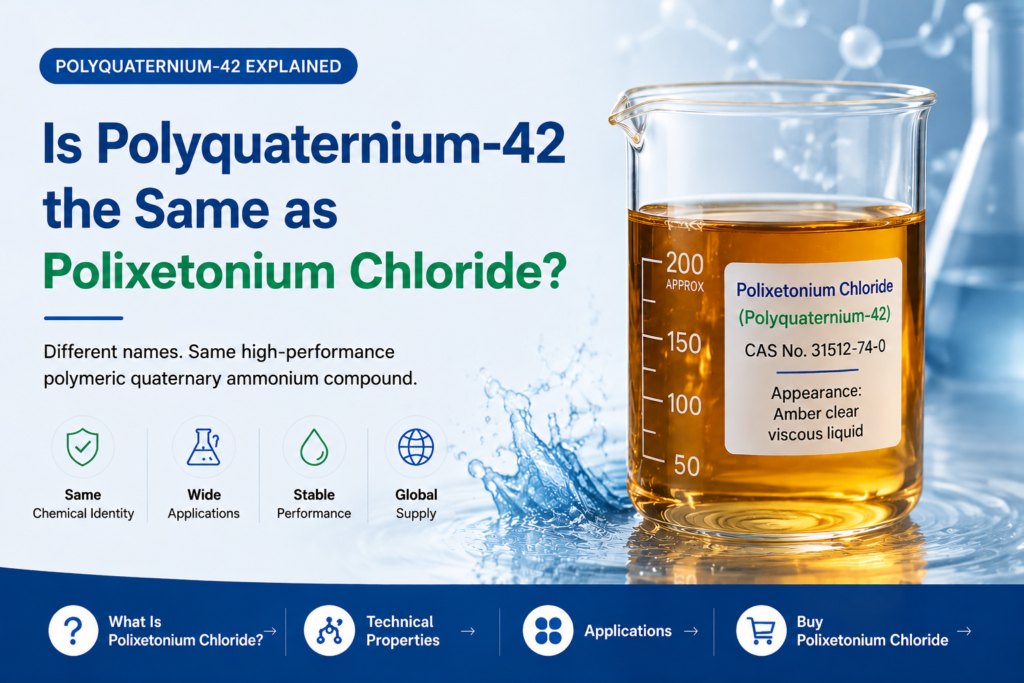
Yes. In most industrial applications, Polyquaternium-42 and Polixetonium Chloride refer to the same polymeric quaternary ammonium compound with CAS No. 31512-74-0.
The difference mainly comes from naming systems used by different industries.
What Is Polyquaternium-42?
Polyquaternium-42 is a cationic polymer belonging to the Polyquaternium family.
The name “Polyquaternium” is commonly used in ingredient naming systems, especially in industries where polymer functionality and composition need to be identified.
The number after Polyquaternium is an identification number.
For example:
- Polyquaternium-7
- Polyquaternium-10
- Polyquaternium-37
- Polyquaternium-42
The number does not represent:
- concentration
- purity
- molecular weight
- active percentage
Polyquaternium-42 contains quaternary ammonium groups, giving the polymer a positive charge.
This cationic structure is responsible for many of its important properties, including:
- adsorption ability
- interaction with negatively charged surfaces
- antimicrobial activity
- polymeric film-forming characteristics
What Is Polixetonium Chloride?
Polixetonium Chloride is the chemical name more commonly used in industrial water treatment and biocide markets.
Its chemical description is:
Poly[oxyethylene(dimethyliminio)ethylene(dimethyliminio)ethylene dichloride]
The main identification:
CAS No.: 31512-74-0
Commercial Polixetonium Chloride is usually supplied as a concentrated liquid solution, commonly:
60% active solution
Typical characteristics:
- Amber clear viscous liquid
- Cationic polymer
- Non-oxidizing biocide
- Non-foaming
- Compatible with many water treatment systems
For a detailed explanation of its chemistry and industrial importance, readers can continue to:
What Is Polixetonium Chloride?
Are Polyquaternium-42 and Polixetonium Chloride the Same Chemical?
Yes, in most commercial and industrial contexts.
Polyquaternium-42 is generally considered the naming identity of the same polymer that is commercially known as Polixetonium Chloride.
The relationship can be understood like this:
| Name | Purpose |
|---|---|
| Polyquaternium-42 | Polymer identification name |
| Polixetonium Chloride | Chemical / industrial name |
| WSCP | Water treatment industry name |
| Polyquat 60 | Pool chemical market name |
Why so many names?
Because chemicals often receive different names based on:
- industry
- region
- application
- historical usage
A swimming pool professional may ask for “Polyquat 60”.
A water treatment engineer may request “Polixetonium Chloride”.
A technical document may mention “Polyquaternium-42”.
They may all be referring to the same chemistry.
Why Do Different Industries Use Different Names?
This is where many international buyers become confused.
Chemical naming is not always universal in commercial communication.
Water Treatment Industry
The preferred term is usually:
Polixetonium Chloride
because buyers focus on:
- active ingredient
- CAS number
- biocide performance
- technical specifications
Swimming Pool Industry
The common terms are:
- Polyquat 60
- Non-foaming polymeric algaecide
because these names are easier for distributors and pool professionals to understand.
Polymer and Ingredient Discussions
The term:
Polyquaternium-42
may appear because it describes the polymer identity.
So, the same material may appear under different names depending on who is using it.
CAS Number: How to Confirm Chemical Identity
When chemical names become confusing, CAS numbers provide the most reliable reference.
For Polyquaternium-42 / Polixetonium Chloride:
CAS No.: 31512-74-0
When contacting suppliers, buyers should confirm:
- CAS number
- Active content
- Appearance
- pH
- Density
- Viscosity
For example, a typical 60% Polixetonium Chloride solution may have:
| Property | Typical Range |
|---|---|
| Active Content | 58–61% |
| Appearance | Amber clear viscous liquid |
| pH | 6.0–8.0 |
| Density | Around 1.15 g/cm³ |
A product name alone is not enough.
Two suppliers may use similar names but offer products with different specifications.
Common Names and Trade Names of Polyquaternium-42
During sourcing, buyers may encounter several names.
Polixetonium Chloride
The preferred industrial chemical name.
Polyquaternium-42
The polymer identification name.
WSCP
Commonly used in water treatment and pool applications.
Polyquat 60
A popular pool industry description referring to polymeric quaternary ammonium algaecide products.
A commercial product name associated with Polixetonium Chloride chemistry.
Busan 77
These names may look different, but buyers should always check the CAS number and technical specifications.
Commercial Grades and Supply Forms
Polyquaternium-42 / Polixetonium Chloride is generally supplied as an aqueous liquid solution.
The most common commercial form is:
60% solution
Why?
Because higher concentration products may become difficult to handle due to:
- increased viscosity
- transportation challenges
- mixing difficulties
The 60% solution provides a practical balance between:
- active ingredient content
- storage stability
- handling convenience
For complete specifications, including viscosity, density, and pH information, see:
Technical Properties of Polixetonium Chloride
Applications of Polyquaternium-42 / Polixetonium Chloride
Because of its cationic polymer structure, Polyquaternium-42 has several industrial applications.
Swimming Pool Algae Control
One of the best-known applications is polymeric pool algaecides.
Benefits include:
- non-foaming performance
- long-lasting algae control
- compatibility with common pool treatment programs
Cooling Water Treatment
Industrial cooling systems often require continuous microbial control.
Polixetonium Chloride is used in cooling water applications because it provides:
- effective algae control
- non-oxidizing action
- compatibility with treatment programs
Industrial Water Systems
Other industrial water applications may use this polymer where long-lasting microbial control is required.
More application details can be found here:
Top 10 Applications of Polixetonium Chloride
How Should Buyers Specify Polyquaternium-42 When Purchasing?
To avoid confusion, buyers should not only write:
“Polyquaternium-42”
A clearer specification is:
Polyquaternium-42 (Polixetonium Chloride), CAS No. 31512-74-0, 60% solution
A complete inquiry should include:
- required quantity
- packaging
- destination
- application
- required documents
This helps suppliers provide the correct product quickly.
Conclusion: One Material, Different Names
So, is Polyquaternium-42 the same as Polixetonium Chloride?
The answer is:
Yes, in most industrial applications, they refer to the same polymeric quaternary ammonium compound.
The difference is mainly the language used by different industries.
Polyquaternium-42 is the polymer naming term.
Polixetonium Chloride is the industrial chemical name.
WSCP and Polyquat 60 are common market terms.
For buyers, the most important information is not the name alone, but:
- CAS number
- technical specifications
- active content
- application requirements
Once these details are confirmed, sourcing becomes much easier.
FAQs About Polyquaternium-42
1. Is Polyquaternium-42 exactly the same as Polixetonium Chloride?
Yes. Polyquaternium-42 and Polixetonium Chloride generally refer to the same cationic polymer with CAS No. 31512-74-0 in industrial applications.
2. Is Polyquaternium-42 used in swimming pool chemicals?
Yes. It is widely used as the active polymer in non-foaming pool algaecide products.
3. Why do suppliers call the same product different names?
Different industries use different naming systems. Water treatment companies often use Polixetonium Chloride, while pool markets may use Polyquat 60.
4. What should I ask when buying Polyquaternium-42?
Buyers should confirm CAS No. 31512-74-0, active content, specifications, packaging, COA, and SDS before placing an order.