
GET IN TOUCH
Ask For Sample?
Why Algae Is One of the Biggest Problems in Swimming Pool Maintenance?
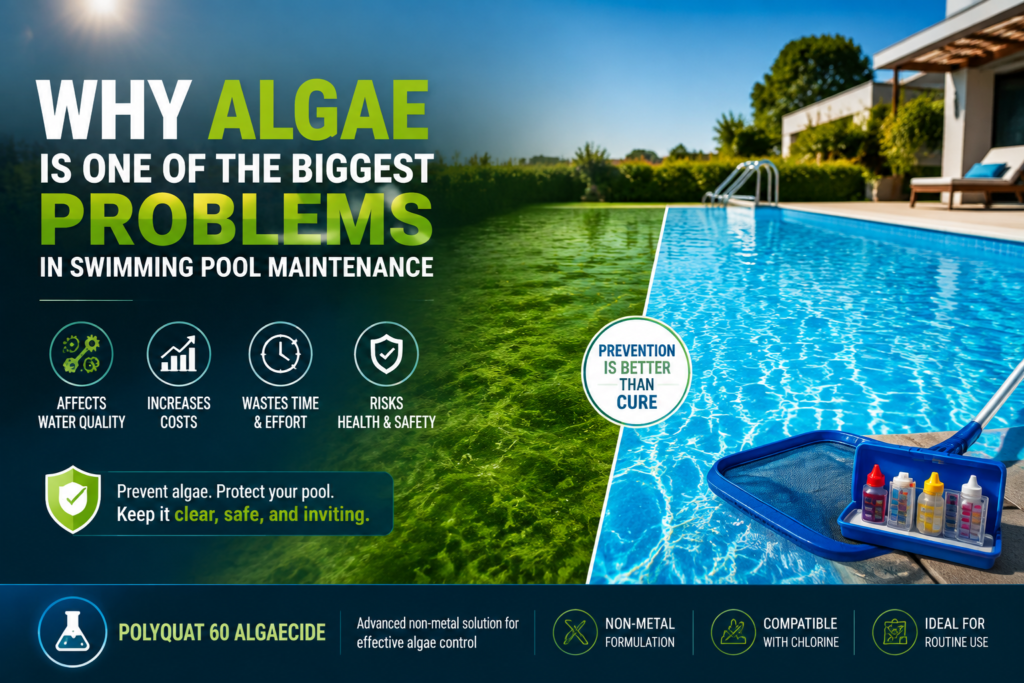
A Green Pool Is Only the Beginning — Why Is Algae Such a Big Deal?
Picture this: You open the pool cover on a warm summer morning, expecting crystal-clear blue water. Instead, you see a cloudy surface with green patches spreading along the walls and steps.
Not exactly the relaxing swimming experience you imagined, right?
Many pool owners think algae is simply a cosmetic issue. A little green color appears, so they add chlorine, brush the pool, and hope the problem disappears.
But algae is rarely “just a little dirt.”
In reality, algae is one of the most common and frustrating problems in swimming pool maintenance because it affects water appearance, chemical balance, filtration efficiency, and overall pool hygiene. Once algae establishes itself inside a pool system, removing it can become much harder than preventing it in the first place.
You know what makes algae especially tricky? It does not need much to survive.
A bit of sunlight. Some nutrients. Warm water. And imperfect circulation.
That is often enough.
For pool professionals, algae control is not simply about making water look beautiful. It is about maintaining a stable environment where swimmers can enjoy clean, healthy water without constantly fighting recurring problems.
Why Does Algae Grow So Easily in Swimming Pools?
A swimming pool may look like a controlled environment, but from algae’s perspective, it is actually a comfortable place to live.
Think about it: a pool provides many things algae needs.
- Sunlight exposure
- Warm temperatures
- Water circulation
- Organic nutrients
- Mineral residues
- Periods of insufficient sanitization
It is almost like a small artificial lake — except we expect it to stay perfectly clear.
Algae are simple aquatic organisms that use photosynthesis to produce energy. When conditions become favorable, they multiply quickly and form visible colonies.
The process often begins quietly.
A few microscopic algae cells enter the pool through:
- Wind and rain
- Swimmers
- Pool equipment
- Contaminated cleaning tools
- Water sources
At first, nobody notices.
Then, one day, those tiny organisms become a green layer on the pool surface.
That is when the real maintenance challenge begins.
The Real Problem: Algae Changes the Entire Pool Environment
Many people assume algae only affects appearance.
A green pool looks bad, but once chlorine kills the algae, everything should return to normal — right?
Not always.
Algae can create a chain reaction inside the pool.
1. Algae Consumes Pool Chemicals
Algae is a living organism, which means it reacts with sanitizing chemicals.
When algae begins growing, chlorine demand increases significantly because chlorine is consumed while attacking organic matter.
Instead of protecting the water, chlorine is busy fighting an existing algae problem.
This creates a frustrating cycle:
- Algae appears
- Chlorine is added
- Some algae dies
- Remaining algae survives
- Pool chemistry becomes unstable
- Algae returns
Many pool owners experience this situation repeatedly during hot weather.
They keep adding chlorine but still cannot maintain clear water.
Why?
Because killing algae after it appears is usually much harder than stopping it from growing.
2. Algae Creates Poor Water Quality
Algae can contribute to:
- Cloudy water
- Green or yellow discoloration
- Slippery pool surfaces
- Unpleasant odors
- Increased organic contamination
A swimming pool should feel clean and refreshing.
Nobody wants to step into water that feels slimy or looks suspicious.
For commercial pools, hotels, resorts, and public facilities, the impact can be even greater. Poor water appearance immediately affects customer confidence.
A guest may not understand pool chemistry, but they understand one thing:
“Does this water look safe and inviting?”
3. Algae Can Reduce Filtration Performance
Pool filtration systems are designed to remove suspended particles and maintain water clarity.
However, when algae grows heavily, the filtration system may become overloaded.
Dead algae particles are extremely small and can pass through some filtration media. This may lead to:
- Frequent filter cleaning
- Longer circulation times
- Increased maintenance labor
- Higher operating costs
A pool is a system. When one part becomes unstable, other parts often suffer.
Why Does Algae Come Back After Treatment?
This is one of the biggest frustrations for pool professionals.
A pool is cleaned. Chemicals are added. The water looks perfect.
Then, a few weeks later…
Green spots appear again.
Sound familiar?
The reason is simple: visible algae is often only the final stage of the problem.
Algae can survive in areas that are difficult to notice:
- Pool corners
- Behind ladders
- Around fittings
- Inside filtration systems
- On pool walls
- In poorly circulated areas
Some algae forms attach strongly to surfaces, creating protective layers that make chemical treatment more difficult.
This is why many professionals focus on prevention instead of emergency treatment.
A good algae control program works quietly in the background, reducing the chance that algae gets the opportunity to dominate the pool environment.
Different Types of Pool Algae: Not All Green Problems Are the Same
When people say “my pool has algae,” they often imagine one problem.
Actually, several types of algae can appear in swimming pools.
Green Algae
Green algae is the most common type.
It usually appears as:
- Green water
- Floating particles
- Green walls or surfaces
The good news?
Green algae is generally easier to control compared with other types.
However, if ignored, it can spread rapidly.
Yellow or Mustard Algae
Yellow algae is more challenging.
It often appears as:
- Yellow-brown patches
- Powdery deposits
- Shaded pool areas
Because it can resemble dirt, many pool owners misunderstand the problem and simply brush it away.
Unfortunately, it often returns.
Black Algae
Black algae is one of the toughest algae problems.
It forms strong attachments to pool surfaces and may develop protective layers.
It is commonly found in:
- Concrete pools
- Areas with poor circulation
- Cracks and rough surfaces
Removing black algae usually requires patience, repeated treatment, and strong maintenance practices.
Why Prevention Matters More Than Emergency Treatment
Imagine two situations.
In the first situation, a pool owner waits until the water turns green. They then spend several days:
- Adding extra chemicals
- Brushing surfaces
- Cleaning filters
- Testing water repeatedly
In the second situation, the pool owner follows a regular maintenance program that prevents algae growth before it becomes visible.
Which approach sounds easier?
Most professionals already know the answer.
Preventive algae control saves time, reduces chemical consumption, and keeps pools ready for swimmers.
This is why many pool maintenance companies include algaecides as part of routine water care.
A quality algaecide does not replace chlorine. Instead, it works alongside sanitizers to provide additional protection against algae development.
The Role of Polyquat 60 Algaecide in Pool Algae Control
One widely used category of non-oxidizing pool algaecides is Polyquat 60.
Unlike traditional copper-based algaecides, Polyquat 60 is a polymeric quaternary ammonium compound designed to provide effective algae control without adding metals to pool water.
For readers who want to understand the chemistry behind this product, you can learn more here:
What Is Polyquat 60 Algaecide? A Complete Beginner’s Guide
Polyquat 60 works by interacting with algae cell membranes, helping prevent algae growth and reducing the chance of recurring outbreaks.
Some advantages commonly associated with Polyquat 60 include:
- Non-metal formulation
- Low foaming characteristics
- Compatibility with chlorine-based pool systems
- Suitable for regular maintenance programs
- Useful for opening and closing pool treatments
The reason many pool professionals prefer polymeric algaecides is simple: they want reliable algae prevention without creating additional water balance problems.
Why Pool Professionals Prefer a Preventive Approach
Professional pool maintenance is not only about fixing problems.
It is about avoiding problems before customers notice them.
A strong algae prevention routine usually includes:
Regular Water Testing
Keeping an eye on:
- pH
- Free chlorine
- Total alkalinity
- Water hardness
helps maintain a stable environment.
Proper Circulation
Even the best chemicals cannot perform well if water movement is poor.
Dead zones create perfect hiding places for algae.
Regular Brushing
Brushing removes early algae attachment before colonies become established.
Using the Right Algae Control Products
Different pools have different needs.
A backyard swimming pool, hotel pool, and public facility may require different maintenance strategies.
That is why selecting a suitable algaecide matters.
Algae Control Is About Protecting the Swimming Experience
A swimming pool represents relaxation.
It represents summer afternoons, family gatherings, hotel vacations, and community recreation.
Nobody wants those experiences interrupted by cloudy or green water.
The interesting thing about algae is that the problem often starts invisibly. By the time people notice it, the pool environment has already changed.
That is why experienced pool professionals do not wait for algae to become obvious.
They build prevention into their maintenance routine.
A clean pool is not created by reacting faster.
It is created by planning smarter.
How to Build a Better Pool Algae Prevention Strategy
A practical algae prevention program should combine several elements:
- Maintain proper sanitizer levels
- Keep water circulating effectively
- Remove organic debris regularly
- Brush pool surfaces
- Monitor water chemistry
- Use a suitable preventive algaecide when needed
For commercial operators, consistency matters even more.
A hotel pool cannot simply be closed for several days because algae appeared. A pool service company cannot spend unlimited hours correcting preventable issues.
The goal is simple:
Keep water clear. Keep maintenance predictable. Keep swimmers happy.
Final Thoughts: Why Algae Remains One of the Biggest Pool Maintenance Challenges
Algae may look like a small green problem, but it represents a much bigger maintenance challenge.
It affects water clarity, chemical balance, equipment performance, and customer satisfaction.
The good news?
With proper maintenance habits and the right algae control strategy, algae does not have to become a constant battle.
Understanding why algae grows is the first step.
Preventing it from taking over is the next.
For pool professionals and product formulators looking for reliable algae control solutions, understanding the chemistry behind products such as Polyquat 60 Algaecide can help create cleaner, more stable swimming environments.
Frequently Asked Questions
1. Why does my swimming pool keep getting algae even after adding chlorine?
A pool may continue developing algae because chlorine alone may not prevent all algae growth, especially when circulation problems, high temperatures, or organic contamination exist. A preventive algae control product can help reduce recurring algae problems.
2. What is the best algaecide for preventing green algae in swimming pools?
Many pool professionals use polymeric quaternary ammonium compounds such as Polyquat 60 Algaecide because they provide non-metal algae control and work well with regular pool maintenance programs.
3. Can algae damage swimming pool equipment?
Yes. Heavy algae growth can increase filter workload, create more frequent cleaning requirements, and contribute to unstable water conditions that increase maintenance demands.
4. How often should I use a pool algaecide for algae prevention?
The frequency depends on pool conditions, climate, usage level, and water chemistry. Many maintenance programs add algaecide during seasonal openings, closings, or regular preventive treatments.
5. Why is Polyquat 60 Algaecide preferred over copper-based pool algaecides?
Polyquat 60 is a non-metal polymeric algaecide that avoids adding copper ions to pool water. This can help reduce concerns related to metal staining while providing effective algae control when used correctly.