Outline
- Why Do Buyers See Different Names for the Same Chemical?
- Understanding the Chemical Name: Poly[oxyethylene(dimethyliminio)ethylene(dimethyliminio)ethylene dichloride]
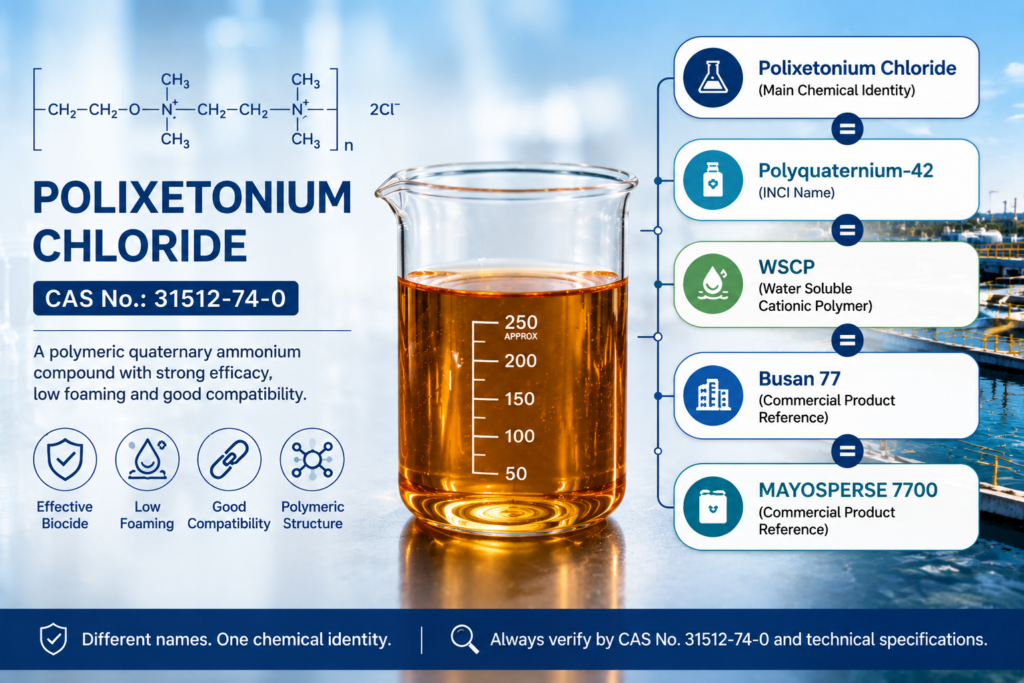
- Polixetonium Chloride: The Main Chemical Identity
- Polyquaternium-42: The INCI Name Used in Ingredient Databases
- WSCP: The Common Term in Water Treatment
- Commercial Product Names and Market References
- Why CAS No. 31512-74-0 Is the Key Identification Method
- Common Mistakes When Comparing Polixetonium Chloride Suppliers
- Different Names, One Chemical Identity
Why Does Polixetonium Chloride Have So Many Different Names?
Have you ever searched for a chemical product and suddenly found yourself looking at several names that seem completely unrelated?
One supplier talks about Polixetonium Chloride.
A technical document lists:
Poly[oxyethylene(dimethyliminio)ethylene(dimethyliminio)ethylene dichloride]
A cosmetic ingredient database mentions:
Polyquaternium-42
A water treatment professional uses:
WSCP (Water Soluble Cationic Polymer)
Then you may also come across commercial product references such as Busan 77 or MAYOSPERSE 7700.
At first glance, it can feel confusing. Are these different chemicals? Are suppliers talking about different materials?
The answer is much simpler than it appears.
These names are connected to the same polymeric quaternary ammonium chemistry commonly identified by:
CAS No.: 31512-74-0
The reason so many names exist is not because the chemical keeps changing. It is because different industries, databases, and suppliers describe the material from different perspectives.
Understanding these naming differences helps buyers communicate more effectively, compare quotations correctly, and avoid purchasing misunderstandings.
1. Why Do Buyers See Different Names for the Same Chemical?
Chemical names are created for different purposes.
A chemist may describe a material based on its molecular structure.
A regulatory document may use a recognized chemical identity.
A cosmetic formulator may search through an ingredient naming system.
A water treatment engineer may prefer a shorter industry abbreviation.
A manufacturer may use a commercial product name for market communication.
The same situation happens in many industries.
For example, a person may have a legal name, a professional title, and a nickname. Different names do not necessarily mean different identities.
Polixetonium Chloride follows the same pattern.
Depending on where you find the information, you may see:
| Name | Common Usage |
|---|---|
| Poly[oxyethylene(dimethyliminio)ethylene(dimethyliminio)ethylene dichloride] | Chemical structural name |
| Polixetonium Chloride | Chemical and industrial identification |
| Polyquaternium-42 | Cosmetic ingredient terminology |
| WSCP | Water treatment industry abbreviation |
| Busan 77 | Commercial product reference |
| MAYOSPERSE 7700 | Commercial product reference |
So, how should buyers understand all these names?
The key is to connect them back to the chemical identity.
2. Understanding the Chemical Name: Poly[oxyethylene(dimethyliminio)ethylene(dimethyliminio)ethylene dichloride]
The longest name you may encounter is:
Poly[oxyethylene(dimethyliminio)ethylene(dimethyliminio)ethylene dichloride]
This name describes the polymer structure.
For scientists and technical specialists, this type of name provides valuable information because it reflects the repeating units and chemical characteristics of the polymer chain.
However, it is not very convenient for everyday business communication.
Imagine sending an inquiry to a supplier and writing this full chemical name every time. It works, but it is certainly not the easiest way to discuss a product.
That is why shorter and more practical names are widely used.
3. Polixetonium Chloride: The Main Chemical Identity
Among international chemical buyers, Polixetonium Chloride is one of the most recognizable names for this material.
It is associated with:
- CAS No.: 31512-74-0
- EINECS No.: 608-627-7
This name is commonly used in:
- technical data sheets;
- safety data sheets;
- industrial discussions;
- water treatment applications.
Polixetonium Chloride belongs to the polymeric quaternary ammonium compound family.
Compared with traditional small-molecule quaternary ammonium compounds, polymeric quaternary ammonium materials have different performance characteristics, including strong surface interaction and low foaming behavior.
For buyers who want to understand the product from the beginning, you can read:
What Is Polixetonium Chloride? A Complete Beginner’s Guide
4. Polyquaternium-42: The INCI Name Used in Ingredient Databases
One of the most common sources of confusion is the name:
Polyquaternium-42
Many buyers see this name and assume it must be a completely different material.
However, Polyquaternium-42 is a name used within the cosmetic ingredient naming system.
The “Polyquaternium” family includes many different cationic polymers used for their interaction with surfaces.
These materials may provide properties such as:
- conditioning effects;
- film formation;
- surface modification.
Because Polyquaternium-42 belongs to the same chemical identity family as Polixetonium Chloride, searches for one name may lead to information about the other.
This is especially common when researching chemical databases, patents, or ingredient-related information.
For a more detailed comparison, see:
Is Polyquaternium-42 the Same as Polixetonium Chloride?
5. WSCP: The Common Term in Water Treatment
In water treatment discussions, another name frequently appears:
WSCP
WSCP generally refers to:
Water Soluble Cationic Polymer
This abbreviation focuses on the functional characteristics of the material rather than the detailed chemical structure.
Water treatment professionals often use shorter terms because they communicate faster in technical discussions.
When someone says WSCP, they are usually referring to a polymeric cationic material used in applications such as:
- algae control;
- industrial water treatment;
- microbial management programs.
However, buyers should remember one important point:
Abbreviations are convenient, but they should always be confirmed through technical information.
The safest way is to check:
- CAS number;
- active content;
- specification sheet;
- application suitability.
6. Commercial Product Names and Market References
Another reason buyers see different names is that chemical manufacturers and suppliers may introduce products under commercial names.
For Polixetonium Chloride chemistry, some commercial product references appearing in industry discussions include:
- Busan 77 *
- MAYOSPERSE 7700 *
These names represent specific commercial products associated with this polymer chemistry.
However, commercial names should not replace chemical identification.
A trade name tells you about a particular marketed product. It does not automatically describe every supplier’s material or guarantee identical specifications.
When comparing suppliers, professional buyers normally look beyond the product name and review:
- chemical identity;
- CAS number;
- active concentration;
- viscosity;
- pH;
- technical specifications.
A commercial name may start the conversation, but chemical data completes it.
7. Why CAS No. 31512-74-0 Is the Key Identification Method
When many names exist, CAS numbers become extremely important.
For Polixetonium Chloride:
CAS No.: 31512-74-0
is the most reliable reference point.
Why?
Because names can vary between:
- countries;
- industries;
- suppliers;
- databases.
A buyer may receive quotations describing the product as:
- Polixetonium Chloride;
- WSCP;
- Polyquaternium-42;
- a commercial product reference.
Without checking the CAS number and specification, it can be difficult to know whether two quotations truly refer to the same material.
For this reason, experienced chemical buyers usually confirm:
- Chemical name
- CAS number
- Active content
- Appearance
- Technical data
before making a purchasing decision.
You can also learn more about product specifications here:
Technical Properties of Polixetonium Chloride
8. Common Mistakes When Comparing Polixetonium Chloride Suppliers
When sourcing this material internationally, several common mistakes can happen.
Mistake 1: Comparing Only Product Names
A supplier may use one name while another uses a different name.
This does not automatically mean they are offering different materials.
Always check the chemical identity.
Mistake 2: Assuming Commercial Names Represent Universal Standards
A commercial name belongs to a specific marketed product.
Different suppliers may offer materials with different specifications, even if the application is similar.
Mistake 3: Ignoring Technical Parameters
For polymeric chemicals, specifications matter.
Important information may include:
- active content;
- viscosity range;
- appearance;
- pH;
- storage conditions.
A reliable supplier should provide clear technical documentation.
9. Different Names, One Chemical Identity
Polixetonium Chloride is a good example of how chemistry, industry, and commerce use different languages.
The chemical structure name explains what the molecule is.
Polixetonium Chloride provides a practical chemical identity.
Polyquaternium-42 connects with cosmetic ingredient terminology.
WSCP is commonly used in water treatment discussions.
Busan 77 and MAYOSPERSE 7700 are commercial product references used in the market.
Different names do not necessarily mean different chemicals.
For international buyers, the most important skill is knowing how these names connect and verifying the material through reliable identifiers such as:
CAS No. 31512-74-0
Once this connection is clear, researching, comparing, and purchasing Polixetonium Chloride becomes much easier.
Frequently Asked Questions
1. Is Polyquaternium-42 the same chemical as Polixetonium Chloride?
Polyquaternium-42 is an ingredient name associated with the same polymer chemistry commonly identified as Polixetonium Chloride (CAS No. 31512-74-0).
2. What does WSCP mean in water treatment?
WSCP stands for Water Soluble Cationic Polymer and is commonly used as an industry term for polymeric cationic materials.
3. Are Busan 77 and MAYOSPERSE 7700 chemical names?
No. They are commercial product references rather than chemical names. Buyers should confirm chemical identity through CAS number and technical specifications.
4. What is the CAS number of Polixetonium Chloride?
The CAS number of Polixetonium Chloride is 31512-74-0.
5. Why does Polixetonium Chloride have different names?
Different industries use different naming systems, including chemical names, ingredient names, abbreviations, and commercial references.
* Note: Busan 77 and MAYOSPERSE 7700 are referenced only for chemical identification purposes. Eautrix is not affiliated with or endorsed by the manufacturers of these commercial products.