
Frequently Asked Questions About Polixetonium Chloride
1. What is Polixetonium Chloride used for?
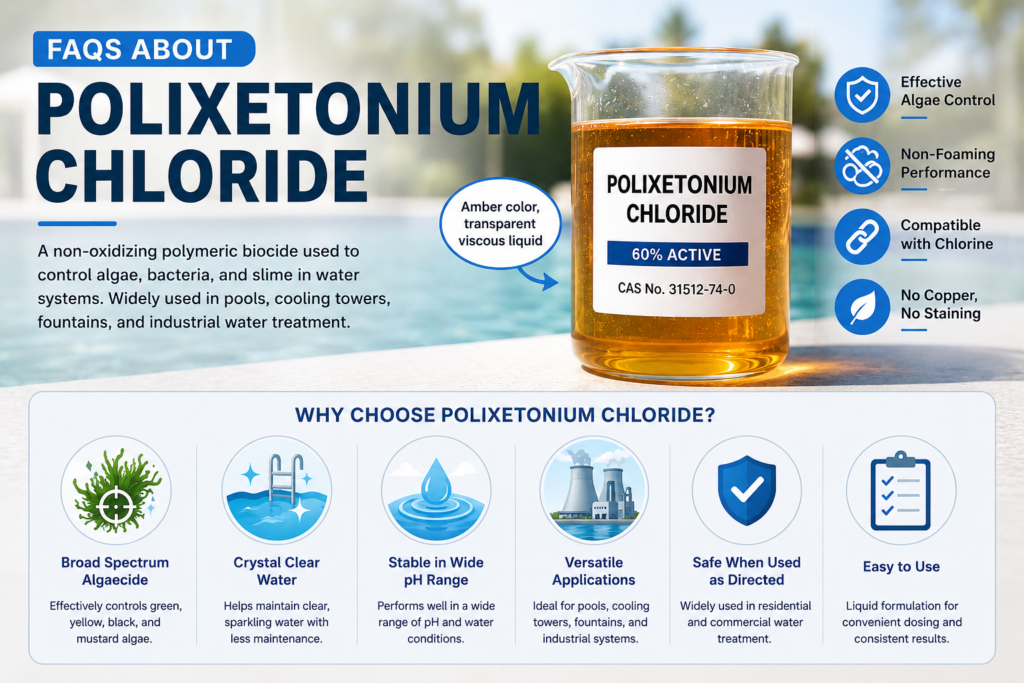
Polixetonium Chloride is a non-oxidizing polymeric biocide used to control algae, bacteria, and slime-forming microorganisms in water systems. It is widely applied in swimming pools, industrial cooling water, decorative fountains, water features, and certain water-based industrial formulations. Because it is non-foaming and compatible with most common water treatment chemicals, it is especially suitable for circulating water systems.
2. Is Polixetonium Chloride the same as Polyquat 60?
Not exactly.
Polixetonium Chloride is the chemical name for a family of polymeric quaternary ammonium biocides (CAS No. 31512-74-0).
Polyquat 60 usually refers to a commercial algaecide formulation containing approximately 60% active Polixetonium Chloride.
In other words:
- Polixetonium Chloride = active ingredient
- Polyquat 60 = finished commercial product formulated with that ingredient
3. How does Polixetonium Chloride kill algae?
Polixetonium Chloride carries positively charged polymer chains that are attracted to the negatively charged surfaces of algae cells. Once attached, it disrupts the cell membrane, causing leakage of essential cellular components. The algae can no longer function normally and gradually die.
Unlike oxidizing sanitizers, this mechanism does not rely on chlorine or bromine, making it effective without oxidation.
4. Does Polixetonium Chloride create foam?
No.
One of its biggest advantages is its non-foaming performance, even in highly circulated water systems.
This makes it a preferred choice for:
- Swimming pools
- Decorative fountains
- Water parks
- Cooling towers
- Industrial recirculating water systems
5. Is Polixetonium Chloride compatible with chlorine?
Yes.
Polixetonium Chloride is generally compatible with chlorine and bromine treatment programs. It is commonly used alongside traditional sanitizers to improve algae prevention while reducing the need for frequent shock treatments.
However, dosage recommendations should always follow the formulation guidelines provided by the manufacturer.
6. Can Polixetonium Chloride replace chlorine?
No.
Polixetonium Chloride is primarily an algaecide and non-oxidizing biocide, not a complete disinfectant.
In swimming pools, it is normally used together with chlorine or bromine rather than replacing them. Chlorine remains the primary sanitizer responsible for rapid pathogen control, while Polixetonium Chloride helps prevent algae growth and supports long-lasting water clarity.
7. Is Polixetonium Chloride safe for swimming pools?
When used according to the recommended dosage, Polixetonium Chloride is widely used in residential and commercial swimming pools. It does not contain copper, so it does not introduce metal ions that may contribute to staining under certain pool conditions.
As with any pool chemical, it should be handled according to the product’s Safety Data Sheet (SDS) and local regulations.
8. What is the typical concentration of Polixetonium Chloride?
Industrial-grade Polixetonium Chloride is most commonly supplied as a 60% active ingredient solution (CAS No. 31512-74-0).
Manufacturers may also provide customized concentrations, such as 10%, 20%, or other formulations, depending on the intended application and customer requirements.
9. What is the difference between Polixetonium Chloride and copper-based algaecides?
Polixetonium Chloride offers several advantages over traditional copper-based products:
- Does not introduce copper into the water
- Non-foaming
- Effective against a broad range of algae
- Compatible with chlorine treatment programs
- Less risk of metal staining under normal operating conditions
These characteristics make it popular for both residential and commercial pool maintenance.
10. How should Polixetonium Chloride be stored?
Store Polixetonium Chloride in its original tightly sealed container in a cool, dry, and well-ventilated area away from direct sunlight and extreme temperatures.
Avoid contamination with incompatible materials, and keep the container tightly closed when not in use. Under appropriate storage conditions, the product typically maintains good stability during its recommended shelf life.
Have more questions? Feel free to contact us anytime. We’re always happy to discuss your application or technical requirements.