
GET IN TOUCH
Ask For Sample?
Partner with a Professional Polyquat 60 OEM Manufacturer
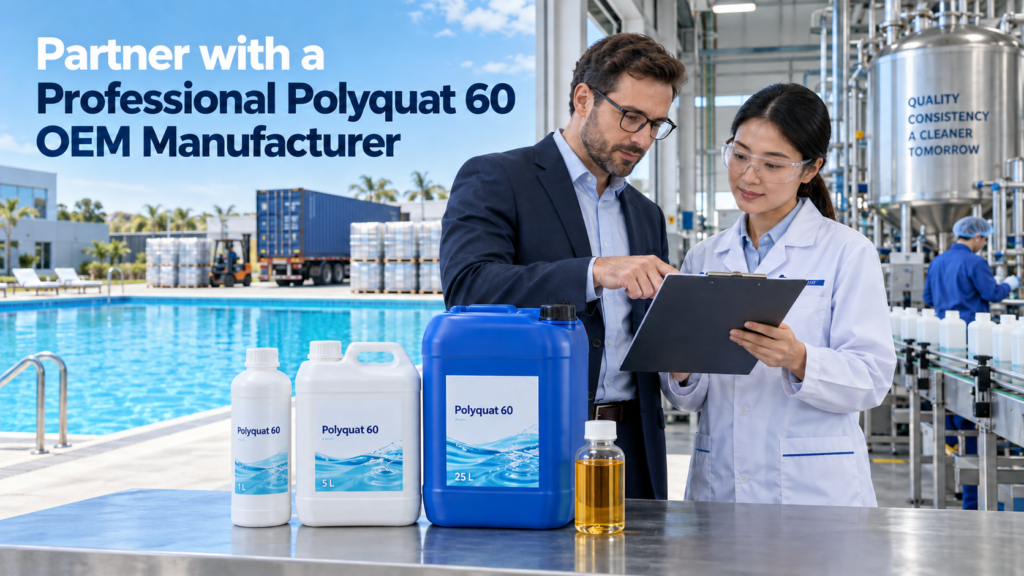
For a pool chemical brand, choosing a Polyquat 60 OEM manufacturer is not just a sourcing decision. It shapes how your product performs, how confidently your sales team speaks, how smoothly each shipment clears customs, and—perhaps most important—whether buyers come back next season.
On paper, Polyquat 60 can look like a simple liquid product. Ask for a 60% active solution, choose a bottle, add a label, and place an order. Easy, right? In practice, a successful private-label program has many moving parts. Product specifications, raw material control, filling accuracy, package compatibility, label review, batch records, export documents, and delivery timing all need to work together.
That is where a professional OEM partner earns its place. The right manufacturer does more than fill your containers. It helps turn a chemical concentrate into a market-ready product that fits your brand, your customers, and your local requirements.
Polyquat 60 OEM Manufacturing Is More Than Filling Bottles
OEM stands for original equipment manufacturing. In the pool chemical sector, the term often covers several service levels. A buyer may purchase Polyquat 60 in bulk under the manufacturer’s standard specification. Another buyer may request a finished private-label algaecide in 1 L bottles, 5 L jerry cans, or 25 L containers. A distributor may need a custom concentration, multilingual labels, master cartons, pallet marks, and a complete export document set.
These are all OEM projects, but they are not equally demanding.
A dependable program begins with a clear product brief. It should answer practical questions such as:
- Will you import concentrated Polyquat 60 or a ready-to-sell formulation?
- What active content and quality limits do you require?
- Which package sizes match your sales channels?
- Will the product be sold to pool professionals, retail stores, or both?
- Who will prepare and approve the label claims?
- Which documents are required in the destination market?
- What is the expected first order and annual volume?
Without these details, a quotation is only a rough number. With them, the manufacturer can build a realistic offer that includes the product, packaging, testing, production lead time, and shipping configuration.
If you are still defining the core product, start with the Polyquat 60 Algaecide product page. It gives your team a practical base for discussing concentration, appearance, applications, and supply options.
Why the Manufacturer Behind the Label Matters
Customers see the bottle. You live with everything behind it.
If one batch arrives with a different color, unexpected viscosity, a leaking cap, or unclear documentation, the end customer may never know which factory made it. They will remember your brand name. That makes supplier selection a reputation decision, not simply a price comparison.
A professional Polyquat 60 OEM manufacturer should provide control at three connected levels.
Product Control
The manufacturer should define the approved raw materials, process conditions, in-process checks, finished-product tests, and release criteria. The commercial team should be able to explain what is tested, how often it is tested, and what happens when a result falls outside the agreed range.
Packaging Control
The liquid must remain secure through filling, warehousing, container loading, sea transport, and local distribution. Bottle resin, cap design, induction seal or inner plug, label adhesive, carton strength, and pallet stability all matter. A handsome package that leaks after six weeks in a hot warehouse is not a successful package.
Document Control
Product names, batch numbers, net weights, manufacturing dates, COA values, packing lists, labels, and shipping marks must agree. Small document errors can cause large delays. Good document control may not look exciting, but neither does a container waiting at port because two papers tell different stories.
Start with a Written Product Specification
The specification is the backbone of an OEM agreement. It converts phrases such as “high quality” into measurable acceptance criteria.
For a concentrated Polyquat 60 program, buyers commonly discuss items such as:
- Product identity and intended application
- Active content or other agreed concentration measure
- Appearance and color range
- pH under a defined test condition
- Density or specific gravity
- Viscosity and test temperature
- Packaging type and net content
- Batch coding and shelf-life statement
- Storage conditions
- Test methods and acceptance limits
The exact limits should come from the approved product specification, not from a generic online description. Test conditions matter too. A viscosity value without a temperature, instrument, or method may create more confusion than clarity.
Ask the manufacturer to link the specification with the Certificate of Analysis, or COA. The COA should report results for the supplied batch—not merely repeat broad sales claims. Before the first commercial order, review the sample COA format so your quality team knows what it will receive.
One more point: agree on change control. If a raw material, test method, package component, production site, or specification needs to change, how much notice will you receive? Can the change be made without written approval? A short clause here can prevent an unpleasant surprise later.
Sample Approval Should Follow a Real Process
Samples are useful, but only when they represent the commercial product.
Begin with a laboratory or pre-shipment sample that matches the proposed specification. Record its batch or sample code. Check the product against your internal criteria, then test it in the conditions that matter to your market. A distributor serving outdoor pools in a hot climate may focus on different use conditions than a company selling winter-closing products in Northern Europe.
Your review may include:
- Appearance, odor, pH, density, and viscosity
- Dilution behavior in local water
- Performance in the intended pool care program
- Compatibility with the selected bottle, cap, seal, and label
- Stability under realistic storage conditions
- Comparison with your approved reference sample
Do not rush from a small sample to a full container without confirming scale-up expectations. The first commercial batch should be checked against the approved reference and specification. For a new private-label package, a pilot filling run can also reveal cap-torque, label-position, coding, or carton problems before thousands of units are produced.
Keep a sealed retention sample from the approved product and, where practical, from each commercial batch. If a complaint appears months later, those samples give both sides something concrete to examine. Memory is vague. A properly identified bottle is not.
Choose Packaging for the Customer, Not Just the Factory
Packaging decisions should begin with how the product will be bought, carried, stored, and poured.
A 1 L bottle may suit retail shelves and residential pool owners. A 5 L jerry can can work well for service companies and specialist dealers. A 25 L jerry can is often more practical for commercial users, regional repacking, or professional maintenance teams. Bulk drums or intermediate bulk containers may make sense for buyers with local blending or filling capability, subject to the agreed product and transport setup.
Yet pack size is only the first choice. You also need to consider:
- Container material and wall thickness
- Handle comfort and controlled pouring
- Cap and liner compatibility
- Tamper evidence
- Induction sealing or inner plugs
- Label material for wet environments
- Ink resistance and batch-code legibility
- Carton quantity and stacking strength
- Pallet pattern and container loading efficiency
Pool chemicals often sit near moisture, sunlight, and changing temperatures. A paper label that looks perfect in the design file may wrinkle or lift in service. Likewise, a dark, crowded label may hide critical instructions. Ask for a filled package sample or production mock-up and test it with wet hands, storage racks, and normal handling. It sounds almost too ordinary, but this is where buyers notice quality.
Private-Label Design Needs Technical Review
Your graphic designer understands visual hierarchy. Your regulatory adviser understands mandatory wording. Your manufacturer understands the product and the physical label. A sound label review brings all three views together.
The front panel normally carries the brand, product name, net contents, and key positioning. Other panels may need directions, warnings, storage information, ingredient disclosure, batch identification, company details, and disposal language. Requirements differ by country and by how the product is classified and marketed.
That last point deserves emphasis: OEM supply does not automatically transfer regulatory responsibility to the factory. The brand owner or importer may still be responsible for registration, authorized claims, local-language text, safety communication, and market placement. Confirm responsibilities in writing before artwork approval.
Avoid making broader performance or safety claims than your evidence and local authorization support. “Non-foaming” can be a useful technical feature when verified. Claims about killing specific organisms, long protection periods, swimmer safety, or universal chemical compatibility may require closer review. Clear, defensible language protects the customer and the brand.
Before printing, use a signed artwork approval process. Check spelling, units, barcodes, colors, regulatory text, company addresses, product codes, and print dimensions. Then approve a digital proof or physical print sample. One wrong digit can travel a very long way when it is printed on 10,000 labels.
Quality Assurance Lives in the Batch Record
A polished sales brochure is helpful. A controlled batch record is better.
Ask a potential manufacturer how an order moves from raw material receipt to finished-product release. You are looking for a traceable system, not a theatrical factory tour. The manufacturer should be able to connect a finished lot with its raw materials, production date, process record, test results, filling line, packaging components, and released quantity.
Useful quality questions include:
- Are incoming raw materials identified and inspected?
- Which in-process parameters are recorded?
- Which finished-product tests are required before release?
- Who reviews and approves the COA?
- How are nonconforming materials isolated?
- How long are batch records and retention samples kept?
- How are customer complaints investigated?
- Is measuring equipment calibrated on a defined schedule?
- How is cleaning recorded between products or batches?
You do not need to turn every first conversation into a three-day audit. Start with a supplier questionnaire, key certificates where relevant, sample documents, and a video or on-site review. Increase the depth as order value and business risk grow.
Documentation Should Be Agreed Before the Purchase Order
Export documents should not be treated as an afterthought. The required set can vary by shipment, destination, transport mode, and customer.
A typical discussion may include:
- Commercial invoice
- Packing list
- Certificate of Analysis
- Safety Data Sheet, or SDS
- Certificate of origin when requested
- Bill of lading or air waybill
- Product or transport declarations where applicable
- Insurance documents under the agreed trade term
- Pallet or wood-packaging statements when relevant
The product name and company information should stay consistent across the approved label, SDS, COA, invoice, packing list, and transport paperwork. Ask the importer and customs broker to review special requirements before production, particularly for a first shipment.
The SDS also needs careful handling. Its classification and transport section should reflect the actual supplied product and current rules for the destination and mode of transport. An old generic SDS with another supplier’s identity is not a substitute for a controlled document.
Regulatory Support Is a Shared Responsibility
Chemical compliance is market-specific. A product accepted in one country may require a registration, notification, approved active substance, local representative, or different label in another. Pool algaecides can fall under pesticide or biocidal product frameworks, depending on the market and claims.
A professional OEM manufacturer should supply accurate product information and available technical documents. The importer or brand owner should confirm what is required to place the finished product on the target market. Sometimes an independent regulatory consultant is the sensible bridge between the two.
Create a responsibility table before launch. List who owns each task: product classification, local registration, claim approval, SDS language, label translation, artwork sign-off, notification updates, and record retention. This simple table removes the dangerous sentence, “We thought the other side was handling it.”
Build a Supply Plan That Can Survive the Busy Season
Pool chemical demand is seasonal in many regions. Orders can rise quickly before spring opening and summer maintenance periods. If your OEM plan begins only when inventory is nearly empty, even a good manufacturer may not save the season.
Share a rolling forecast. It does not need to be a binding purchase order, but it helps the manufacturer plan raw materials, packaging, labels, and filling capacity. Separate forecast volume from confirmed orders so both parties understand the commitment.
Discuss these supply points early:
- Minimum order quantity for the liquid and each package design
- Lead time for first orders and repeat orders
- Extra time for custom bottles, labels, or cartons
- Production capacity during peak months
- Safety stock options for raw materials or printed packaging
- Shelf life and inventory rotation
- Shipment consolidation possibilities
- Backup plans for delayed packaging components
Printed labels and custom containers often create longer lead times than the chemical itself. That catches new brand owners off guard. A sensible launch plan may begin with standard containers and custom labels, then move to fully customized packaging when sales volume supports it.
Compare Total Value, Not Only the Price per Kilogram
The lowest unit price can become the most expensive offer if it brings inconsistent concentration, weak packaging, rejected artwork, delayed documents, or repeated claims.
Compare quotations on the same basis. Confirm concentration, net weight, packaging, palletization, testing, documentation, trade term, payment terms, lead time, and any one-time printing or mold costs. If two offers describe different products or service levels, the numbers are not truly comparable.
Also calculate landed cost. Freight efficiency matters, especially for liquid products. Concentrated supply can reduce the volume shipped per unit of finished treatment, while local dilution or filling may lower freight and improve package flexibility. However, local processing adds equipment, quality, water, labor, compliance, and traceability responsibilities. There is no universal winner; the right model depends on your market and operating capability.
A Strong OEM Partner Helps You Build a Product Line
Polyquat 60 may be the first product, but it does not need to stand alone.
Distributors often serve customers who want algae control, water clarification, and seasonal care from one supplier. Once the core OEM process works, related products can be added using the same artwork approval, quality, and supply framework.
For cloudy-water programs, consider a compatible Polymer Pool Clarifier. For colder markets and pool-closing campaigns, a Winter Algaecide can extend the selling season. The goal is not to create a huge catalog overnight. It is to build a focused line in which each product has a clear job.
Ask the manufacturer whether package families can share bottle shapes, cap colors, cartons, or label dimensions. Common components can simplify purchasing and strengthen brand recognition. Just keep each formula, label, code, and batch record clearly separated.
Warning Signs You Should Not Ignore
Most sourcing problems send a small signal before they become a large one. Watch for these signs:
- The supplier will not provide a clear written specification.
- Every question receives “no problem,” but no supporting detail.
- The sample cannot be linked to future commercial production.
- COA values appear identical across every batch without explanation.
- Packaging compatibility is assumed rather than tested.
- Label claims are encouraged without regulatory review.
- Product identity changes across the quotation, SDS, and invoice.
- Lead times remain vague after artwork and quantity are confirmed.
- Change-control and complaint procedures are absent.
- The price is unusually low, yet the scope of supply is unclear.
One warning sign does not always mean the supplier is unsuitable. It does mean you should slow down, ask for evidence, and define the missing point in writing.
A Practical Route from Inquiry to First Shipment
A well-run OEM project can follow a simple sequence:
- Share your target market, product format, pack sizes, annual estimate, and launch date.
- Review the proposed specification, sample COA, SDS, packaging choices, and commercial quotation.
- Approve and test a traceable product sample.
- Confirm regulatory responsibilities and permitted label claims.
- Create the artwork and complete technical, regulatory, and print reviews.
- Approve package samples or a pilot filling run when needed.
- Sign the specification, quality terms, artwork, and purchase order.
- Confirm the production schedule and pre-shipment document drafts.
- Review batch results, packing details, and shipment information.
- Evaluate the first delivery and record improvements for the repeat order.
Simple does not mean careless. Each step should have an owner and an approval record. That discipline makes later orders faster because the key decisions have already been made.
Why Work with Eautrix for Polyquat 60 OEM Supply?
Eautrix focuses on cationic polymer solutions for water treatment and specialty pool chemical applications. For OEM and private-label buyers, we can discuss concentrated Polyquat 60 supply, finished product formats, package sizes, label requirements, and export documentation based on the needs of the project.
Our production facility is located in Langfang, Hebei, China, close to Tianjin’s main port area. This location supports practical export planning for international orders. More important, our approach starts with technical and commercial details: what product you need, where it will be sold, how it will be packed, and which checks should be completed before shipment. (eautrix.com)
We can support discussions around:
- Bulk Polyquat 60 supply
- 1 L, 5 L, and 25 L packaging options
- Private-label and custom packaging projects
- Product samples for evaluation
- COA and SDS documentation
- Related pool clarifier and winter-care products
- Shipment planning for international buyers
The final scope depends on order quantity, packaging availability, target-market requirements, and artwork approval. That is why a useful inquiry includes more than “Please send your best price.” Tell us the market, pack size, expected volume, and preferred delivery term. A few clear details lead to a much better answer.
The Better Partnership Starts with Better Questions
Partnering with a professional Polyquat 60 OEM manufacturer is not about handing over your logo and hoping for the best. It is a controlled path from technical specification to customer experience.
The strongest partnerships are built on measurable quality, honest communication, clear responsibility, and repeatable execution. They also leave room for practical improvement. Perhaps the first shipment uses a standard bottle. The second improves the carton. The third adds a seasonal product. Progress can be steady without being reckless.
If you are preparing a new algaecide brand, expanding a distributor range, or looking for a more dependable Polyquat 60 supply arrangement, Eautrix is ready to review your project. Share your destination market, preferred concentration, package sizes, estimated order quantity, and label needs. We will use those details to discuss a workable OEM solution and quotation.
Frequently Asked Questions
1. What information should I send to a Polyquat 60 OEM manufacturer?
Send your destination market, required concentration or specification, package sizes, estimated order quantity, annual forecast, label language, target launch date, and preferred Incoterm. These details help the manufacturer prepare an accurate private-label Polyquat 60 quotation.
2. Can I order Polyquat 60 with my own brand and label?
Yes, private-label Polyquat 60 packaging can be discussed for suitable order quantities. The artwork, claims, mandatory text, bottle, cap, seal, carton, and batch coding should all be approved before mass production.
3. Which packaging sizes are suitable for OEM Polyquat 60 algaecide?
Common options include 1 L bottles for retail, 5 L jerry cans for pool service channels, and 25 L jerry cans for professional or commercial users. The best size depends on customer habits, freight, local rules, and your route to market.
4. How should I check Polyquat 60 quality before a bulk order?
Approve a traceable sample against a written specification, review the COA and SDS, test relevant physical properties and use performance, and confirm package compatibility. Keep an approved reference sample for comparison with the first commercial batch.
5. Does an OEM manufacturer handle all product registrations for my country?
Not automatically. The manufacturer can provide available technical information, but the importer or brand owner may remain responsible for local registration, approved claims, label language, SDS requirements, and market placement. Define each responsibility in writing before launch.