
GET IN TOUCH
Ask For Sample?
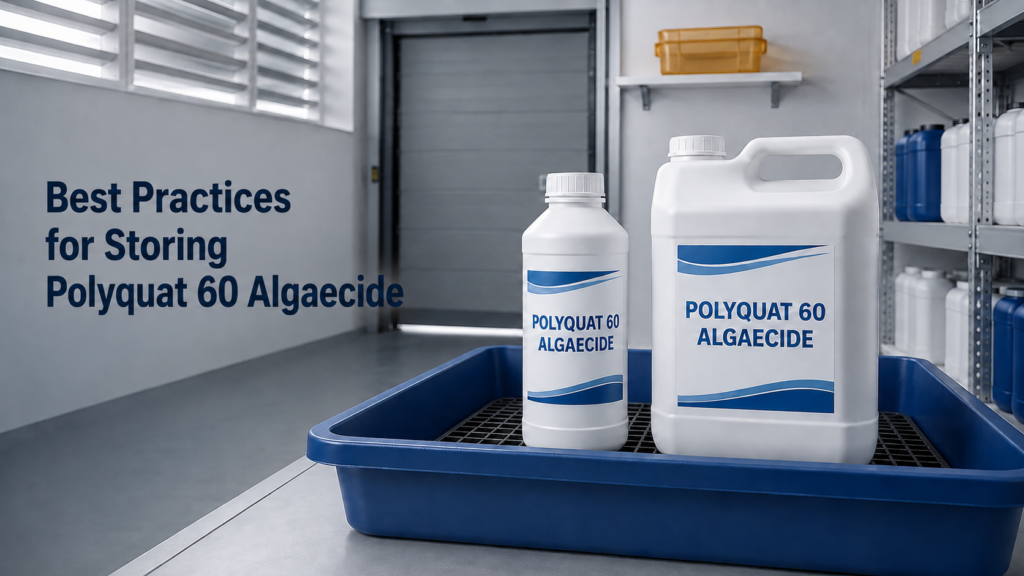
Best Practices for Storing Polyquat 60 Algaecide
Polyquat 60 is valued for being a concentrated, non-foaming, metal-free algaecide. Yet even a well-formulated product can lose its practical value when it is stored carelessly.
A loose cap allows contamination. Direct sunlight heats the container. Freezing may alter the product’s physical condition. One damaged bottle on an upper shelf can leak across every package below it. None of these problems looks dramatic at first—but warehouse trouble often begins with something small.
Correct storage protects more than the chemical itself. It also protects employees, customers, packaging, inventory records, nearby water sources, and the reputation of the supplier or pool service company handling it.
The basic rule is simple: keep Polyquat 60 in its original, tightly closed container in a cool, dry, ventilated, secure area. Store it upright, protect it from severe temperature changes, separate it from incompatible chemicals, and provide secondary containment for leaks.
There is one important qualification. “Polyquat 60” is a product category rather than one universal retail formulation. Concentration, additives, packaging, registration status, and regional label requirements can differ. The instructions on the specific product label and Safety Data Sheet (SDS) must always take priority over general advice.
Why Does Polyquat 60 Storage Matter So Much?
Polyquat 60 is a water-soluble polymeric quaternary ammonium algaecide. Many 60% products are based on Polixetonium Chloride, also known as Polyquaternium-42, associated with CAS No. 31512-74-0.
The product is used to prevent and control algae in residential pools, commercial pools, spas, and seasonal water-care programs. It is non-oxidizing and does not depend on copper or another metal for its algae-control effect.
Readers who need a broader introduction can review the <u>Polyquat 60 Algaecide product page</u> for its common characteristics, packaging options, and pool applications.
Polyquat 60 is usually supplied as a concentrated aqueous liquid. Its physical condition, concentration, viscosity, and package integrity all affect how easily it can be measured, transferred, diluted, or formulated.
Poor storage may lead to:
- Leaking or swollen containers
- Contaminated product
- Damaged or unreadable labels
- Changes in appearance or flow
- Incorrect dosing caused by damaged packaging
- Accidental mixing with other pool chemicals
- Product reaching floors, drains, soil, or surface water
- Inventory aging because older containers remain forgotten
Storage is therefore part of quality control. It is not merely a matter of finding an empty shelf.
Start With the Product Label and SDS
Before choosing a storage location, read two documents: the product label and the current SDS.
The label tells the user how the registered finished product must be stored and disposed of. The SDS provides additional information about handling, personal protection, stability, incompatibilities, accidental release, and emergency response.
A representative SDS for a 60% polyquat algaecide calls for storage in a dry, cool, well-ventilated place, with the original container tightly closed and kept away from children, pets, food, feed, and incompatible materials. Other Polyquat 60 SDS documents give similar directions, although the exact wording varies between formulations.
That variation matters.
Do not copy the storage temperature, shelf life, hazard classification, or disposal instructions from a different brand simply because both labels say “Polyquat 60.” Confirm the information for the actual finished product and batch being handled.
A useful document station should contain:
- The latest SDS revision
- The finished product label
- The Technical Data Sheet, when supplied
- The batch number and manufacturing date
- Supplier emergency contact details
- Local spill-reporting contacts
- Site-specific storage and response procedures
Electronic copies help, but an accessible printed copy is valuable during a power failure or warehouse emergency.
Choose a Cool, Dry, and Shaded Storage Area
“Cool and dry” sounds almost too simple. In practice, it requires a little thought.
A metal shed exposed to afternoon sun may be dry, but certainly not cool. A shaded basement may stay cool while suffering from damp floors. A service van may be secure during the day but reach extreme temperatures when parked.
The preferred location is an indoor chemical-storage area protected from direct sunlight, rainfall, flooding, and major temperature swings.
Avoid placing Polyquat 60:
- Beside windows receiving direct sun
- Against heating pipes or radiators
- Near boilers, furnaces, or hot process equipment
- Directly beneath air-conditioning outlets where condensation forms
- On floors that regularly become wet
- In low areas vulnerable to flooding
- Inside an unattended vehicle for long periods
- Outside without weather protection
Direct sunlight can heat the liquid and container even when the surrounding air feels comfortable. Repeated heating and cooling may also stress closures, seals, and plastic packaging.
If a warehouse has several possible storage zones, monitor their actual temperatures. The coolest-looking corner is not always the most stable one.
Temperature Control: Do Not Guess at One Universal Range
Many general SDS documents say to store Polyquat 60 in a cool place but do not state a narrow numerical range. Some finished algaecide SDS documents also advise protecting the product from freezing and direct sunlight.
This does not justify inventing a universal temperature specification.
The acceptable range should come from the supplier’s SDS, TDS, stability data, or written storage statement. A raw-material concentrate, a diluted private-label product, and a winter algaecide formulation may not behave identically.
As a practical rule:
- Prevent freezing unless the supplier confirms freeze–thaw stability.
- Avoid prolonged exposure to excessive warehouse heat.
- Minimize rapid or repeated temperature cycling.
- Record temperatures where commercial stock is stored.
- Quarantine any product exposed outside its confirmed range.
If Polyquat 60 has frozen, do not immediately sell it, dose it, or heat it with an uncontrolled heater. Contact the supplier. The manufacturer may recommend gradual thawing, gentle mixing, testing, or disposal, depending on the formulation and exposure history.
Likewise, never assume that a clear appearance proves the product is unaffected. Some changes cannot be confirmed by sight alone.
Keep Every Container Tightly Closed
A properly closed package prevents contamination, evaporation of water from the formulation, leakage, and accidental entry of dirt or other chemicals.
This is particularly important in pool-maintenance rooms, where measuring cups, wet gloves, chlorine dust, splashes, and open containers may all be present.
After each use:
- Inspect the cap and sealing surface.
- Remove residue from the outside of the closure.
- Close the cap securely without damaging the threads.
- Wipe the container exterior.
- Return the package to secondary containment.
- Record the opening date when inventory procedures require it.
Do not leave a measuring device sitting inside the container. Never pour unused material from a dirty measuring cup back into the original bottle. That small attempt to avoid waste can contaminate an entire package.
Dedicated transfer tools are worth using. Mark them clearly for Polyquat 60 and do not share them with chlorine, acids, alkalis, clarifiers, or other treatment chemicals.
Use the Original Compatible Container
The original container is normally the safest storage package because it has been selected for the formulation and carries the required identity, hazard, use, and disposal information.
Polyquat 60 products are commonly supplied in compatible plastic bottles, jerrycans, drums, or intermediate bulk containers. However, the appropriate material and closure system should still be confirmed by the supplier, especially for bulk repacking or private-label production.
Do not transfer Polyquat 60 into:
- Beverage bottles
- Food containers
- Unmarked buckets
- Household detergent bottles
- Containers with an unknown previous use
- Damaged packages
- Containers that cannot be sealed
A drink bottle creates an obvious poisoning risk. Even if everyone in the warehouse “knows what is inside,” a visitor, new employee, cleaner, driver, or family member may not.
When transfer is necessary for an approved operational reason, the receiving container must be chemically compatible, clean, dedicated, closable, and correctly labeled. Follow workplace and local regulatory requirements for secondary-container labeling.
Store Containers Upright and Off the Floor
Every bottle, jerrycan, or drum should stand upright unless its approved packaging system specifically permits another position.
Store packages on chemical-resistant shelving, pallets, or containment decks. Keeping them off the bare floor reduces the chance of damage from water, cleaning equipment, pallet trucks, or unnoticed floor contamination.
Heavy packages belong on lower levels. This reduces both fall risk and manual-handling strain.
A sensible shelf arrangement includes:
- Small bottles at a convenient handling height
- Larger jerrycans and drums on lower shelves
- No packages above eye level if they must be lifted manually
- Adequate clearance around sprinkler systems and ventilation openings
- Shelf lips or restraints where falling is possible
- Enough space to inspect labels and container condition
Avoid overcrowding. A shelf packed from edge to edge may look efficient, but it hides leaks and encourages workers to pull containers out by their caps or handles.
Secondary Containment Is a Quiet Form of Insurance
Secondary containment is a tray, bund, spill pallet, or protected storage zone designed to catch liquid if the primary container leaks.
For a single household bottle, a sturdy chemical-resistant tray may be adequate. Commercial storage requires a containment capacity based on local rules, container sizes, and the site’s spill-risk assessment.
The containment material must also be compatible with the stored product.
Place containment where it can be inspected and cleaned. A tray already filled with rainwater, dust, or residues from another chemical cannot perform its job properly.
Secondary containment helps prevent a small cap leak from becoming:
- A slippery walking surface
- A damaged carton or pallet
- A mixed-chemical incident
- A release to a floor drain
- Contamination of soil or surface water
- Loss of several neighboring packages
This last point deserves emphasis. Polixetonium Chloride carries an aquatic hazard classification in chemical databases, so releases should be kept away from drains and natural water. PubChem lists the substance as very toxic to aquatic life under the acute aquatic hazard category. Preventing environmental release is therefore a central storage objective—not a footnote.
Separate Polyquat 60 From Incompatible Chemicals
Polyquat 60 may be used in a properly managed chlorinated swimming pool, but that does not mean concentrated products should share containers, measuring equipment, or spill trays.
Normal use compatibility in thousands of gallons of pool water is very different from concentrated chemical contact in a bottle, bucket, feeder, or warehouse leak.
Keep Polyquat 60 physically separated from:
- Concentrated liquid or dry chlorine products
- Oxidizers
- Acids and alkalis unless compatibility is confirmed
- Other chemicals identified as incompatible in the SDS
- Food, beverages, animal feed, and medicines
- Personal belongings and protective clothing
- Unidentified returned chemicals
Never mix Polyquat 60 directly with concentrated chlorine in a storage container or measuring vessel. For a fuller explanation of the distinction between pool-water compatibility and concentrate mixing, see Can Polyquat 60 Be Used with Chlorine?.
Separate containment is also important. If a chlorine container and a Polyquat 60 bottle leak into the same tray, the products may contact each other even though both packages were stored upright.
A chemical segregation chart near the storage area can help employees make quick, consistent decisions.
Ventilation and Access Control Still Matter
Polyquat 60 is an aqueous product and is not stored like a volatile solvent. Even so, the SDS commonly calls for a well-ventilated storage space.
Ventilation supports a safer working environment, especially where many pool chemicals are stored and handled. It also helps prevent heat buildup in small rooms.
Storage rooms should not double as lunchrooms, offices, changing areas, or general household cupboards.
Access should be limited to trained people. For residential use, keep the product inaccessible to children and pets. For commercial storage, use locked rooms, cages, cabinets, or controlled warehouse zones as required by the site risk assessment.
Post clear identification at the entrance, but do not rely on signs alone. Physical access control is more dependable than a notice that says “staff only.”
Prepare for Leaks Before They Happen
The best time to find a spill kit is not while liquid is already moving toward a drain.
Keep suitable response materials near the storage area without placing them inside the spill zone. The exact contents should reflect the SDS and site assessment, but they may include:
- Chemical-resistant gloves
- Splash goggles or other required eye protection
- Protective clothing
- Compatible absorbent material
- Drain covers
- Waste bags or approved recovery containers
- Non-sparking or chemical-resistant cleanup tools where appropriate
- Warning signs or barrier tape
- Written emergency instructions
Employees should know whom to contact, when to evacuate the area, and whether a spill exceeds their training.
For a minor release, stop the source only if it can be done safely, protect drains, contain the liquid, and collect it according to the SDS and local rules. Do not wash the product into a drain or outside onto the ground.
For a larger spill, damaged bulk container, unknown mixture, or environmental release, isolate the area and contact trained emergency personnel.
Manage Stock With FEFO, Not Memory
Chemical inventory can look permanent. It is not.
Use first-expired, first-out—often shortened to FEFO—when the product has a stated expiry or retest date. If containers share the same shelf life, first-in, first-out may be sufficient.
Record:
- Product name and concentration
- Supplier
- Batch or lot number
- Date received
- Manufacturing date
- Expiry or retest date
- Date opened
- Quantity
- Storage location
- Inspection findings
- Temperature excursion history
Do not let new deliveries bury older stock at the back of a shelf. Rotate inventory when receiving each shipment.
A monthly visual inspection is a reasonable starting point for many small facilities, while high-volume or harsh environments may require more frequent checks. Local procedures should determine the final schedule.
What Should You Inspect?
Look at the package before moving it.
Warning signs include:
- A swollen, collapsed, split, or distorted container
- A loose, cracked, or leaking cap
- Crystallized or dried residue around the closure
- Wetness beneath the package
- A stained or damaged label
- Unusual separation, clumps, haze, or sediment
- A marked color change
- Unexpected odor
- Evidence of freezing or overheating
- A missing batch number
- An unknown storage history
Not every visual change proves the active ingredient has failed. Equally, shaking the bottle is not a scientific quality test.
Quarantine questionable material, mark it clearly, and contact the supplier. If the product is intended for commercial formulation, resale, or a sensitive application, appropriate quality testing may be needed before release.
How Should an Opened Container Be Stored?
Once opened, Polyquat 60 faces a greater contamination risk.
Use clean, dry, dedicated equipment whenever product is removed. Keep rainwater, pool water, dust, chlorine residues, and other chemicals away from the opening.
An opened container should still be:
- Tightly resealed
- Stored upright
- Kept in secondary containment
- Protected from heat, freezing, and sunlight
- Returned promptly to its assigned location
- Marked with the opening date when required
- Used within the supplier’s stated period after opening
Do not estimate remaining stock by lifting a large slippery container if safer inventory methods are available. A scale, calibrated level system, or controlled stock record may be more suitable.
Seasonal Storage for Pool Owners
A bottle left over after summer may sit untouched for six or eight months. That is when storage habits tend to slip.
Do not leave Polyquat 60 beside the pool, under a deck, in an outdoor pump enclosure, or in a vehicle. Winter freezing and summer heat can both create problems.
Choose an indoor, locked, ventilated area that meets the label. Keep the product separated from chlorine and acid. Retain the original label, and never place the bottle where a leak could reach a drain, well, pond, or stream.
Before using stored product next season:
- Read the label again.
- Check the expiry or shelf-life information.
- Inspect the bottle and cap.
- Look for an unusual physical change.
- Confirm that the product was not frozen or overheated.
- Ask the supplier if its condition is uncertain.
Once its condition is confirmed, calculate the dose from the actual product concentration and pool volume. The Polyquat 60 dosage guide for swimming pool application explains why instructions for a diluted product should not be copied directly onto a 60% concentrate.
Storage for Pool Service Vehicles
Service vehicles create a difficult combination: movement, heat, limited space, and several chemical types.
Carry only the amount reasonably needed for the route. Secure containers in an upright position inside compatible secondary containment. Prevent them from sliding, tipping, or being crushed by tools.
Separate Polyquat 60 from chlorine, acids, and other incompatible materials. Do not transport chemicals in the passenger compartment when regulations or safe operating procedures require a dedicated cargo area.
At the end of the shift, return long-term stock to the approved storage location. A parked van is rarely a temperature-controlled warehouse.
Drivers should carry the relevant documents and understand the transport requirements for the exact product, package size, concentration, and jurisdiction. Transport classification cannot be determined from the name “Polyquat 60” alone.
Storage for Distributors and Private-Label Operations
Distributors handle larger inventories, longer holding periods, and more package movement. Their controls should therefore go beyond a clean shelf.
A commercial storage program may include:
- Approved supplier and incoming-inspection procedures
- Lot traceability
- Retained samples
- Temperature monitoring
- Pallet and stacking limits
- Forklift protection
- Segregation maps
- Bunded storage
- Leak inspections
- Emergency drills
- Shelf-life alerts
- Procedures for damaged returns
- Written repacking controls
Never repack a technical concentrate into consumer containers without confirming formulation, packaging compatibility, labeling, registration, and legal requirements for the destination market.
The word “algaecide” may place a finished product under pesticide or biocide regulations, depending on the country and claims made. Storage, labeling, disposal, and recordkeeping duties may therefore extend beyond general warehouse rules.
What About Empty Containers and Unwanted Product?
Do not reuse an empty Polyquat 60 container for water, food, fuel, another chemical, or household storage.
Disposal instructions depend on the product label, container type, residual quantity, and local regulations. In the United States, pesticide guidance directs users to follow the “Storage and Disposal” statement on the label; unwanted remaining pesticide may require household or commercial hazardous-waste handling rather than ordinary disposal.
Never pour unwanted product into:
- A sink
- A toilet
- A storm drain
- A roadside ditch
- Soil
- A pond, stream, or lake
- An area not permitted by the product label
Container rinsing is also label-dependent. The rinse water must not be released casually. If the label allows rinsing, follow its exact procedure and use or manage the rinsate only as legally permitted.
When instructions are unclear, contact the supplier or local waste authority before acting. A short phone call is much easier than cleaning up an environmental release.
A Practical Polyquat 60 Storage Checklist
Use this quick review during warehouse inspections:
- Is the current product label readable?
- Is the latest SDS available?
- Is the container original, compatible, and undamaged?
- Is the cap tightly closed?
- Is the package upright?
- Is the product protected from sunlight?
- Is the area cool, dry, and ventilated?
- Is it protected from freezing and excessive heat?
- Is it separated from chlorine and other incompatible chemicals?
- Is it away from food, feed, drinks, and medicines?
- Is access controlled?
- Is secondary containment present and clean?
- Are floor drains protected from a possible spill?
- Is a suitable spill kit nearby?
- Are older batches being used first?
- Are opening dates, batch numbers, and expiry dates recorded?
- Has the area’s temperature remained within the supplier’s requirements?
- Are damaged or questionable packages quarantined?
If several answers are “no,” the storage system needs attention—even if no leak has happened yet.
Frequently Asked Questions
1. What is the best temperature for storing Polyquat 60 Algaecide?
Store Polyquat 60 within the temperature range stated on the specific product’s label, SDS, or TDS. Many documents call for a cool storage area, while some also warn against freezing. There is no single numerical range that can safely be applied to every formulation.
2. Can Polyquat 60 be stored outside during winter?
Outdoor winter storage is generally unsuitable unless the supplier has approved the conditions and the storage system provides proper temperature and weather protection. Freezing may affect the liquid or package. Keep it indoors in a secure area that meets the product instructions.
3. Can Polyquat 60 Algaecide be stored beside chlorine?
It should be physically segregated from concentrated chlorine and kept in separate secondary containment. Polyquat 60 can be used in many chlorine-maintained pools, but concentrated products must not be directly mixed or allowed to combine during a leak.
4. How long can an opened bottle of Polyquat 60 be stored?
The acceptable period depends on the formulation, package, storage conditions, and supplier’s shelf-life data. Reseal the bottle immediately, mark the opening date, prevent contamination, and follow the manufacturer’s stated shelf life rather than relying on appearance alone.
5. What should I do if stored Polyquat 60 has frozen or changed appearance?
Quarantine the container and do not use, sell, or blend the product until the supplier evaluates the situation. Do not apply uncontrolled heat. Record the exposure history, photograph the container if safe, and ask whether thawing, mixing, testing, or disposal is required.