
GET IN TOUCH
Ask For Sample?
Why Pool Professionals Choose Polyquat 60 Instead of Copper Algaecides?
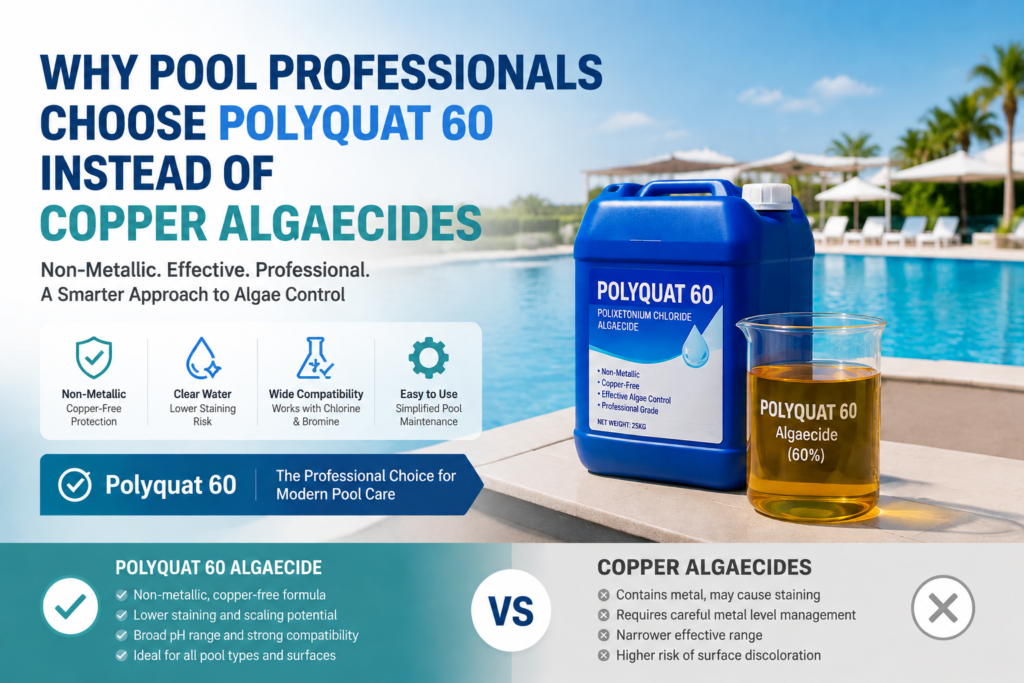
When a pool turns green, cloudy, or difficult to maintain, customers usually do not care what caused the problem. They only see one thing: the water does not look right.
For pool professionals, however, algae control is never just about removing green water. It is about protecting surfaces, preventing complaints, reducing maintenance time, and keeping water quality stable throughout the season.
For many years, copper-based algaecides have been a common choice in swimming pool maintenance. They are familiar, widely available, and they can provide effective algae control under many conditions.
But professional pool operators are increasingly asking a different question:
“Is there a better way to control algae without introducing metals into the pool?”
This is where Polyquat 60 algaecide has gained attention.
Unlike copper products, Polyquat 60 is a non-metallic, non-oxidizing polymeric algaecide based on Polixetonium Chloride (Polyquaternium-42, CAS No. 31512-74-0). It provides algae control without relying on copper ions, making it an attractive option for pool professionals who want reliable performance with fewer side concerns.
So why are more pool service companies, maintenance professionals, and private-label pool chemical brands choosing Polyquat 60 instead of traditional copper algaecides?
Let’s take a closer look.
Why Pool Professionals Are Rethinking Traditional Copper Algaecides?
Copper has a long history in water treatment.
Actually, the idea behind copper-based algae control is quite simple. Copper ions interact with algae cells and interfere with their biological processes, helping slow or stop algae growth.
For decades, this approach worked well enough for many pool owners.
However, modern pool maintenance has changed.
Today’s customers expect crystal-clear water, clean surfaces, low staining risk, and easy weekly maintenance. Pool professionals are managing everything from backyard pools to luxury resorts, fitness centers, hotels, and community facilities.
The expectations are higher.
A small issue that was acceptable years ago — such as slight staining or metal buildup — can now become a serious customer complaint.
Think about it:
A pool technician may spend hours balancing chlorine, pH, alkalinity, and filtration. Then a copper-related stain appears on a beautiful white plaster pool. The customer probably will not say, “Interesting, the copper chemistry caused this.”
They will simply say:
“Why does my pool look like this?”
That is why many professionals have started looking beyond traditional copper solutions.
What Makes Copper Algaecides Popular in Pool Maintenance?
Before comparing alternatives, it is important to understand why copper products became popular in the first place.
Copper algaecides have several advantages:
- Effective against many common algae types
- Familiar chemistry for pool operators
- Available in many formulations
- Often economical for routine algae prevention
- Compatible with many traditional pool treatment programs
For some applications, copper products can still be useful.
For example, certain algae problems may respond well to copper-based treatments, especially when used correctly and at appropriate levels.
However, “effective” does not always mean “ideal.”
Professional pool maintenance is not only about killing algae. It is also about maintaining the entire pool environment.
And this is where differences start to appear.
The Hidden Challenges of Copper-Based Algae Control
Copper works because it introduces metal ions into the water.
That is also the reason why some pool professionals are becoming more cautious.
1. Copper Can Create Staining Concerns
One of the biggest concerns with copper-based algaecides is staining.
When copper levels become too high, or when water chemistry is not properly balanced, copper may react with pool surfaces.
This can lead to:
- Greenish or bluish discoloration
- Surface staining
- Difficult cleanup procedures
- Customer dissatisfaction
For pools with light-colored finishes, such as white plaster, quartz, or premium decorative surfaces, appearance matters a lot.
A stain that seems minor from a chemical perspective can become a major issue from a customer perspective.
2. Copper Requires Careful Metal Management
Pool professionals already manage many variables:
- Free chlorine
- pH
- Total alkalinity
- Calcium hardness
- Cyanuric acid
- Salt levels
Adding another factor — dissolved metals — means another parameter to watch.
Some professional operators prefer to simplify their maintenance process.
A non-metallic algaecide removes one more potential complication.
3. Copper Does Not Always Match Every Pool System
Modern pools are becoming more advanced.
Saltwater pools, automated dosing systems, premium residential pools, and commercial facilities often require predictable chemistry.
In these systems, professionals may prefer products that:
- Do not add metals
- Work across a wide pH range
- Have good compatibility with chlorine and bromine
- Create fewer side concerns
This is one reason Polyquat 60 has become increasingly popular.
What Is Polyquat 60 Algaecide and Why Is It Different?
Polyquat 60 algaecide is a concentrated polymeric algae-control product commonly based on:
Polixetonium Chloride (Polyquaternium-42)
It belongs to the quaternary ammonium polymer family.
Unlike copper algaecides, Polyquat 60 does not depend on metal ions.
Instead, its positively charged polymer chains interact with algae cells, disrupting their structure and reducing algae growth.
In simple terms:
Copper works through metal activity.
Polyquat 60 works through polymer chemistry.
That difference creates several practical advantages for professional pool maintenance.
Polyquat 60 vs Copper Algaecides: A Professional Comparison
Let’s compare these two approaches from a pool professional’s point of view.
| Feature | Polyquat 60 Algaecide | Copper Algaecides |
|---|---|---|
| Chemistry type | Polymeric quaternary ammonium compound | Copper-based chemistry |
| Contains metal | No | Yes |
| Staining concern | Very low | Requires metal management |
| Foaming | Non-foaming formulation available | Depends on formulation |
| Chlorine compatibility | Generally compatible when used correctly | Depends on copper level and conditions |
| pH flexibility | Broad working range | Requires careful balance |
| Surface appearance concerns | Lower risk | Higher attention needed |
| Professional maintenance simplicity | Easier chemistry management | Requires monitoring of copper levels |
The goal is not to say copper products are ineffective.
The real difference is control.
Many pool professionals choose Polyquat 60 because they want fewer variables affecting the final result.
Why Non-Metallic Algae Control Matters for Modern Pools
A swimming pool is not just a body of water.
It is a complete environment.
The water chemistry interacts with:
- Pool surfaces
- Equipment
- Filters
- Pumps
- Automated systems
- Customer expectations
A professional maintenance company is protecting more than water quality. They are protecting their reputation.
Imagine two scenarios.
In the first scenario, a pool company treats algae but later spends extra time correcting metal staining.
In the second scenario, the company uses a non-metallic algae control product and focuses on maintaining balanced water chemistry.
Which approach creates fewer headaches?
For many professionals, the answer is obvious.
This is why the demand for copper free pool algaecides continues to grow.
How Polyquat 60 Helps Pool Professionals Deliver Better Results
1. Reliable Preventive Algae Control
Professional pool service is not only about emergency treatment.
The best companies prevent problems before customers notice them.
Polyquat 60 is often used as part of a regular maintenance program to help control algae growth between service visits.
That means:
- Fewer green pool emergencies
- More consistent water appearance
- Better customer satisfaction
2. Suitable for Different Pool Applications
Polyquat 60 can be used in many swimming pool environments, including:
- Residential swimming pools
- Commercial pools
- Hotel pools
- Resort pools
- Fitness center pools
- Community pools
Different pools have different challenges, but the need for stable algae control remains the same.
3. Better Fit for Private Label Pool Chemical Brands
Many pool chemical brands today are looking for products that combine:
- Professional performance
- Easy positioning
- Consumer-friendly benefits
A Polyquat 60-based product can be marketed as:
- Copper-free algaecide
- Non-metallic algae control
- Premium pool maintenance solution
- Professional-grade algae prevention
This gives distributors and private-label companies more flexibility when developing their own product lines.
For companies interested in private-label pool chemicals, you can also learn more about Polyquat 60 Algaecide private labeling options.
Is Polyquat 60 Always Better Than Copper?
Not necessarily.
The best algaecide depends on:
- Pool type
- Water conditions
- Existing treatment program
- Customer expectations
- Maintenance goals
Copper products still have their place.
However, many professionals are moving toward Polyquat 60 because they value predictable maintenance and fewer metal-related concerns.
The question is not:
“Does copper work?”
The question is:
“Is copper the right choice for every pool?”
For many modern pool systems, the answer may be no.
Choosing the Right Algaecide for Professional Pool Service
When selecting an algae-control product, professionals should consider several factors.
Look Beyond Immediate Algae Removal
A product that kills algae quickly is useful.
But professional maintenance requires thinking longer term.
Ask:
- Will it affect water appearance?
- Will it create additional chemistry problems?
- Will customers notice side effects?
- Does it fit the pool system?
Consider Product Consistency
For pool companies and distributors, consistency matters.
A reliable Polyquat 60 supplier should provide:
- Clear specifications
- Certificate of Analysis (COA)
- Safety Data Sheet (SDS)
- Stable supply
- Technical support
For buyers searching for a reliable source, you can explore more about how to choose a Polyquat 60 algaecide supplier.
Match the Product to Customer Expectations
Luxury pool owners may prioritize appearance.
Commercial facilities may prioritize operational stability.
Pool service companies may prioritize reducing callbacks.
The right algaecide should support all these goals.
Frequently Asked Questions
1. Is Polyquat 60 better than copper algaecide for swimming pools?
Polyquat 60 offers advantages because it is a non-metallic algaecide with lower staining concerns. However, the best choice depends on the pool system and maintenance requirements.
2. Does Polyquat 60 contain copper?
No. Polyquat 60 is based on Polixetonium Chloride (Polyquaternium-42), a polymeric quaternary ammonium compound, and does not contain copper.
3. Why do professional pool companies prefer copper-free algaecides?
Many professionals prefer copper-free products because they reduce concerns related to metal buildup, staining, and additional water chemistry management.
4. Can Polyquat 60 be used with chlorine in swimming pools?
Yes. Polyquat 60 is commonly used in chlorine-based pool systems when applied according to recommended treatment guidelines.
5. Where can I buy Polyquat 60 algaecide in bulk?
Professional buyers can source Polyquat 60 from qualified chemical suppliers that provide consistent specifications, technical documents, and private-label support.