
GET IN TOUCH
Ask For Sample?
How Pool Algae Problems Affect Water Appearance and Maintenance Costs?
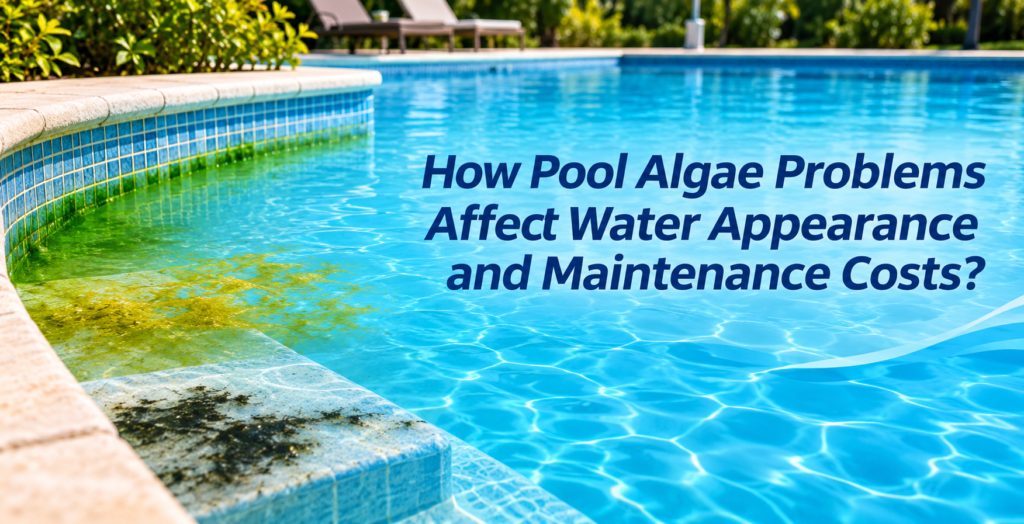
A swimming pool should look clean, fresh, and inviting. Clear blue water, spotless walls, and a smooth surface create the perfect setting for a relaxing swim. But when algae begin to grow, that picture can change fast.
A few green patches may seem harmless at first. Then the water turns cloudy, the walls feel slippery, and the filtration system starts working harder. Before long, a small algae problem can become a costly maintenance headache.
For homeowners, algae growth means more time cleaning and less time enjoying the pool. For commercial pool operators, hotels, resorts, and professional pool service companies, the consequences can be much greater. Poor water appearance can lead to customer complaints, higher chemical costs, extra labor, and temporary pool closures.
The good news? Most algae problems can be managed with a sound prevention and maintenance plan.
This guide explains how pool algae affect water clarity, operating costs, filtration performance, and customer satisfaction. We’ll also explore how preventive algae control products, including Polyquat 60 Algaecide, can fit into a well-managed pool care program.
Why Does Algae Growth Change the Appearance of Pool Water?
Algae are simple organisms that use sunlight and nutrients to grow. They can enter swimming pools through wind, rain, dust, swimwear, and pool equipment.
When disinfectant levels fall or water circulation becomes poor, algae may gain a foothold.
At first, the changes may be hard to notice. A faint green tint appears near the steps. Small patches develop along the walls. The water loses some of its sparkle.
Then things get worse.
Algae cells multiply, spread through the water, and attach to pool surfaces. The result can be a pool that looks dirty even when its basic equipment is running.
Green, Yellow, and Black Algae: Different Problems, Different Appearances
Not all algae problems look the same.
| Algae type | Common appearance | Typical maintenance concern |
|---|---|---|
| Green algae | Greenish water, cloudy appearance, green deposits | Rapid growth and loss of water clarity |
| Yellow or mustard algae | Yellow-brown dusty patches, often in shaded areas | Recurring deposits and repeated brushing |
| Black algae | Dark spots with firmly attached growth | Difficult surface cleaning and persistent patches |
Green algae are among the most common problems in swimming pools. They can spread quickly when chlorine residuals are too low.
Mustard algae often appear as dusty yellow deposits that can be mistaken for dirt or pollen.
Black algae, a term commonly used for certain cyanobacterial growths, may form stubborn colonies on rough or porous surfaces.
Each type creates a different cleaning challenge, but they share one important feature: the longer the growth continues, the more difficult and costly recovery may become.
From Crystal Clear to Cloudy: How Algae Affect Water Clarity
Water clarity is one of the first things swimmers notice.
Even when water chemistry is within the recommended range, suspended particles can make a pool look dull. Algae add another source of unwanted material.
As algae multiply, they can cause several visible changes.
- Green or yellow discoloration: Algae cells and deposits change the natural appearance of the water.
- Cloudiness: Suspended algae cells and other particles scatter light, reducing transparency.
- Slippery surfaces: Algae and associated biological films may develop on steps, walls, and floors.
- Visible deposits: Dead or living algae can collect in corners, along tile lines, and near low-flow areas.
- Loss of visual depth: Heavy growth may make it difficult to see the pool floor.
That last point matters more than many pool owners realize.
Clear water isn’t just about looks. Lifeguards and swimmers need to see underwater features and people clearly. When algae growth makes the pool floor hard to see, it can become a serious safety concern.
Pool operators should restrict swimming when water clarity fails applicable safety requirements.
And here’s an important detail: cloudy pool water doesn’t always mean algae are present. Poor filtration, unbalanced water chemistry, fine debris, and calcium precipitation can create similar symptoms.
That’s why accurate diagnosis should come before chemical treatment.
The Hidden Costs of Pool Algae: Where Does the Money Go?
An algae outbreak doesn’t come with a single expense. Instead, it creates a chain of maintenance tasks, each adding time, chemicals, or equipment demand.
A pool that normally needs routine cleaning may suddenly require several rounds of treatment, repeated brushing, filter cleaning, and water testing.
Let’s look at the main cost drivers.
1. Higher Chemical Consumption
When algae become established, normal sanitizer levels may no longer be enough to restore the pool quickly.
Depending on the condition of the water and the approved treatment products, pool operators may need additional chlorine, pH-adjusting chemicals, algaecide, or clarifying products.
Algae and other organic contaminants can increase chlorine demand. This means more sanitizer may be needed to achieve and maintain the required free chlorine residual.
In some cases, repeated treatment is necessary because the initial cleaning does not remove all attached growth.
The cost isn’t limited to the purchase price of the chemicals. Staff must also test, measure, apply, and monitor them.
2. More Cleaning Labor
Imagine a professional pool technician arriving at a hotel pool expecting a routine service visit.
Instead, the technician discovers green deposits on the steps, cloudy water, and slippery patches along the walls.
The visit now involves extra brushing, vacuuming, filter maintenance, and follow-up testing.
A task that would normally take a short time may turn into several visits.
For pool service companies, that creates scheduling pressure. For hotels and resorts, it can increase labor expenses or require outside contractors.
3. Greater Filtration and Pumping Costs
Algae can also affect filtration performance.
When algae cells and dead biological material accumulate in the water, filters must capture and remove more particles.
This can lead to faster filter loading, higher pressure differential, and more frequent cleaning or backwashing.
Sand filters may require additional backwashing. Cartridge filters may need more frequent rinsing or deep cleaning. DE filters may require cleaning and replacement of filter media after backwashing, according to their design.
The financial impact depends on the system, but possible costs include:
- Additional water and energy for backwashing.
- More filter cleaning and maintenance labor.
- Greater consumption of replacement filter media.
- Longer recovery operations.
- Additional wear associated with neglected or overloaded equipment.
Algae do not automatically cause a large increase in electricity consumption. However, extended pump operation and repeated cleaning cycles can raise energy and operating costs.
4. Water Loss and Replacement Expenses
Severe algae outbreaks sometimes lead operators to waste water during vacuuming or repeated backwashing.
That water must be replaced.
Replacement water may also need heating, sanitizing, and chemical balancing.
In regions where water is expensive or scarce, the financial impact can be significant.
This is particularly relevant for large commercial pools and facilities operating under water-use restrictions.
5. Unexpected Pool Closures
Perhaps the most expensive consequence isn’t chemical treatment at all.
It’s lost access to the pool.
If algae growth causes unacceptable visibility, unsafe surfaces, or water quality outside required limits, the pool may need to close until conditions are corrected.
For a residential pool, this means inconvenience.
For a hotel, resort, fitness center, or aquatic facility, the consequences may include guest complaints, disrupted services, refunds, or lost revenue.
A swimming pool is often part of the experience customers pay for. When that experience disappears, the financial impact can extend beyond the maintenance department.
How Much Can an Algae Outbreak Really Cost?
There is no universal cost for treating pool algae.
The total depends on pool volume, severity, local labor rates, chemical prices, equipment condition, and how quickly the problem is detected.
Still, a simple example helps explain why prevention matters.
Consider a hypothetical commercial pool experiencing an algae outbreak.
| Expense category | Illustrative extra cost |
|---|---|
| Additional treatment chemicals | $80 |
| Extra cleaning labor | $150 |
| Filter maintenance and cleaning | $60 |
| Water replacement and balancing | $40 |
| Follow-up service visit | $100 |
| Total additional maintenance cost | $430 |
These figures are illustrative assumptions, not measured industry averages or a supplier quotation. Actual expenses may be much lower or higher.
The example also excludes potential revenue loss from closure.
Now consider a facility that experiences several preventable outbreaks during a busy season. The costs can add up quickly.
That’s why preventive pool maintenance should be viewed as an operating-cost management strategy, not simply a chemical expense.
Why Commercial Pools Face Greater Financial Risks
Commercial swimming pools face conditions that make algae management particularly important.
They often experience high swimmer loads, frequent water disturbance, outdoor contamination, and strict operational requirements.
A private backyard pool may sit unused for several days. A hotel pool, by contrast, may welcome swimmers throughout the day.
More swimmers bring additional organic material into the water, including sweat, skin oils, and other contaminants. These increase the load on the disinfection and filtration systems.
Outdoor commercial pools also receive leaves, dust, pollen, and rainwater.
Without adequate circulation, cleaning, and disinfectant control, these conditions can contribute to algae growth.
Appearance Is Part of the Customer Experience
Picture two hotel pools.
The first has bright, clear water, clean steps, and spotless tile lines.
The second has slightly cloudy water and a few green patches near the corners.
Even if the second pool is still being maintained, which one would guests prefer?
Most people judge pool quality first by appearance.
Cloudy or discolored water can create doubts about cleanliness and safety. That perception may influence guest satisfaction, online reviews, and the facility’s reputation.
For hospitality businesses, visual water quality is part of the product they sell.
Algae Can Disrupt Maintenance Schedules
Professional pool service companies often manage multiple locations.
Their schedules depend on predictable service times.
An unexpected algae outbreak can disrupt that routine. Technicians may need to return for extra visits, bring additional chemicals, or spend more time cleaning one pool.
Those extra tasks reduce the time available for other customers.
A consistent algae prevention program can help make maintenance schedules more predictable, although it cannot eliminate every outbreak.
What Causes Algae Problems Even in Maintained Pools?
It’s tempting to blame every algae outbreak on a lack of chlorine.
But the causes can be more complex.
A pool may receive regular chemical treatment and still develop algae if other operating conditions are unfavorable.
Poor Water Circulation
Areas with weak water movement may receive less effective disinfectant distribution.
Steps, corners, ladders, and recessed features can become common locations for attached algae growth.
Regular brushing helps disturb these deposits and expose them to properly maintained sanitizer.
Inadequate Sanitizer Residual
Chlorine is a primary disinfectant in many swimming pools.
When the free chlorine residual falls below the level needed for the pool’s conditions, algae can multiply.
Heavy swimmer loads, sunlight, organic contamination, and poor chemical feed control may contribute to this problem.
Water Chemistry Imbalance
Pool pH influences chlorine chemistry and overall water treatment performance.
Water that is outside the recommended pH range can make disinfection and maintenance more difficult.
Total alkalinity, cyanuric acid concentration, calcium hardness, and other parameters also need attention according to the pool system.
Insufficient Brushing and Cleaning
Algae attached to pool surfaces can be harder to control than free-floating cells.
Even with suitable sanitizer levels, deposits may persist in areas that are rarely brushed.
Environmental Conditions
Warm weather, strong sunlight, rainstorms, and windborne debris can increase maintenance demands.
Summer is often a challenging season because pools experience both warmer water and heavier use.
However, algae problems are not limited to summer. Outdoor pools in warm climates and poorly maintained covered pools may experience growth during other seasons.
Prevention vs. Treatment: Which Approach Costs Less?
In many cases, preventing algae growth is less disruptive than treating a major outbreak.
A preventive program focuses on maintaining water quality before visible problems develop.
A corrective program starts after algae have already affected the water or pool surfaces.
| Factor | Preventive maintenance | Corrective algae treatment |
|---|---|---|
| Chemical demand | More predictable | May increase sharply |
| Cleaning labor | Routine brushing and vacuuming | Intensive cleaning may be required |
| Filtration | Normal monitoring and maintenance | Additional cleaning or backwashing |
| Water clarity | Easier to maintain consistently | Recovery may take time |
| Pool availability | Lower risk of algae-related interruption | Closure may be necessary |
| Budget planning | More predictable expenses | Unexpected costs possible |
Of course, prevention is not free. Pool operators still need to purchase chemicals, test water, maintain equipment, and pay for labor.
The difference is predictability.
Routine maintenance helps reduce the likelihood of expensive recovery work and protects the pool’s appearance throughout the swimming season.
Where Does Polyquat 60 Algaecide Fit into Pool Maintenance?
A sound pool care program begins with proper disinfection, water balance, circulation, and filtration.
Algaecides may provide an additional layer of algae control when used as directed and when authorized for the intended market.
One polymer-based option used in certain pool algaecide formulations is Polyquat 60 Algaecide.
Polyquat 60 is commonly associated with Polixetonium Chloride, CAS No. 31512-74-0, a cationic polymer used in algae-control formulations.
The name generally refers to a product containing approximately 60% active polymer, although actual product specifications and labeling should always be checked.
How Does Polyquat 60 Work?
Polyquat 60 is a positively charged polymer.
Its cationic structure can interact with negatively charged components of algal cell surfaces, contributing to algae-control activity.
Unlike chlorine, it is not an oxidizing sanitizer.
That distinction matters.
Chlorine-based sanitizers provide essential disinfection, while Polyquat 60 may serve as a supplemental algaecide in a broader maintenance program.
Polyquat 60 should not be treated as a replacement for chlorine or another approved primary disinfectant.
Why Consider a Polymer-Based Algaecide?
Polyquat 60 formulations are of interest to pool chemical brands and maintenance professionals because they can offer several practical characteristics.
- Non-oxidizing chemistry: Provides a different mode of action from chlorine-based oxidation.
- Low-foaming characteristics: Suitable formulations can help avoid the visible foam associated with some other algaecide chemistries.
- Metal-free formulation possibilities: Products without copper or other added metals avoid introducing those metals as a source of staining.
- Supplemental algae control: Can support routine algae management when used according to the approved product label.
- Flexible product development: Concentration and packaging can be tailored for different distribution channels, subject to product testing and regulatory requirements.
These characteristics do not mean every Polyquat 60 formulation performs identically.
Actual effectiveness depends on the formulation, concentration, water conditions, target organisms, and treatment directions.
Regulatory approval also matters. In the United States, products sold with algae-control claims generally require appropriate EPA pesticide registration. Other markets may have their own authorization systems.
How Eautrix Supports Polyquat 60 Algaecide Product Development
For pool chemical distributors and private label brands, product quality and supply consistency matter just as much as the marketing claims on a bottle.
Eautrix focuses on specialty cationic polymers and pool chemical formulations, including Polyquat 60 Algaecide based on Polixetonium Chloride (CAS 31512-74-0).
The standard Polyquat 60 material is an amber, transparent, viscous liquid.
Depending on customer requirements and technical feasibility, product development may cover different concentrations, packaging formats, and private label presentation.
Common packaging formats
1L BottleRetail pool care
5L JerrycanProfessional service
25L ContainerCommercial supply
Larger industrial packaging, such as 200L drums and 1000L IBCs, can also support bulk distribution.
For distributors, packaging selection affects shipping efficiency, storage requirements, handling, and the needs of end users.
A retail customer may prefer a small, easy-to-handle bottle. A professional service company may need larger packaging for repeated maintenance work.
The right format depends on how the product will be sold and used.
For more information, visit the Eautrix product portfolio or Eautrix website.
How to Reduce Algae-Related Maintenance Costs
Preventing algae problems requires more than adding one chemical to the pool.
The most reliable approach combines regular testing, physical cleaning, effective filtration, and suitable chemical treatment.
Here are the key actions pool operators should focus on.
Maintain the Correct Disinfectant Residual
Test free chlorine or the applicable primary disinfectant regularly.
Keep the residual within the range required by local regulations and the pool’s operating conditions.
Outdoor pools with cyanuric acid require particular care because stabilizer concentration affects chlorine availability.
Keep Water Chemistry Under Control
Monitor pH, total alkalinity, calcium hardness, and other relevant parameters.
Avoid large chemical swings that can make water treatment less stable.
Improve Circulation and Filtration
Check that the circulation system provides adequate flow throughout the pool.
Clean filters according to manufacturer instructions and operating conditions.
Pay special attention to areas where debris and algae deposits tend to accumulate.
Brush Pool Surfaces Regularly
Brushing helps remove attached deposits and makes chemical treatment more effective.
Steps, corners, ladders, and shaded areas deserve extra attention.
Use Supplemental Algaecides Where Appropriate
An approved algaecide can form part of a preventive maintenance plan.
Follow the specific product label for dosage, application frequency, compatibility, swimmer re-entry, and other safety instructions.
Do not assume that products with similar chemical names have identical use directions.
Keep Accurate Maintenance Records
Record chemical readings, product additions, filter pressure, cleaning activities, and unusual water conditions.
These records help identify recurring problems before they become expensive.
For commercial facilities, good documentation also supports staff communication and regulatory compliance.
Can Better Algae Control Improve Long-Term Pool Operating Efficiency?
Yes, although the benefits depend on how well the entire maintenance program is managed.
When algae are controlled before they spread, pool operators may reduce the need for repeated corrective treatments, intensive cleaning, and unexpected service visits.
More stable water conditions also make it easier to plan chemical purchases and maintenance schedules.
For commercial facilities, that consistency has value beyond the maintenance budget.
A clear, well-maintained pool supports guest confidence, protects the facility’s appearance, and reduces the risk of algae-related interruptions.
For professional pool service companies, fewer emergency visits can mean more predictable labor schedules and better customer relationships.
And for pool chemical distributors, reliable algae-control products can become an important part of a complete pool maintenance portfolio.
Still, one point deserves emphasis: algaecide performance should be assessed as part of the full pool treatment system, not in isolation.
Even a well-formulated product cannot compensate for consistently inadequate disinfection, poor circulation, or neglected filtration.
What Should Pool Chemical Buyers Look for in an Algaecide Supplier?
For distributors and private label brands, selecting an algae-control product involves more than comparing prices.
A low purchase price may look attractive, but inconsistent quality, inadequate documentation, or unsuitable packaging can create additional costs later.
Buyers should examine several factors before making a bulk purchase.
Active ingredient identity and concentration: Confirm the chemical identity, CAS number, active content, and relevant specifications.
Batch consistency: Request a Certificate of Analysis (COA) and review the supplier’s quality control procedures.
Product stability: Evaluate appearance, viscosity, storage behavior, and compatibility with the intended packaging.
Technical documentation: Obtain the Safety Data Sheet (SDS), technical specifications, and other documents required for the target market.
Regulatory status: Confirm that the finished product can legally be marketed with the intended algae-control claims in the destination country.
Private label capabilities: Check whether the supplier can support suitable packaging, label preparation, and concentration requirements.
For businesses developing their own pool chemical brands, these details help reduce purchasing risk and support consistent product quality.
Eautrix can discuss Polyquat 60 raw material specifications, packaging requirements, and formulation development for professional buyers. Any finished algaecide must still meet applicable local registration and labeling requirements before sale.
Final Thoughts: Clear Water Is Good Business
Pool algae problems are more than a cosmetic inconvenience.
They can change the color and clarity of swimming pool water, increase chemical demand, create extra cleaning work, and place additional pressure on filtration systems.
For commercial pools, the consequences may extend to customer satisfaction, operating schedules, and revenue.
The key is to identify algae problems early and maintain a consistent prevention program built around proper disinfection, balanced water chemistry, effective circulation, and regular cleaning.
Supplemental algae-control products such as Polyquat 60 Algaecide may have a useful role when they are properly formulated, approved for the intended use, and applied according to their labels.
For pool chemical distributors and private label brands, offering reliable algae-control products can help customers manage one of the most visible and frustrating challenges in pool maintenance.
After all, clear water isn’t just about appearance. It’s about safety, confidence, and keeping maintenance costs under control.
For Polyquat 60 Algaecide raw materials, bulk packaging, or private label formulation inquiries, contact Eautrix at info@eautrix.com.
Frequently Asked Questions (FAQ)
1. How does algae growth make swimming pool water cloudy?
Algae cells can multiply in pool water and remain suspended, scattering light and reducing visibility. Dead algae and other fine particles may also contribute to cloudiness. Proper disinfection, cleaning, and filtration help restore water clarity.
2. Does pool algae increase chlorine consumption and maintenance costs?
Yes. Algae and associated organic contamination can increase chlorine demand. Severe outbreaks may also require extra brushing, vacuuming, filter cleaning, and water treatment, raising overall maintenance costs.
3. Is preventive algae treatment cheaper than removing an established algae bloom?
Preventive maintenance is often less costly than correcting a severe outbreak because it helps avoid intensive cleaning and repeated chemical treatments. Actual savings depend on pool size, water conditions, labor costs, and the treatment program.
4. Can Polyquat 60 Algaecide help prevent green algae in swimming pools?
A properly formulated and authorized Polyquat 60 Algaecide may help control green algae when used according to its approved label. It should complement, not replace, adequate chlorine or another approved primary disinfectant.
5. Why is algae prevention especially important for commercial swimming pools?
Commercial pools often have higher swimmer loads and stricter operating requirements. Algae outbreaks can reduce water clarity, increase cleaning expenses, disrupt maintenance schedules, and potentially cause temporary closures. Consistent prevention helps protect both water quality and operating efficiency.