
GET IN TOUCH
Ask For Sample?
Benefits of Using Polixetonium Chloride
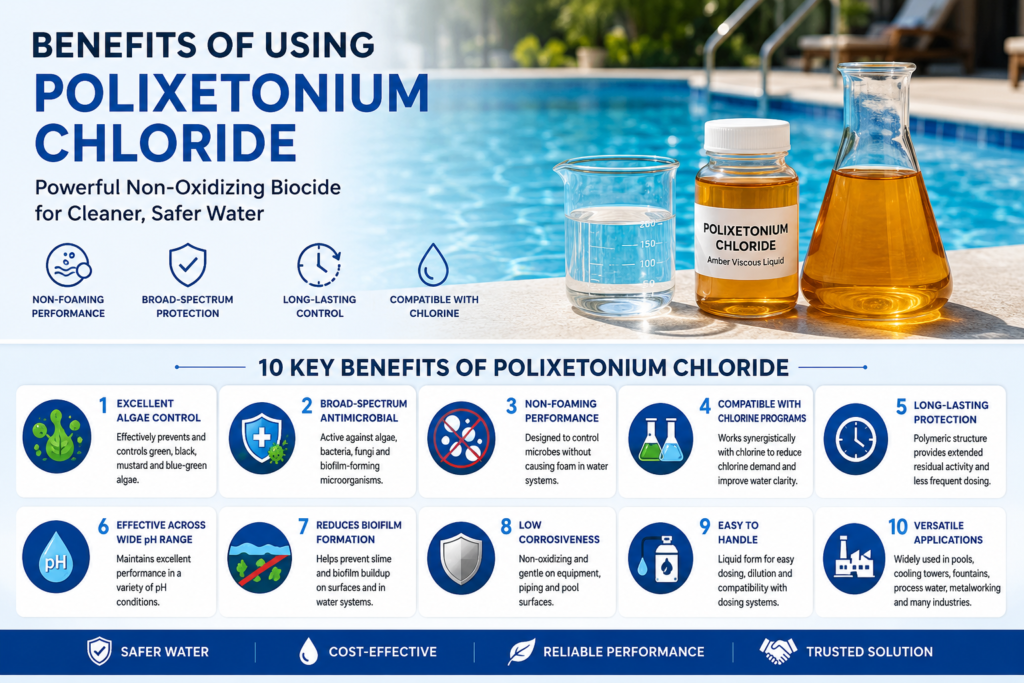
Water treatment isn’t just about removing visible dirt. It’s about controlling algae, bacteria, and microorganisms before they become expensive problems. That’s exactly where Polixetonium Chloride stands out.
Unlike many traditional oxidizing biocides, Polixetonium Chloride offers long-lasting microbial control without producing excessive foam or significantly affecting water balance. Whether it’s used in swimming pools, industrial cooling systems, decorative fountains, or process water, this polymeric quaternary ammonium compound has earned its reputation for reliability.
If you’re looking for a non-foaming, highly effective, and versatile biocide, here’s why Polixetonium Chloride deserves your attention.
What Is Polixetonium Chloride?
Polixetonium Chloride is a polymeric quaternary ammonium compound commonly supplied as a clear amber, viscous liquid. It functions as a non-oxidizing biocide and algaecide, providing broad-spectrum control of algae, bacteria, and biofilm-forming microorganisms.
Unlike chlorine or bromine, it does not rely on oxidation to destroy microorganisms. Instead, it disrupts microbial cell membranes through its positively charged polymer chains, leading to rapid cell death while maintaining excellent stability in various water conditions.
Because of its polymeric structure, it also remains active longer than many conventional disinfectants.
How Does Polixetonium Chloride Work?
The chemistry is surprisingly straightforward.
Microorganisms such as algae and bacteria typically carry negatively charged cell surfaces. Polixetonium Chloride contains multiple positively charged quaternary ammonium groups along its polymer backbone.
When introduced into water, the polymer:
- Attaches to negatively charged microbial cells
- Disrupts cell membrane integrity
- Causes leakage of intracellular components
- Prevents further cell growth
- Reduces biofilm formation
This mechanism makes it highly effective while minimizing damage to pool equipment and industrial systems.
Top 10 Benefits of Using Polixetonium Chloride
1. Excellent Algae Control
One of its biggest strengths is preventing algae before it becomes visible.
It effectively controls:
- Green algae
- Mustard algae
- Black algae
- Blue-green algae (cyanobacteria)
Regular maintenance dosing keeps water clear throughout the season.
2. Broad-Spectrum Antimicrobial Activity
Polixetonium Chloride doesn’t stop with algae.
It also helps control:
- Gram-positive bacteria
- Gram-negative bacteria
- Slime-forming microorganisms
- Certain fungi
This broad activity makes it suitable for many industrial water systems.
3. Non-Foaming Performance
Many quaternary ammonium compounds create excessive foam.
Polixetonium Chloride is specifically valued because it offers non-foaming performance, making it ideal for:
- Swimming pools
- Cooling towers
- Decorative fountains
- Industrial circulation systems
Less foam means easier operation and a better user experience.
4. Compatible with Chlorine Programs
Rather than replacing chlorine completely, Polixetonium Chloride often works alongside it.
Benefits include:
- Lower overall chlorine demand
- Reduced chlorine odor
- Improved water clarity
- Better algae prevention between chlorine treatments
This combination is widely used in commercial pool maintenance.
5. Long-Lasting Residual Protection
Because it is polymeric instead of a small-molecule biocide, it remains active longer.
That means:
- Longer protection intervals
- Less frequent dosing
- More stable water quality
- Reduced maintenance workload
For facilities managing large water systems, this can translate into meaningful operating cost savings.
6. Effective Across a Wide pH Range
Many water treatment chemicals become less effective when pH changes.
Polixetonium Chloride maintains reliable performance across the pH ranges commonly encountered in:
- Swimming pools
- Industrial cooling water
- Decorative water features
- Process water systems
This flexibility simplifies routine water management.
7. Helps Reduce Biofilm Formation
Biofilms create ongoing maintenance challenges by protecting bacteria inside slimy layers.
Polixetonium Chloride helps:
- Prevent biofilm development
- Reduce slime buildup
- Improve system cleanliness
- Enhance overall disinfection efficiency
Cleaner surfaces also improve heat transfer in cooling systems.
8. Low Corrosiveness
Oxidizing disinfectants can gradually attack metal equipment.
Since Polixetonium Chloride is non-oxidizing, it is generally gentler on:
- Pumps
- Filters
- Heat exchangers
- Pipelines
- Pool accessories
Long-term equipment maintenance costs may therefore be reduced.
9. Easy to Handle
Most commercial products are supplied as ready-to-use liquid concentrates.
Advantages include:
- Simple metering
- Easy dilution
- Good storage stability
- Convenient transportation
- Compatibility with automatic dosing systems
This makes it attractive for both distributors and end users.
10. Suitable for Many Industries
Its versatility is one of the reasons demand continues to grow.
Common industries include:
- Swimming pool chemicals
- Industrial water treatment
- Cooling towers
- Decorative fountains
- Water parks
- Manufacturing process water
- Metalworking fluids
- Paper mills
- Textile processing
- Oilfield water systems
Few non-oxidizing biocides cover such a broad application range.
Common Applications of Polixetonium Chloride
Swimming Pools
Pool operators appreciate its ability to:
- Prevent algae growth
- Improve water clarity
- Reduce maintenance frequency
- Work alongside chlorine sanitizers
- Provide non-foaming operation
It is commonly used in residential pools, hotels, resorts, schools, and public aquatic facilities.
Industrial Cooling Water
Cooling towers provide ideal conditions for microbial growth.
Polixetonium Chloride helps:
- Prevent slime formation
- Improve heat exchange efficiency
- Reduce microbiological contamination
- Lower maintenance downtime
Decorative Fountains
Fountains often suffer from algae because of sunlight exposure.
Regular dosing keeps:
- Water clearer
- Surfaces cleaner
- Pumps operating efficiently
- Maintenance costs lower
Metalworking Fluids
Microbial contamination shortens coolant life.
Polixetonium Chloride extends fluid service life by controlling bacteria responsible for unpleasant odors and degradation.
How to Choose High-Quality Polixetonium Chloride
Not all products deliver the same performance.
When selecting a supplier, look for:
- Stable active content
- Consistent viscosity
- Clear amber appearance
- Non-foaming performance
- Good compatibility with other treatment chemicals
- Reliable quality control
- Technical documentation (COA, SDS, TDS)
- Flexible packaging options
- Technical support for formulation or application
Working with an experienced manufacturer can help ensure consistent product quality and long-term supply stability.
Final Thoughts
Polixetonium Chloride has become a trusted solution because it combines effectiveness with operational simplicity.
Its broad antimicrobial activity, excellent algae control, non-foaming characteristics, and compatibility with existing water treatment programs make it suitable for a wide variety of industrial and recreational applications.
For manufacturers, distributors, and water treatment professionals, it offers a practical way to maintain cleaner water while reducing maintenance effort and protecting valuable equipment.
As demand grows for reliable, long-lasting non-oxidizing biocides, Polixetonium Chloride continues to be one of the most versatile options available.
Frequently Asked Questions
1. What is the main benefit of Polixetonium Chloride?
Its primary benefit is long-lasting control of algae and microorganisms without producing foam, making it suitable for swimming pools and industrial water systems.
2. Is Polixetonium Chloride compatible with chlorine?
Yes. It is commonly used alongside chlorine to improve algae control, reduce chlorine demand, and maintain clearer water.
3. Does Polixetonium Chloride create foam?
No. One of its major advantages is its non-foaming performance, even in circulating water systems.
4. Which industries commonly use Polixetonium Chloride?
It is widely used in swimming pools, cooling towers, decorative fountains, process water treatment, metalworking fluids, paper manufacturing, and other industrial water systems.
5. How should Polixetonium Chloride be stored?
Store it in tightly sealed containers in a cool, dry, well-ventilated area away from direct sunlight and freezing conditions. Following the manufacturer’s storage recommendations helps maintain product quality over its shelf life.